How to Get Rid of Doom Piles: A 20-Minute System
You swept a pile into a bag before company came over. Three weeks later, the bag is still there, and you've bought a replacement roll of tape because you couldn't find the one buried inside it. That bag is a doom pile, and the name is more accurate than it sounds. Professional organizer Julie Witherell explains that DOOM is an acronym: "Didn't Organize; Only Moved." The items were relocated, not resolved (Good Housekeeping).
Psychologist Joseph Ferrari identifies what he calls "the three lacks" behind most clutter struggles: not enough time, not enough resources, not enough ability to handle an item in the moment (APA Speaking of Psychology). When any one of those is missing, the pile forms. ADHD organizing specialist Melanie Summers puts it plainly: doom piles are common, and they don't mean someone is lazy. They signal overload (Good Housekeeping).
This guide walks through clearing one pile in 20 minutes using a four-step sort-and-relocate sequence, then assigning the one-action homes that stop the next pile from forming. You'll need one pile you can see right now, four floor spaces or containers for sorting, and a timer.
What are doom piles, and why do they keep coming back?
Video of the Day
Doom piles typically start in a moment of good intention. Summers notes they often begin when someone is prepping for a trip, gathering materials for a project, or trying to clear a surface quickly, and then grow as more items get added before the original task is resolved (Good Housekeeping). The pile isn't the result of giving up. It's the result of pausing at the wrong moment without a designated place to put things.
The term originated on social media and became particularly associated with ADHD doom piles, given how distractibility, time blindness, and unfinished projects feed the cycle (Good Housekeeping). But organizer Mindy Godding is clear that doom piles are universal: even someone with no executive functioning challenges will stack things in a corner to clear visual clutter instead of putting them away.
Once a pile forms, it compounds. Godding points out that items buried in a pile are frequently replaced or duplicated elsewhere, adding to the overall clutter rather than containing it (Good Housekeeping). Each unresolved item starts to feel like a representation of an unfinished task, making the pile heavier to face the longer it sits. A 2022 peer-reviewed study found clutter had a significant negative direct effect on subjective well-being (β = −0.46, p < 0.000) across both age groups studied, and that younger adults experienced the negative impact on psychological home more intensely than older adults (Older Adults and Clutter, Semantic Scholar).
Piles don't get easier with time. The method below is built around that reality.
Video of the Day
How to get rid of doom piles: the 4-step sprint method
Pick one pile, not the worst one, and follow this sequence.
Before you start: Witherell's organizing principle is the spine of this entire method. Sort items into categories first, move each category to its correct room second, then put things away one area at a time (Good Housekeeping). Each step happens separately to prevent attention from fragmenting across multiple rooms at once. Set up four sorting zones before touching the pile: trash/recycle, relocate (belongs in another room), action (needs a task, such as a bill to pay, an item to return, or a call to make), and uncertain (can't decide in ten seconds).
Step 1: Take a before photo
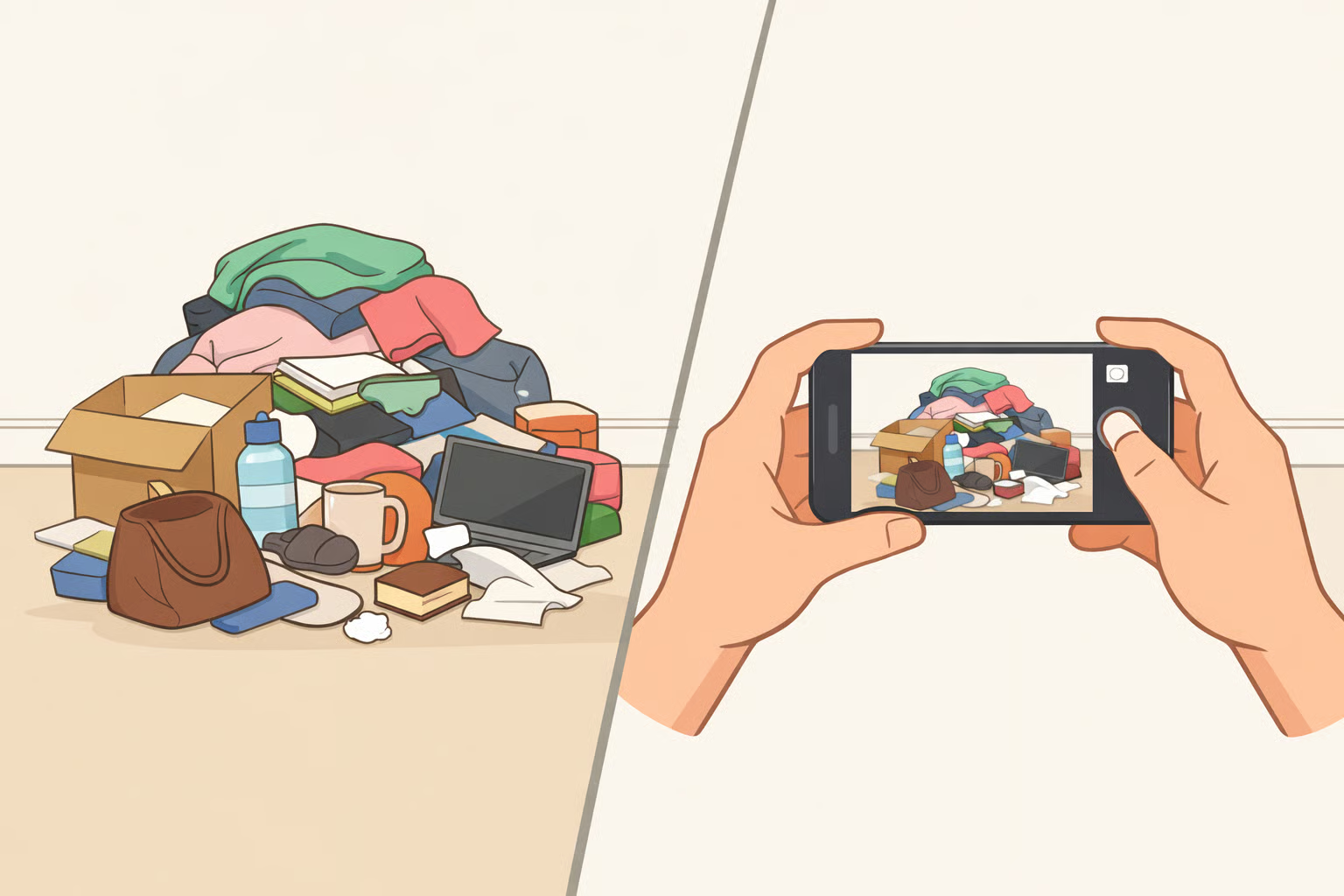
Shoot the pile before touching anything. Godding recommends before-and-after documentation because 20 minutes of focused effort rarely looks significant until you can compare (Good Housekeeping). Dozier's research keeps participants focused on what improved rather than what remained, and that progress-forward framing produced measurable results in her pilot study, including a 20% reduction in clutter and improved mental health among older participants (Mississippi State University). The before photo gives you something concrete to compare against when the sprint is done.
Step 2: Set a 20-minute timer and sort into four categories
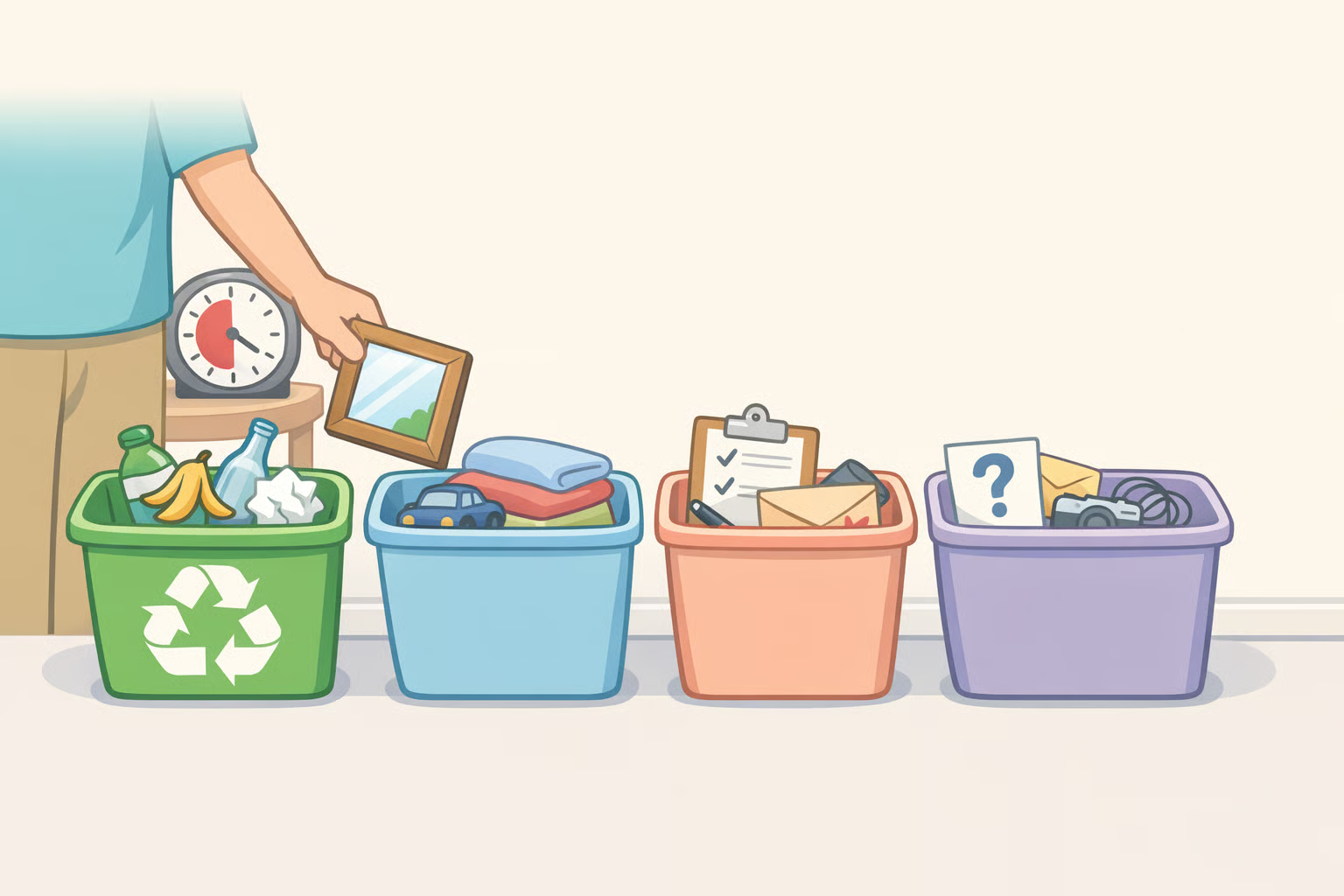
Godding's "clutter sprint" framework: set the timer and move items out of the pile as fast as possible, categorizing rather than deciding (Good Housekeeping). A playlist helps. Sort each item into one of the four zones based on a single quick read.
Do not make keep-or-discard decisions during this pass. Ferrari's research notes that physically handling an object increases the likelihood of keeping it, the same mechanism behind retail impulse buying (APA). Touch each item once to categorize. Keep-or-discard decisions come later, in a separate pass, once the pile is broken apart and the psychological weight has lifted.
For action items: note what kind of action is needed as you sort, whether that's paying, returning, calling, or filing. Group by type. These items aren't going away in this sprint; they're getting a visible, temporary home so they stop hiding.
For uncertain items: if you can't categorize something in ten seconds, it goes in the uncertain zone. No stalling. The sprint continues.
If the timer goes off before you finish: Stop. Schedule another 20-minute sprint the same day or tomorrow. An incomplete sprint still reduced the pile. Pushing past exhaustion to finish is how a manageable task turns into an abandoned one.
Step 3: Relocate by category, then put things away one area at a time
Take the trash out. Put the recycling in the bin. Carry the "relocate" items to the rooms they belong in, but leave them there rather than storing them immediately. Then return and put things away one room at a time, completing each area before moving to the next. Witherell is explicit about this sequencing: moving by category before putting away keeps focus intact and prevents the half-finished pile from scattering across the house (Good Housekeeping).
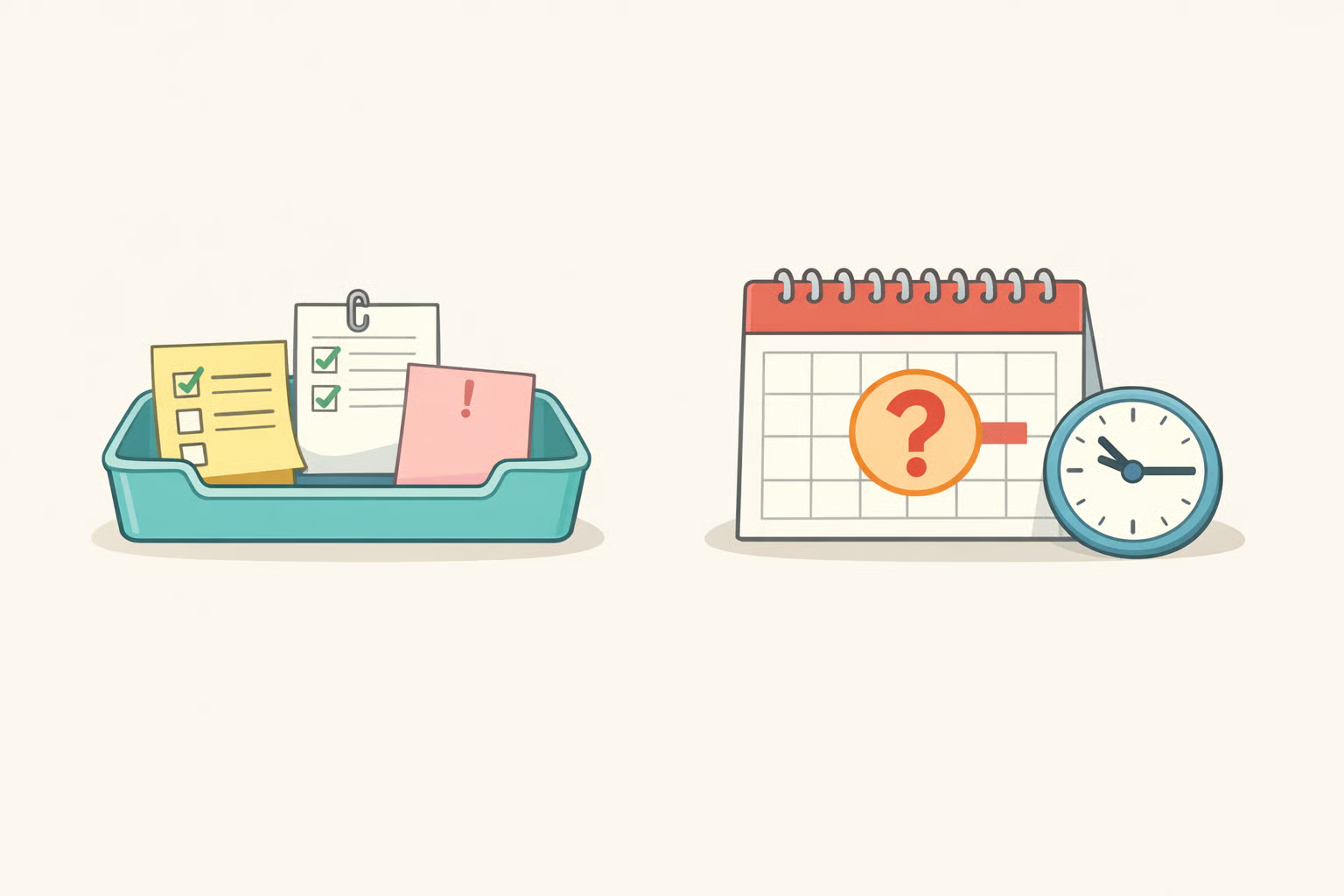
For the action pile: group items by task type and give each group a visible temporary home. A mesh tray on the counter beats a second pile on the desk. Items you can see are items you'll act on. Schedule time this week to work through one group at a time.
For the uncertain pile: set a return date within the next seven days to make one decision per item. Write it on your calendar. The uncertain zone is a temporary queue, not a new pile. Without a deadline, it becomes exactly what you just cleared.
One specific trap to avoid: letting the uncertain zone sit past its deadline. At that point, if an item has no clear home and no clear use, it goes in the donate or trash pile. A second round of "maybe later" is not a category.
Step 4: Take the after photo
Compare it to the before shot. The pile is smaller or gone. Progress is real even if the room isn't perfect.
Stop the next doom pile from forming: one-action homes
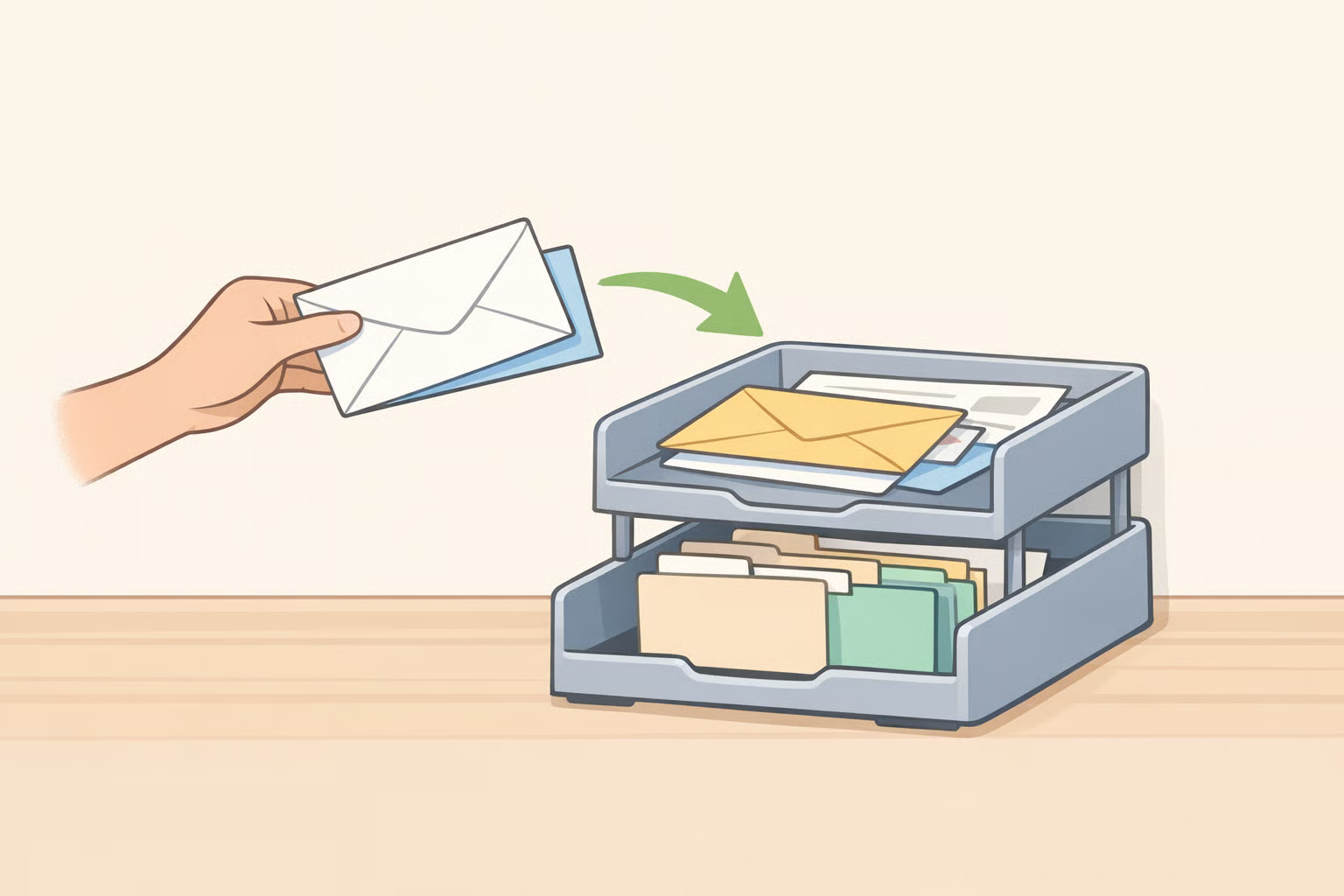
Decluttering doom piles is only half the job. The other half is making it harder to create a new one than to put something away properly.
Doom piles re-form when putting things away requires more steps than setting them down. Summers is direct: if a storage system takes too many steps, people pile instead (Good Housekeeping). Her benchmark for client systems is one hand or one action, whether that's a hook, an open bin, or a drawer you drop something into and close. If returning something requires opening a cabinet, moving an obstacle, finding the right slot, and closing everything again, the pile will always win. That's not a willpower problem; it's a design problem.
Assign homes based on real behavior, not aspirational behavior. Witherell's advice: create drop zones based on how each room is actually used (Good Housekeeping). If mail always lands on the kitchen counter, put a two-slot tray there, one for action items and one for filing, and sort once a week. The tray works because it requires one motion, stays visible, and doesn't demand a decision every time something arrives. That is the finished system. Don't replace it with a filing cabinet in a back room.
Skip elaborate storage: label makers, matching bins, color-coded systems. If the system requires more steps than the pile it replaces, it will be abandoned.
Design for your worst day. Witherell's standard is worth quoting directly: "Having a flexible system is key, one you can do on your worst day" (Good Housekeeping). Can you use this in thirty seconds when you're tired, distracted, or running late? If not, simplify until you can.
One maintenance habit makes the difference: once a week, spend five minutes returning anything that has landed outside its one-action home. Set a recurring alarm. Five minutes prevents a drift pile from becoming a doom pile.
When a pile signals something more than clutter
Everyday doom piles and hoarding disorder are not the same thing. Ferrari is explicit: hoarding is a recognized psychological disorder; ordinary clutter is not (APA). Most doom piles respond to the friction-reduction approach above.
The Mayo Clinic describes hoarding disorder as an ongoing difficulty discarding possessions accompanied by real distress at the thought of letting them go, often building to the point where rooms become unusable and creating safety hazards, and tending to worsen over time rather than resolve with better organization. If clearing attempts keep failing, the thought of discarding causes genuine distress, or the clutter is affecting daily functioning, that situation calls for a mental health provider rather than a new storage system.
Dozier's research found that cognitive-behavioral approaches and motivational interviewing produced measurable improvements in more entrenched clutter cases, well beyond what organizing tactics alone achieved (Mississippi State University). The method in this article is the right starting point for ordinary doom piles. It isn't the right tool for everything.
What one cleared pile actually gets you
Dozier's pilot study participants reduced their clutter by 20% and reported improved mental health and a healthier relationship with their belongings (Mississippi State University). One cleared pile is one fewer deferred decision, and those compound faster than most people expect.
The system works because it never asks for a perfect day. Sort, relocate, assign homes, repeat. Witherell's framing is the right one to end on: "The goal is to make it better, not perfect. Everyone is dealing with a lot in their lives" (Good Housekeeping). Five minutes a week returning things to their one-action homes is what that looks like in practice.