Which laundry rules you can break (and which ones to keep)
Most laundry routines were built around one goal: maximum cleaning. Hot water, long cycles, small loads to give clothes room to move these habits made sense for older machines, weaker detergents, and a simpler risk calculus. The laundry rules you can break aren't obscure edge cases. They're the defaults most households follow automatically: always use hot water, wash after every wear, give clothes room in the drum. For everyday loads, the evidence no longer supports them.
Three goals now compete in every wash: effective cleaning, infection hygiene, and environmental impact. Defaulting to maximum intensity optimizes for none of them.
This guide gives you a clear operating model for ordinary household laundry everyday clothes, linens, lightly soiled items along with explicit guidance on when the relaxed defaults don't apply. By the end, you'll have a simple three-tier decision: what to do for normal loads, what changes when clothes are heavily soiled, and what changes when someone in the household is sick.
Everyday defaults, stated upfront: cold water, full drum, short cycle, quality enzymatic detergent. The sections below explain why each default is defensible and where each one breaks down.
A few numbers that set the stakes:
- For frequently washed garments, the energy used during the washing phase accounts for 50–80% of the item's entire lifetime environmental footprint, according to a lifecycle assessment published in MDPI Sustainability last September. The choices made at the machine matter more than almost anything that happens before the garment reaches your home.
- Average wearing counts per garment dropped 36% in the first fifteen years of this century while global clothing production roughly doubled, per the same study compounding the environmental cost of washing clothes that didn't yet need it.
- For everyday laundry with moderate cleaning expectations, calibrating wash parameters to actual demand rather than defaulting to maximum-intensity settings can cut environmental impact by an average of 80% compared to a high-cleaning-oriented process, the same research found. That gain is specific to moderate-demand loads; heavily soiled items are a different calculation, addressed explicitly in each relevant section.
Laundry rules you can break: temperature, frequency, and load size
Video of the Day
Rule 1: Always wash in hot water
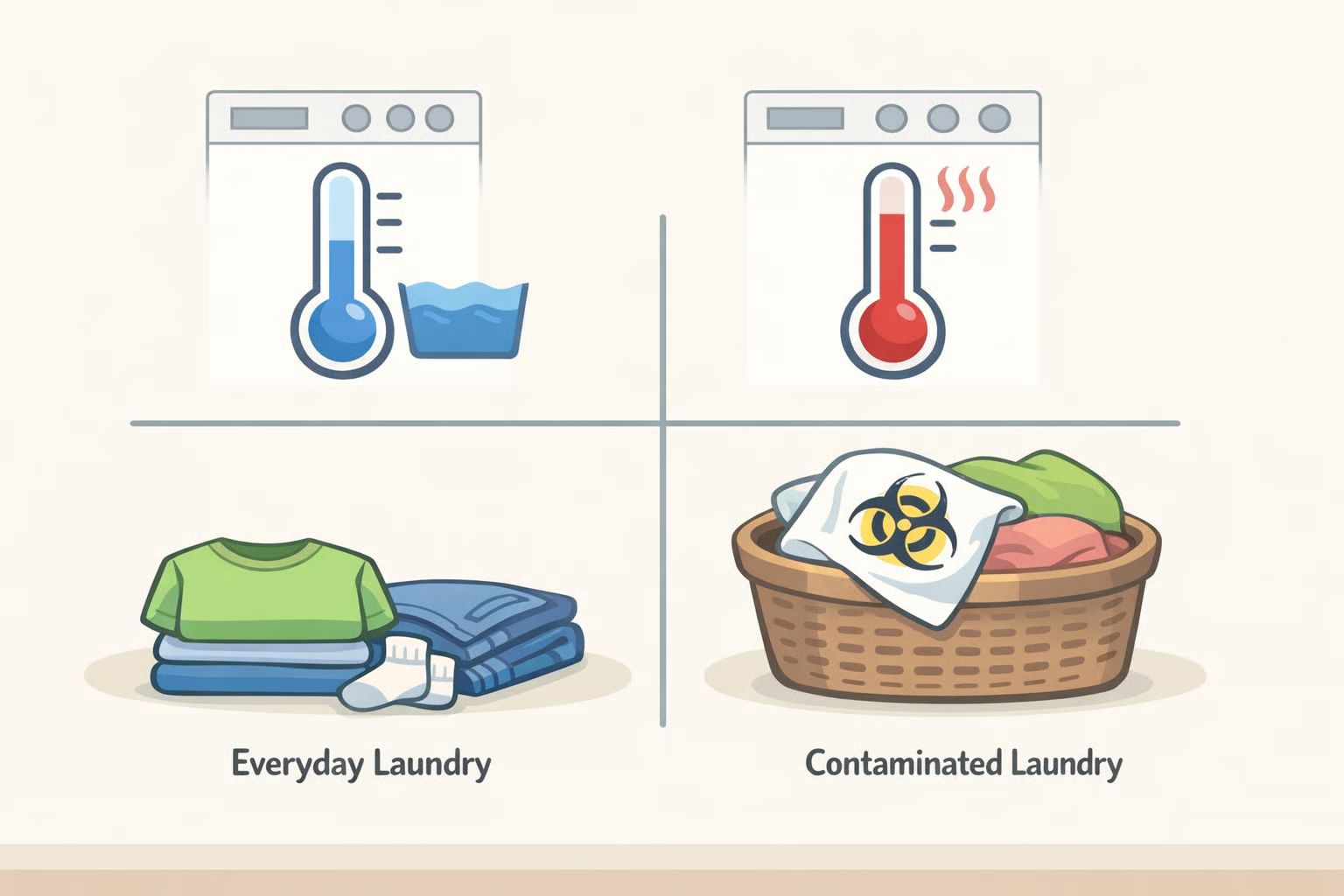
The most evidence-supported rule to rethink for everyday laundry. A quantitative microbial risk model published in the Journal of Applied Microbiology in early 2022 found that cold-water washes at typical North American household temperatures a median of 14.4°C brought estimated infection risks for respiratory pathogens into or near acceptable thresholds using standard detergents, with risk values ranging from 2.2 × 10⁻⁵ to 2.2 × 10⁻⁷. Enzymatic detergents pushed those numbers down further, to 8.6 × 10⁻⁸ or lower. Hospital laundry research reinforces the point from a different direction: cold-water formulas at roughly 31°C produced the same 3-log10 bacterial reduction in heavily soiled hospital linen as high-temperature washing, according to a study in Infection Control & Hospital Epidemiology published in 2015. That's not a direct home-laundry analogue hospital linen is a different contamination scenario but it supports the broader point that chemistry can matter as much as heat.
Residential hot water taps are typically set to 49–52°C, per the Journal of Applied Microbiology risk model. That's well below the 65°C threshold at which SARS-CoV-2 sees a 4-log reduction in under five minutes. For routine laundry, hot tap water is more of an energy expense than a hygiene tool.
The exception that holds the rule together: For laundry contaminated with enteric pathogens vomit, fecal matter, or items from a household member with rotavirus, Salmonella, or confirmed gastrointestinal illness hot water is not optional. The same risk model found that acceptable infection risk thresholds for rotavirus were only reached using hot water, chlorine bleach, advanced detergents, and hand hygiene before touching the face. Salmonella required hot water combined with bleach or high-heat drying to approach the threshold. Cold water with standard detergent fell short for both. This exception applies to illness-contaminated loads only; it does not apply to routine respiratory-illness scenarios.
A note on the research: The 2022 study received partial funding from Procter & Gamble. The findings are published in peer-reviewed literature and align with the independent hospital data cited above, but the funding relationship is worth knowing.
Takeaway: Use cold water for everyday clothing and routine household laundry. Switch to hot water plus bleach or high-heat drying for any load contaminated with enteric illness or bodily waste.
Rule 2: Wash after every wear
Repeated washing causes progressive fabric damage, shortening garment lifespan a cost that accumulates invisibly under a blanket wash-every-wear policy, according to the MDPI Sustainability research. The environmental case against unnecessary washing is covered above; the fabric care case adds a second reason to stop.
The sorting logic below is a set of practical rules of thumb based on body contact, visible soil and odor, and activity intensity not research-backed thresholds:
- Wash after every wear: underwear, socks, anything with visible soil or odor, workout clothes worn against skin during vigorous exercise.
- Wash after 2–3 wears: t-shirts and fitted tops with direct skin contact but no heavy activity; items worn in warm environments.
- Wash less frequently: jeans, outerwear, blazers, loosely worn knitwear with minimal skin contact.
- Hygiene override: any item from a household member with a respiratory or gastrointestinal illness wash promptly, regardless of visible soiling.
Rule 3: Don't fill the machine clothes need room to move
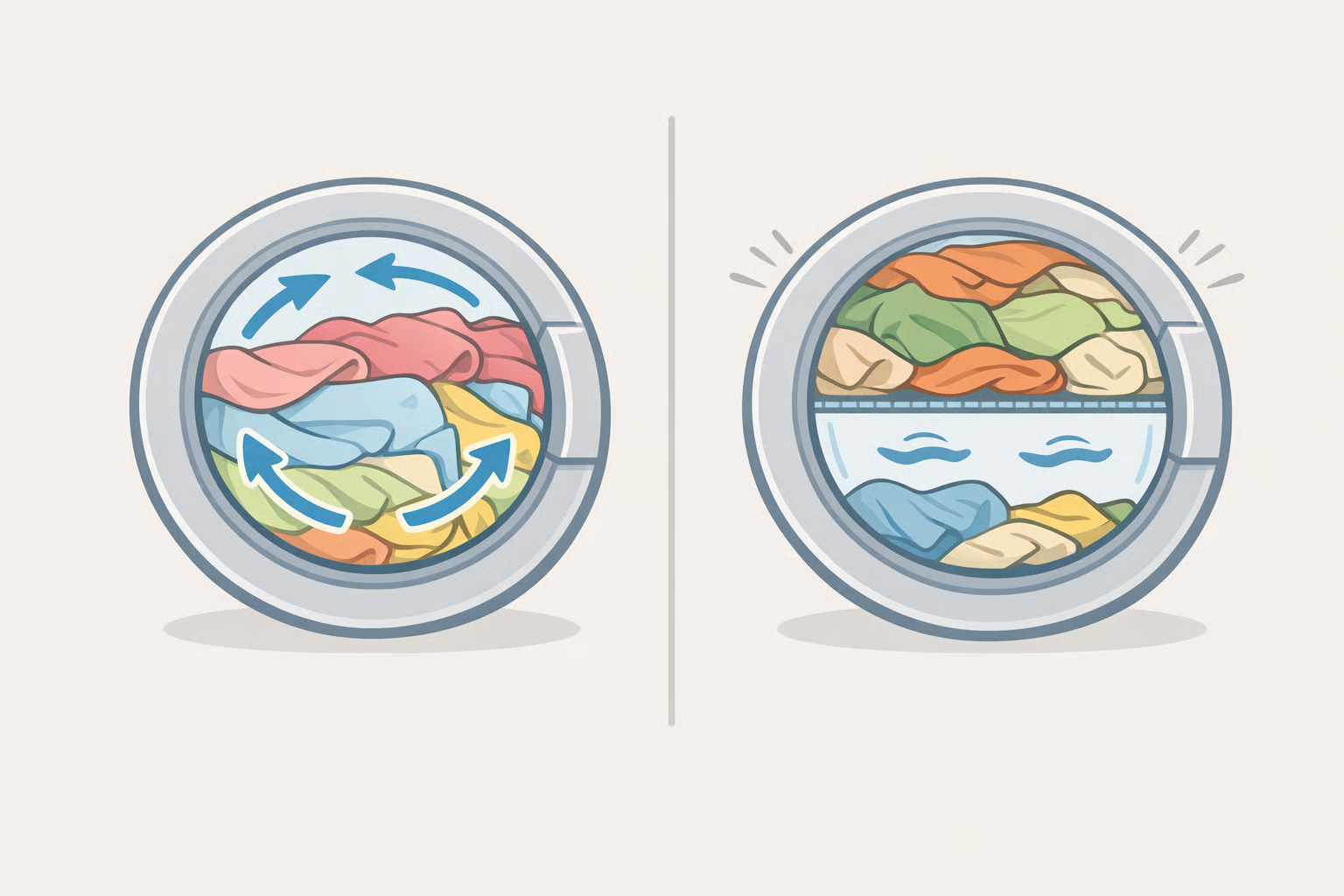
Load size is the single most important variable in the laundry equation, and it pulls in two directions simultaneously. The MDPI Sustainability lifecycle assessment found that load size was the most statistically significant factor affecting both washing efficiency and environmental impact across all tested conditions but with a negative correlation on cleaning performance, meaning heavier loads produced slightly lower per-kilogram cleaning results. At the same time, a 2024 study in Frontiers in Environmental Science found that running a full drum load compared to a half load meaningfully reduced fibrous microplastic release from polyester and polyester-blend garments into wastewater.
The practical synthesis for everyday laundry: full loads are better than partial loads on both environmental impact and microplastic release, and the cleaning efficiency trade-off is modest when soil levels are moderate. The MDPI study used a single soiling type and substrate, which limits how broadly these results generalize; for heavily soiled loads, that cleaning efficiency penalty becomes material.
Partial loads use more energy per garment and, for synthetic items, increase microplastic release. Their only real upside is a small cleaning advantage that matters mainly when items are genuinely dirty.
Takeaway: Fill the drum for everyday laundry. For heavily soiled loads, give the machine room to work; the cleaning efficiency trade-off matters more when cleaning demand is high.
Rule 4: Longer cycles are safer and more thorough
For everyday laundry with moderate cleaning expectations, optimized wash conditions which favor shorter cycle times alongside appropriate temperature and detergent choices reduced environmental impact by 60–80% compared to both low-impact-oriented and maximum-cleaning processes, according to the MDPI Sustainability research. The 2024 microplastics study independently found that shortened washing programs reduced fibrous microplastic release from synthetic garments, giving a second reason to default to shorter settings for routine loads.
The MDPI study is explicit about the limit: when high washing efficiency is genuinely required, shorter conditions are less competitive and require increased wash time and detergent to compensate. Shorter cycles are a smart default for everyday loads, not a universal fix.
Takeaway: Default to a shorter, cooler cycle for routine clothes. Reserve extended cycles and higher detergent concentrations for heavily soiled items, towels, or illness-contaminated laundry. On lightly soiled laundry, longer cycles add energy, water, and microplastic release without adding cleaning value.
Video of the Day
Rules 5, 6, and 7: Synthetic fabrics and the products you may not need
Rule 5: New clothes can go straight into a normal wash
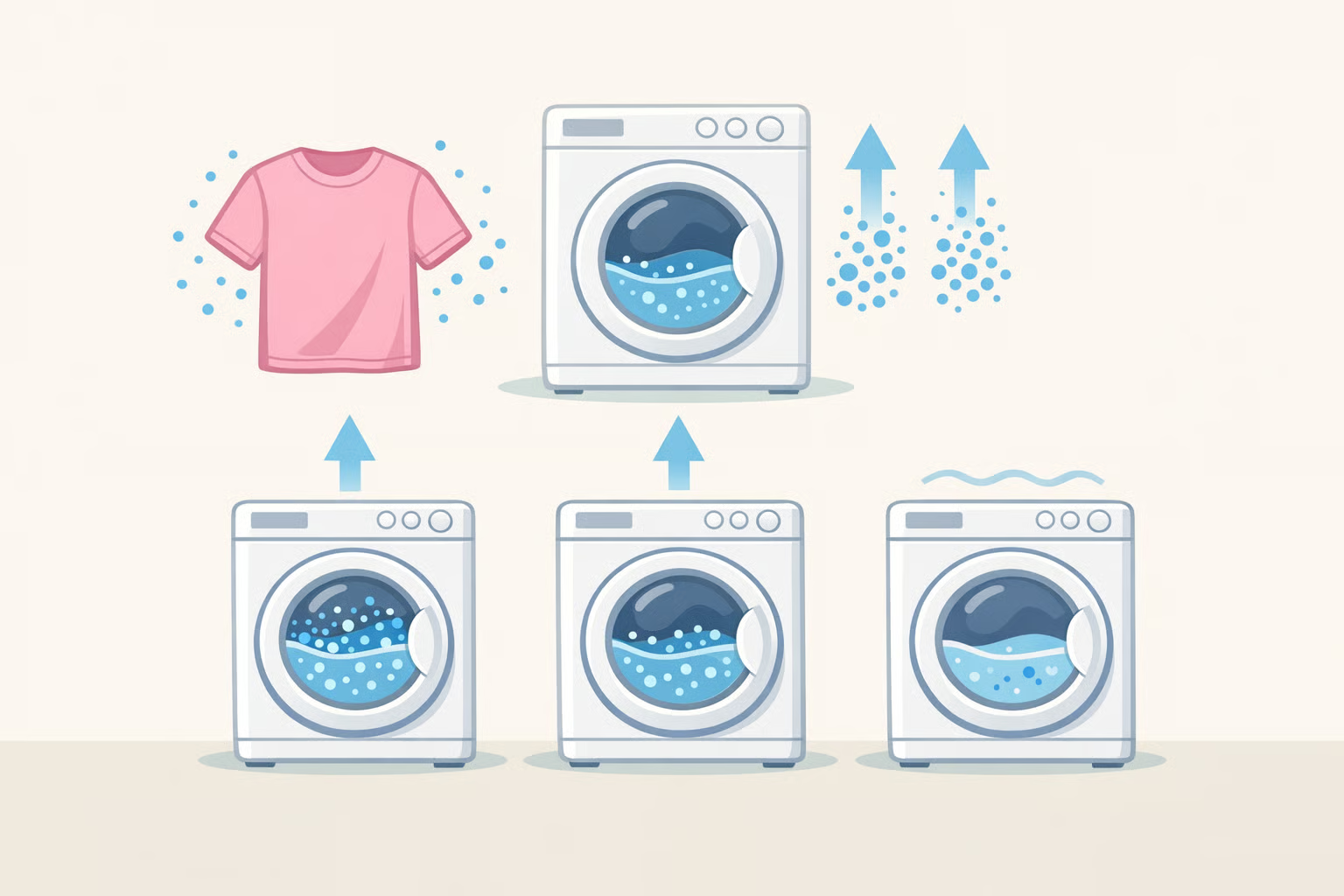
For synthetic garments, the first wash is the highest-stakes event in the machine. A 2024 Frontiers in Environmental Science study tracking 18 polyester and polyester-blend garment types found that 40–60% of total fibrous microplastic emissions across ten wash cycles occurred in the first two washes consistently, across all garment types and washing parameters tested. Shedding decreased steadily after that, approaching a stable baseline at different rates depending on the garment.
The first two washes matter most because that's when shedding is highest. Full loads and short programs reduced release throughout testing, per the same 2024 research so those habits carry value beyond the initial cycles, not just during the shedding peak.
This finding applies specifically to synthetic fabrics. Polyester and polyester blends account for roughly 65% of global fiber production, according to the same study. It does not translate directly to cotton, wool, or linen.
Takeaway: When washing new synthetic garments for the first time, use a full load and a short program both reduce per-item microplastic release during the cycles when shedding is highest.
Rule 6: Fabric softener keeps synthetic clothes in better condition
Tested directly and found to have no measurable effect. The 2024 Frontiers study found that fabric softener had no influence on the amount of fibrous microplastics released from polyester garments during washing. Skipping it on synthetics removes a product cost and a chemical input with no corresponding change in the outcome that most concerns synthetic fabrics in the wash.
Scope note: this evidence is specific to microplastic release from synthetic fabrics. The research doesn't cover softener's effect on cotton hand feel, static in mixed-fiber loads, or long-term fabric longevity. The case for skipping softener on synthetics is direct; the case for eliminating it from all laundry is a broader claim than this evidence supports.
Takeaway: Stop using fabric softener on polyester and synthetic-blend garments. It changes nothing about their shedding behavior.
Rule 7: Stop looking for one perfect laundry setting
The research doesn't support single-variable optimization. Wash temperature, load size, cycle length, frequency, and product choice all interact and the best combination depends on what the load actually needs. The MDPI Sustainability lifecycle assessment found that the best conditions and their environmental performance varied across the eight impact categories studied, and that optimal settings for moderate cleaning efficiency differed from optimal settings for maximum cleaning. No universal best setting exists only the best setting for the job at hand.
This is the practical bridge into how to use all of the above. The decision isn't "what's my best laundry setting" it's "what does this load need?" Everyday clothes need efficient cleaning with minimal environmental cost. Heavily soiled items need cleaning performance, even at the cost of efficiency. Illness-contaminated items need hygiene, even at the cost of everything else.
Your three-tier decision model
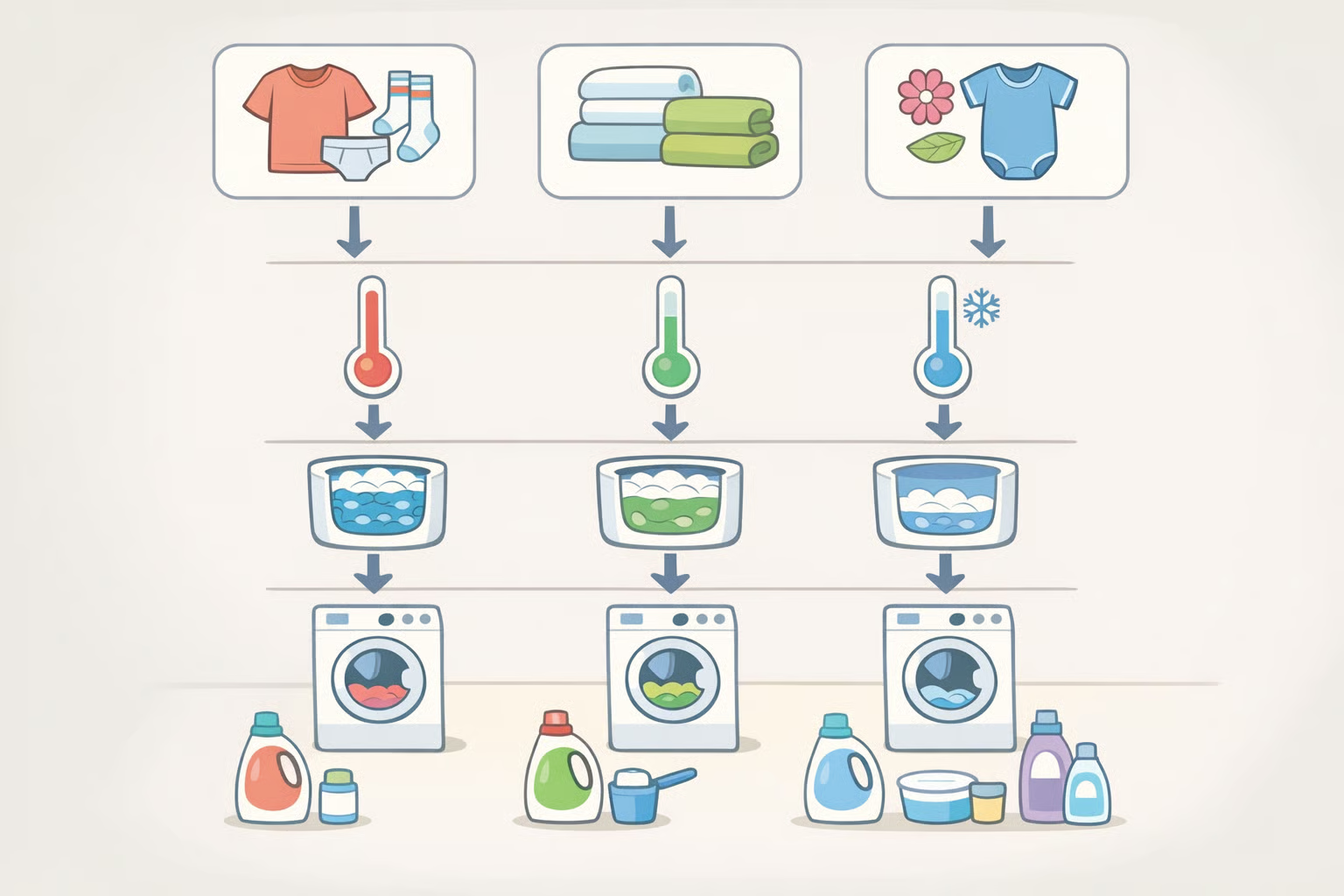
If you only remember one thing, use this.
Everyday laundry (most loads):
- Temperature: cold water
- Load: full drum
- Cycle: short program
- Detergent: enzymatic formula reduces infection risk further with no temperature cost, per the Journal of Applied Microbiology
- Frequency: sort by body contact and activity level, not a blanket rule
- New synthetics: full load, short cycle for the first two washes
- Fabric softener on synthetics: skip it
Heavily soiled loads:
- Temperature: warm or hot improves cleaning performance, per the MDPI Sustainability study
- Load: don't pack the drum; the cleaning efficiency penalty from overloading is meaningful when soil levels are high
- Cycle: longer with higher detergent concentration
Illness-contaminated loads (enteric illness, vomit, fecal matter):
- Temperature: hot water required, not optional
- Add chlorine bleach or dry on high heat; the Journal of Applied Microbiology risk model found these were necessary to approach acceptable thresholds for Salmonella and rotavirus
- Wash separately from routine laundry
- Wash hands immediately after handling contaminated items the same model found hand hygiene at critical handling points reduced infection risk by up to 6 log10, a larger protective effect than any single change in wash parameters
Match the wash to the job
The old defaults weren't wrong for the problem they were designed to solve. They were calibrated for maximum cleaning under maximum-risk conditions, using machines and detergents that no longer set the ceiling for performance.
The shift worth making is simpler than it sounds: treat maximum settings as the exception, not the baseline. Cold water handles routine respiratory-pathogen scenarios under typical North American conditions. A full drum is the single highest-use habit change for most households. Shorter cycles cut energy, water, and microplastic release on lightly soiled loads without sacrificing cleaning results.
Two rules hold firm hot water for illness-contaminated laundry, and real cleaning intensity for genuinely dirty items. Everything else can flex. The practical work is learning to tell the difference before you start the machine.