Best oven temperature for crispy bacon: cook at 400°F
The short answer: 400°F is the best oven temperature for crispy bacon. Standard-cut strips are typically done in 18–20 minutes; thick-cut can run 22–28 minutes depending on how crispy you want them. Start in a cold oven, single layer, foil-lined pan.
The rest of this guide covers the variables that actually change the outcome: thickness, crowding, and when to pull the pan.
What you need before you start
Video of the Day
- A rimmed sheet pan, not a flat cookie sheet, so rendered fat stays contained
- Aluminum foil or parchment paper for lining
- A wire rack or paper-towel-lined plate for draining
- Bacon at refrigerator temperature, not frozen unless you're following the frozen-bacon note in the timing section
Video of the Day
Why 400°F works and when to adjust it
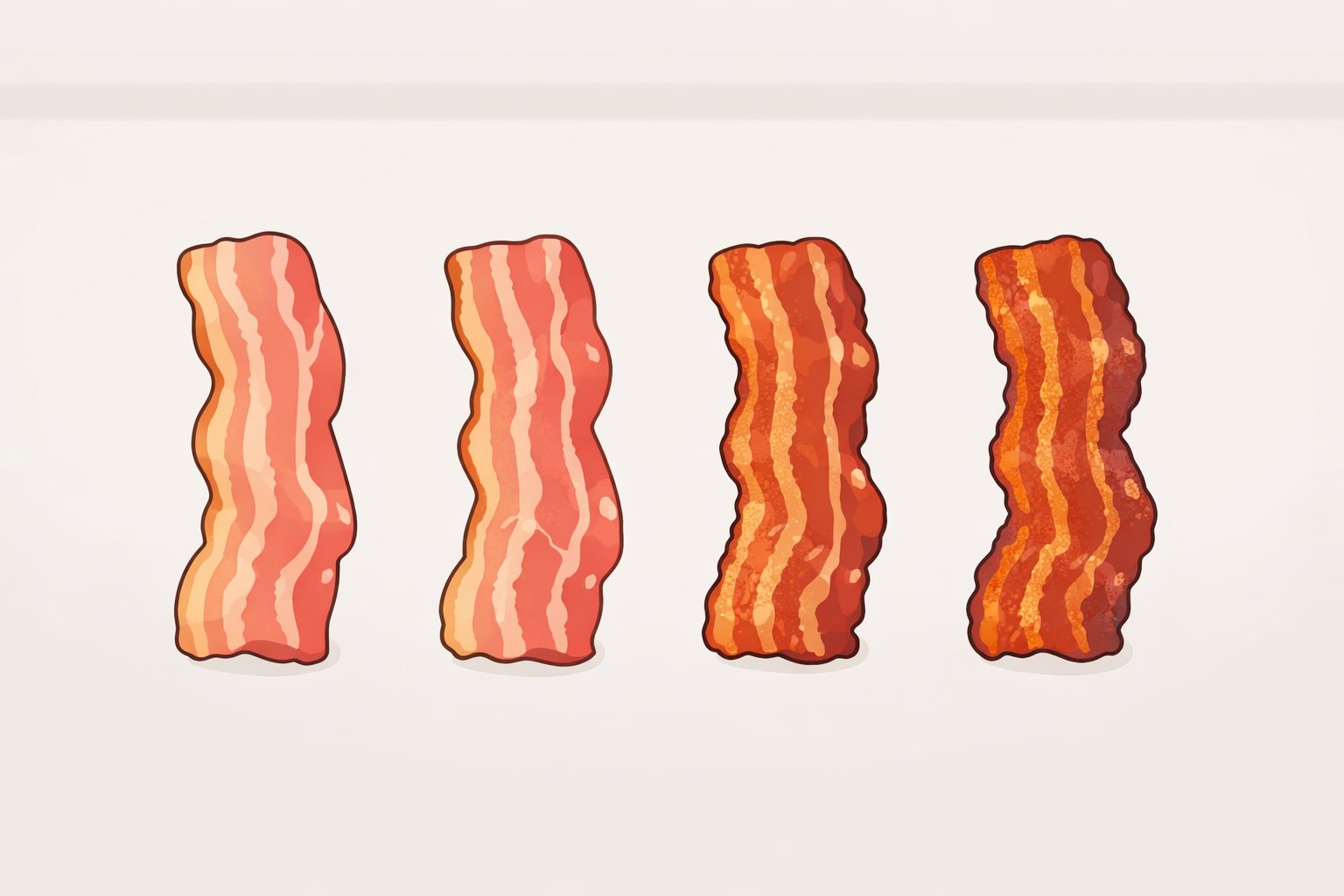
Food & Wine tested several cooking methods last summer and named oven baking the clear winner: evenly crisp, flat strips across a full 10-slice pan with consistent results across multiple tests. Several guides published in 2025 converge on the same number. Stripes & Willows calls 400°F the sweet spot where bacon crisps but doesn't burn. Bradley's Fine Diner tested higher settings and found that 400°F for 20–22 minutes was the better path forward after 450°F singed the strips before the fat had time to render.
It's hot enough to fully render the fat and crisp the meat through including the fatty sections without the narrow timing window you get at higher temperatures. That said, 400°F is the default, not the only option. Here's how the temperature scale maps to texture and cut:
- 375°F Slower fat render, better suited to very thick-cut bacon where the interior needs more time before the exterior darkens. Also the right setting if you want chewy bacon at 12–15 minutes, per Stripes & Willows and Flavor365.
- 400°F The broadest-consensus recommendation. Works for standard and thick-cut alike. The forgiving timing window is the main advantage.
- 425°F Faster cook, extra-crispy results, but the margin between done and overdone narrows. Stripes & Willows puts timing at 15–18 minutes; check early and watch closely.
- 450°F Stripes & Willows includes it as an extra-crispy option at 12–15 minutes, but Bradley's Fine Diner found it too aggressive in their own testing. Treat it as a high-risk option for experienced hands only.
On scorching: Whatever temperature you use, pull the bacon before it burns. Golden color, fully melted fat, and active sizzling not browning edges and smoke are the cues you want. A pan-frying study cited by USDA FSIS found some nitrosamine formation specifically in burned bacon. That data comes from a skillet context, not oven-baking, but the practical takeaway is the same: pull it when it looks done, not a minute after.
One rack position worth knowing: Stripes & Willows notes that moving the pan to a higher oven rack for the final few minutes can push the tops to extra-crispy. Optional, but useful if you want more texture without cranking the temperature.
Step-by-step: how to cook bacon in the oven
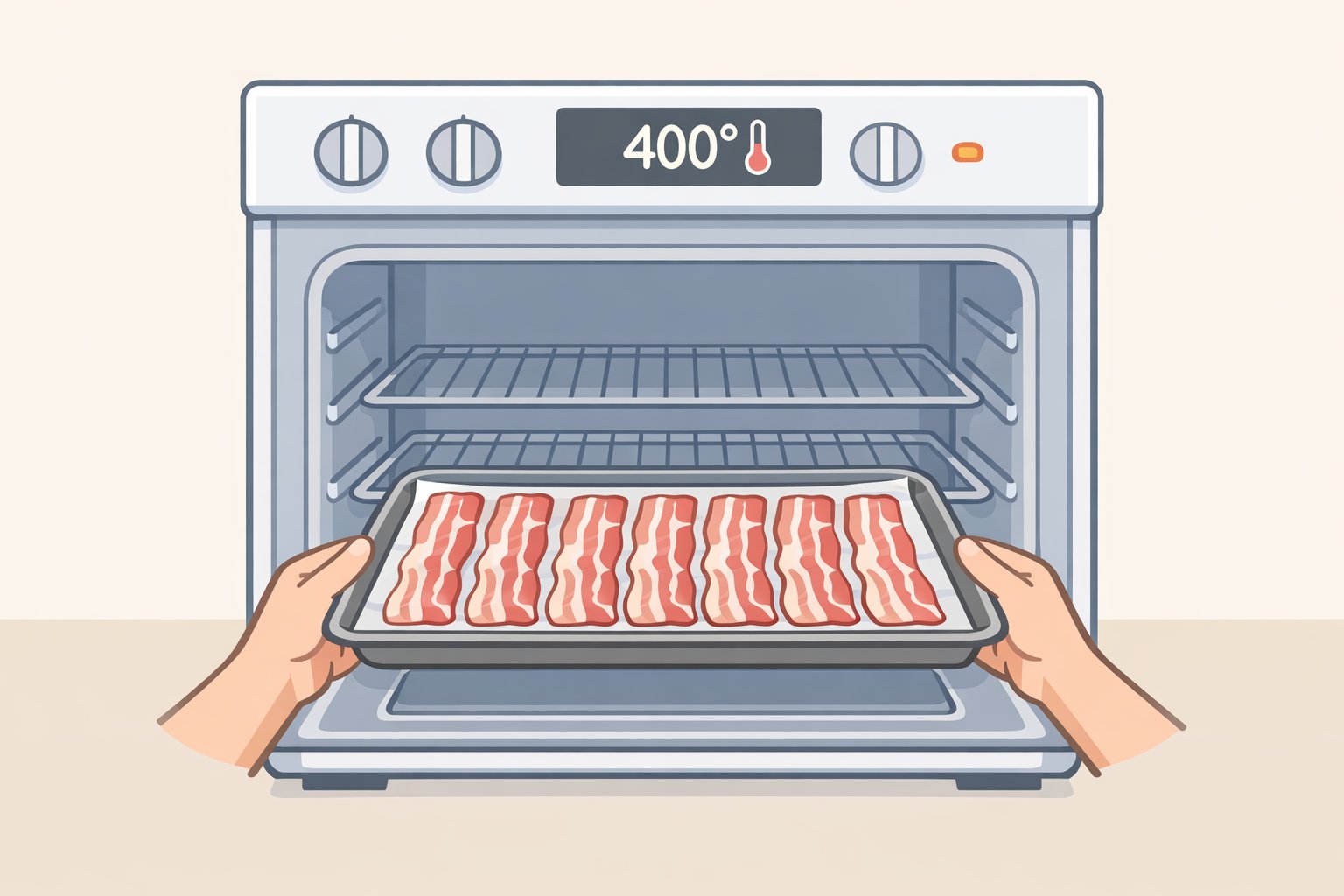
Use this process unless you have a clear reason to change course.
Step 1: Line a rimmed sheet pan with foil. Foil makes cleanup easy and lets the bacon sit in a thin layer of its own rendered fat, which helps the underside crisp. Parchment is a workable alternative; it handles heat up to 450°F, though it may darken at the edges, which is cosmetic and normal (Stripes & Willows). Skip the wire rack. Flavor365 finds it unnecessary and notes that cooking directly on foil produces better texture.
Step 2: Lay bacon strips in a single layer with about a quarter-inch between each. Strips that touch or overlap trap steam and braise rather than roast, leaving flabby, undercooked patches even when surrounding strips look perfectly crisp (Flavor365). If a full pound won't fit in one layer, use two pans. Crowding one pan doesn't save time; it just guarantees uneven results.
Step 3: Place the pan in a cold oven, then set to 400°F. Load the bacon before turning on the heat. As the oven climbs to temperature, the fat renders gradually rather than hitting a sudden blast, which reduces shrinkage and produces flatter, more evenly cooked strips. Flavor365 calls this the best approach; Stripes & Willows reports strips that come out "flat and even" over 20–25 minutes using a cold start.
Preheated oven option: Food & Wine's test kitchen preheats to 400°F before the bacon goes in and rated their results 10/10. Both methods work. Cold-start is more forgiving; the gradual temperature rise widens the window before overcooking becomes a risk. For thick-cut or a first attempt, start cold. Use a preheated oven only if you know your oven well and need to save time.
Step 4: Start checking at 15 minutes, then every 2–3 minutes after that. Bacon is done when it's golden, the fat looks fully melted, and the strips are sizzling but not smoking (Stripes & Willows). Exact timing depends on cut; the table in the next section has the numbers.
Step 5: Transfer immediately to a wire rack or paper-towel-lined plate. Don't let cooked bacon rest in the pooled fat on the sheet pan. Sitting in rendered grease softens it quickly (Flavor365). Give the strips about a minute before serving; Bradley's Fine Diner notes that bacon firms as it cools, so texture continues to set even after it's off the heat. What feels slightly underdone at the moment of pulling often firms into exactly right by the time it reaches the plate.
How long to cook bacon in the oven: timing by cut
Slice thickness is the single biggest factor in cook time, according to Flavor365. Pan material, oven brand, minor temperature differences all of those matter far less than whether you're working with thin, standard, or thick-cut strips. The numbers below are for the cold-start method at 400°F. If starting in a preheated oven, subtract roughly 2–3 minutes from the elapsed totals, since the cold-start figures include the oven's warm-up period.
Quick-reference timing (cold-start, 400°F):
| Cut | Start checking | Typical done range | Extra crispy range |
|---|---|---|---|
| Thin-sliced | 13 min | 15–18 min | 18–21 min |
| Standard-cut | 15 min | 18–20 min | 20–23 min |
| Thick-cut | 20 min | 22–25 min | 25–28 min |
Sources: Bradley's Fine Diner; Stripes & Willows; Flavor365
For thick-cut specifically: Consider dropping to 375°F and flipping the strips halfway through. The lower temperature gives the fat more time to render before the exterior darkens; the flip ensures even browning on both sides (Stripes & Willows; Bradley's Fine Diner). For extra-crispy thick-cut, Flavor365 also suggests flipping the strips about two-thirds of the way through cooking time, which promotes even browning on both sides without requiring a temperature change.
Don't judge doneness by color alone. USDA FSIS notes that cured pork can remain visibly pink even when fully cooked, because curing agents fix that color regardless of internal temperature. Use visual and textural cues instead: melted fat, golden color, active sizzle.
Cooking from frozen: It's safe to cook bacon directly from the freezer; USDA FSIS confirms this. Expect cook time to nearly double, per Bradley's Fine Diner. Separate the strips as they thaw in the oven rather than trying to arrange them while frozen. Cold-start works particularly well here since the bacon has time to thaw and render as the oven heats, rather than seizing up against an immediate blast of heat.
Storage, reheating, and what comes next
Cooked bacon keeps in an airtight container in the refrigerator for up to five days (Flavor365). To reheat without losing crispness, use a 350°F oven for 2–3 minutes. The microwave softens it (Stripes & Willows).
Cooking for a crowd, the sheet-pan method scales cleanly. Use two pans side by side, rotate them front-to-back halfway through, and expect timing to stay roughly the same as a single pan. The key is keeping each pan at a single layer; stacking pans in a crowded oven can trap heat unevenly, so leave adequate space between racks.
Once this method is solid, glazed and candied bacon is a short step away. Same setup, same temperature, with a brush of something sweet applied in the final few minutes. Stripes & Willows recommends baking at 375°F for glazed variations to keep the sugar from burning before the bacon is done the fundamentals don't change, the finish does. That same logic applies to seasoned or spiced variations: add whatever you're using in the last 5–8 minutes of cook time so it caramelizes without scorching.
Spacing before the bacon goes in and draining immediately when it comes out are the two steps that most determine the final texture. Get those right, and the temperature handles the rest.