Gordon Ramsay Mayo Trick for Crispy Pork Chops: Full Guide
A thin coat of mayonnaise replaces the usual flour-and-egg station, gives breadcrumbs something to grip, and produces a crust that crisps in the oven without babysitting. That's the Gordon Ramsay mayo trick for crispy pork chops, and it works the same way in NYT Cooking's tested version of the recipe. This guide follows NYT's method because it's built around boneless chops at ¾ to 1 inch thick, with specific bake times and a 35-minute total window from prep to plate (NYT Cooking). By the end, you'll know how to build the crumb coating, apply the mayo correctly, and pull the chops at the right temperature without drying them out.
Prerequisites: Boneless pork chops at ¾ to 1 inch thick. A zipper bag or wide shallow container for the crumb mix. A rimmed sheet pan. A meat thermometer not optional.
Chop selection: what to buy and what to avoid
Video of the Day
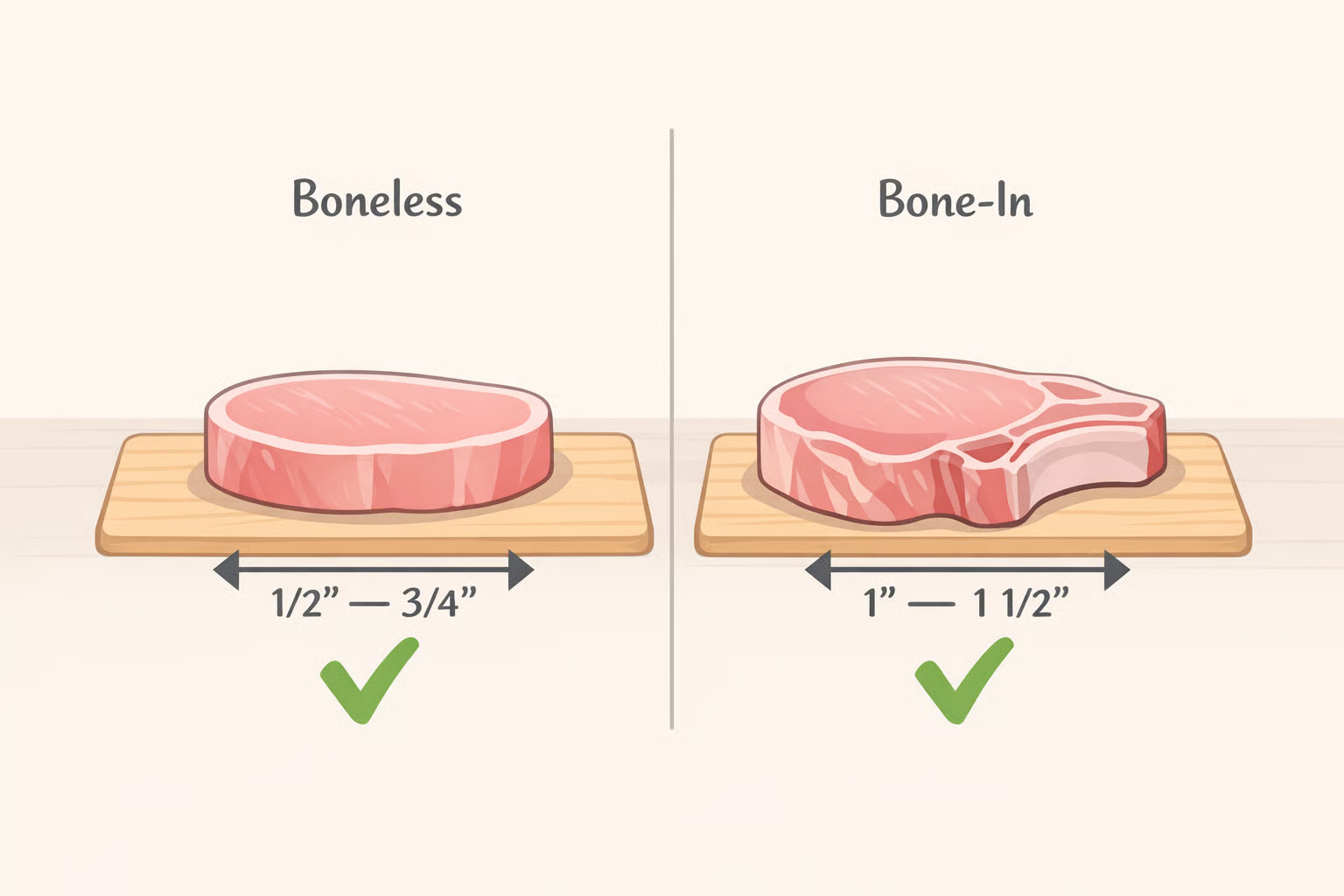
Cut thickness determines everything downstream: bake time, crust behavior, and whether the interior stays moist.
Boneless, ¾ to 1 inch thick. This is what NYT's recipe is calibrated for. The extra thickness gives the crumb coating time to crisp and color before the meat runs out of time. Thinner chops cook through before the crust develops properly.
Bone-in chops work differently. Ramsay's Shake 'n Bake video, posted about two months ago, uses ¼-inch bone-in chops (YouTube), which cook much faster and are pan-fried rather than baked. If that's what you have, reduce your cook time significantly and check temperature early. This guide isn't built for that cut.
On breadcrumbs: Use plain dried breadcrumbs as the base. Panko will give a coarser, crunchier exterior and works with the same method, but the spice-to-crumb ratio in NYT's recipe is calibrated for standard dried crumbs. If you swap in panko, the texture shifts; the technique stays the same.
Video of the Day
How the Gordon Ramsay mayo trick for crispy pork chops actually works
Spreading mayonnaise on the chop before dredging isn't a gimmick. It's a practical shortcut with a mechanical reason behind it.
Mayo is a pre-emulsified mixture of egg yolks, oil, and acid. As a binder, it does what an egg wash does, but it's thicker and tackier, which means crumbs adhere more heavily and unevenly. That unevenness matters. As Serious Eats explains in its Food Lab breakdown of breading mechanics, the nooks and crannies in a craggy breadcrumb coating vastly increase surface area, producing more crunch per bite than a smooth, uniform layer. A generous mayo coat encourages exactly that kind of irregular adhesion.
Ramsay described the visual result in a video from about a year ago: the chop develops a deep color and the coating takes on a texture resembling small pork scratchings as it cooks (YouTube). NYT's recipe frames the mayo's role more simply: it helps lock in moisture and adds flavor (NYT Cooking). Both descriptions are consistent with what the method produces in practice.
Worth being clear about what the sources don't show: there's no controlled comparison between mayo and a standard egg wash for this specific application. The honest case for mayo is that it consolidates the binder and fat into a single ingredient, simplifies the prep, and delivers consistent results across two independent tested recipes. That's a real advantage. It's not a proof of universal superiority.
The critical gotcha: Keep the layer thin and even. A thick mayo coating won't dry out during baking. It stays wet beneath the crumbs and you end up with a soft, greasy crust. Think coating, not slathering.
Step 1: build the crumb coating and apply the mayo
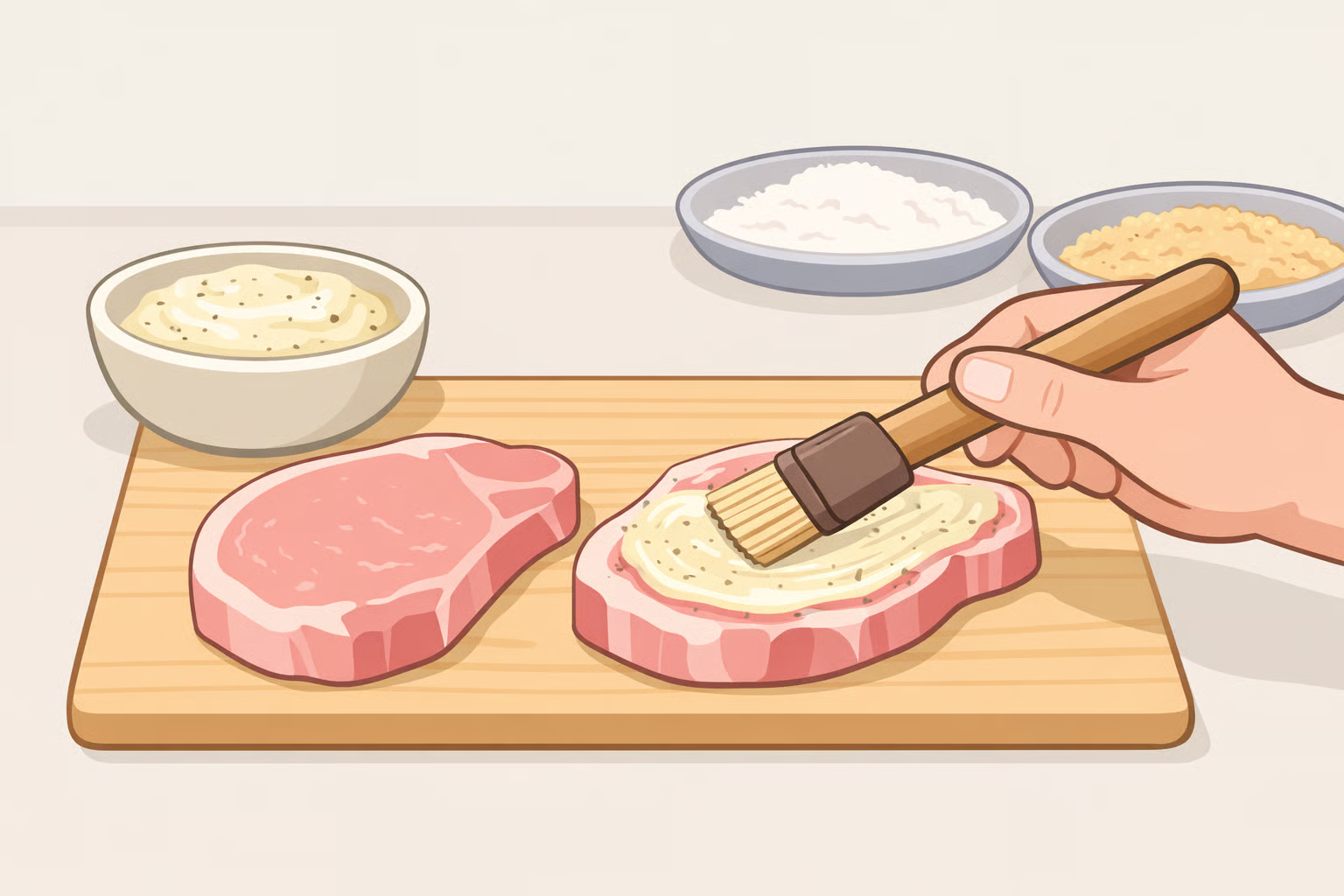
Use NYT's breadcrumb ratio as the base. It gives you enough coating for four chops without burying the meat.
The crumb mixture: ¾ cup plain dried breadcrumbs, 1 tablespoon paprika, 2 teaspoons each of onion powder and kosher salt, 1 teaspoon each of garlic powder and ground oregano, 2 teaspoons sugar, and 1 teaspoon celery salt (NYT Cooking). Ramsay's version uses a nearly identical spice blend but swaps standard paprika for smoked and skips the sugar (YouTube). Stick with NYT's ratio; the sugar is doing real work on color and browning. Swap in smoked paprika if you want more depth.
1. Mix the dry coating. Combine all dry ingredients in a zipper bag or wide shallow container. Shake or stir until the spices are evenly distributed through the crumbs. This is the only seasoning pass for the coating, so don't rush it.
2. Season the mayo. Add a pinch of salt and pepper to ¼ cup of mayonnaise and stir to combine. Both Ramsay and NYT season the mayo before applying it (YouTube; NYT Cooking). This puts flavor in the layer closest to the meat, not just the outer crust.
3. Coat the chops one at a time. Use a brush or the back of a spoon to spread a thin, even layer of mayo across every surface: top, bottom, and sides. Exposed edges with no mayo will have bare spots in the crust.
4. Dredge and shake. Transfer the coated chop into the bag of crumb mixture. Seal and shake firmly until fully covered. Do this one chop at a time; coating them all at once mats the crumbs and produces uneven results (NYT Cooking). Set each finished chop on the sheet pan before moving to the next.
If crumbs aren't sticking to the edges: the mayo is too thin in those spots. Add a little more with a fingertip or brush before re-dredging. Don't try to press crumbs onto a dry surface.
Step 2: bake to the right temperature
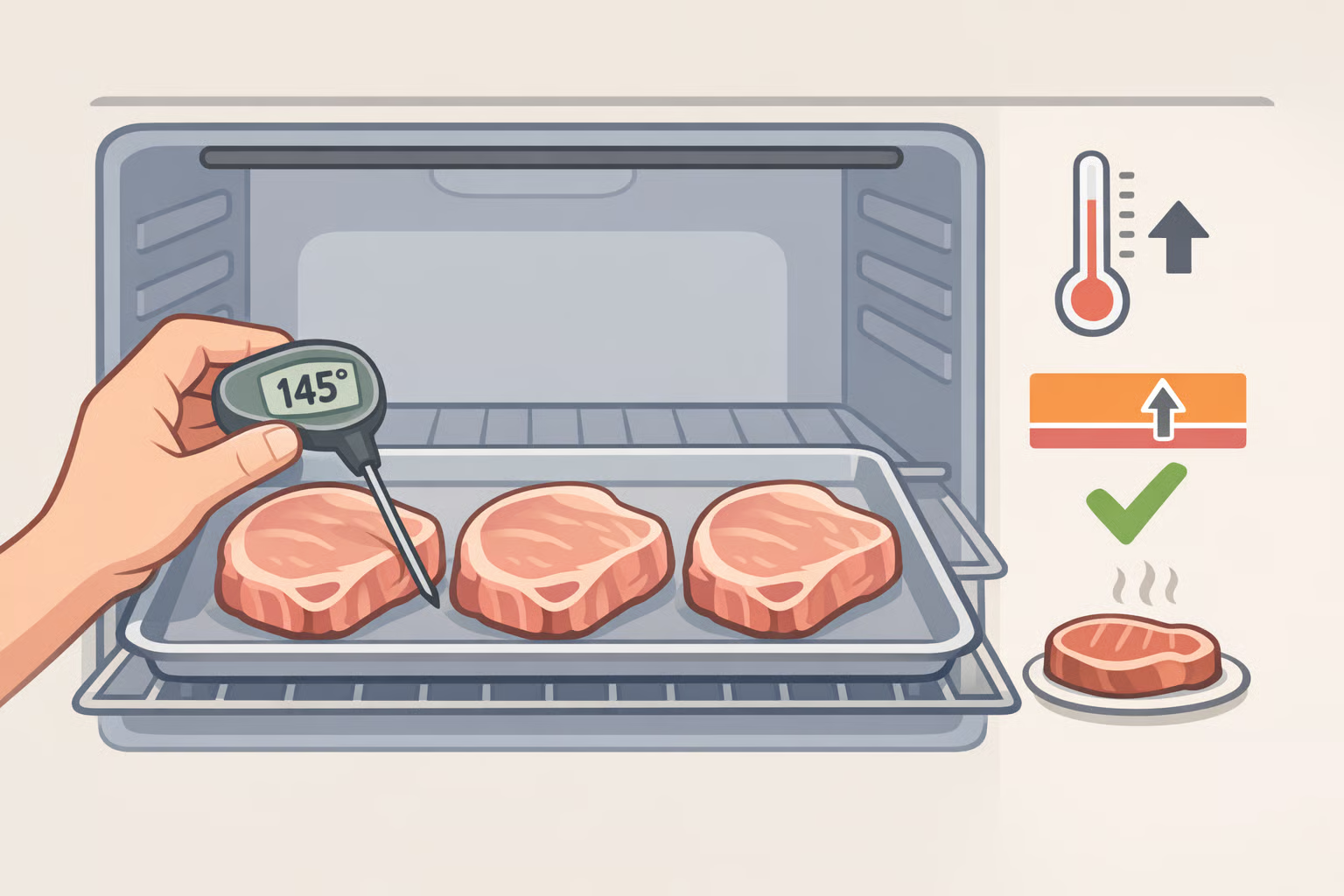
Getting the crust crisp while keeping the interior moist is a temperature problem with a straightforward solution.
1. Preheat the oven to 400°F. Don't skip this. Chops placed in a cold oven start cooking before the crust sets, and the coating softens rather than crisps. NYT's tested bake times assume a fully preheated oven (NYT Cooking).
2. Space the chops on the sheet pan. Leave room between them. Crowded chops trap steam, and steam is what ruins a breadcrumb crust.
3. Bake 15 to 18 minutes, checking at 15. NYT's tested range for ¾- to 1-inch boneless chops (NYT Cooking). Ramsay's visual cue, a deep brown color with a texture resembling small pork scratchings (YouTube), is a useful secondary signal, but not something to rely on alone. Probe the thickest part of each chop.
4. Pull at 140°F, not 145°F. NYT is explicit on this: remove the chops from the oven at 140°F, then rest for five minutes (NYT Cooking). Carryover cooking brings the temperature up to the USDA-recommended 145°F during the rest. Wait for the oven to finish the job at 145°F and you'll overshoot every time.
5. Rest for five minutes before cutting. On the sheet pan or a wire rack. Non-negotiable.
Troubleshooting:
- Crust isn't browning: The oven probably wasn't fully preheated, or the chops are too close together. Give the oven another five minutes and space them out before the next batch.
- Coating is sliding off: Mayo was too thin or unevenly applied. Work one chop at a time and don't rush the dredging step.
- Chop is dry inside despite correct temperature: Check your thermometer calibration. Home ovens often run hot; try pulling at 138°F and resting the same five minutes.
What comes next
NYT's version takes 35 minutes start to finish (NYT Cooking) and holds a 5.0 rating from 908 reviews. It's weeknight-appropriate with no special equipment. If that's all you needed, you're done.
For those who want to tweak: panko instead of plain dried crumbs gives a coarser, crunchier exterior. The same mayo-first method transfers cleanly to chicken cutlets at a similar thickness, same temperature, same logic. If you want more smoke in the crust, swap standard paprika for smoked. If your chops are running pale, your oven temperature is the first thing to check, not your technique.
For a more involved plated version, Ramsay pairs his with scallion potatoes and an apple cider pan sauce (YouTube). NYT's version calls for applesauce on the side, which delivers the same contrast of sweetness and acid against the rich crust with considerably less work (NYT Cooking).