How to Make Fajitas More Flavorful: The Soy Sauce Marinade Trick
The fastest way to make fajitas more flavorful is to swap your lime-heavy marinade for a short soy sauce soak. That's the whole thesis. The rest of this guide explains why it works, gives you the exact formula, and walks through the method step by step including the one prep move most home cooks skip that determines whether you get char or steam.
Skirt and flank steak are thin cuts with a high surface-to-interior ratio. That geometry matters: the surface is where a marinade actually operates. America's Test Kitchen soaked chicken breasts in four different marinades for 18 hours, then trimmed the exterior well past the depth of any visible penetration and tasted the interior against unmarinated chicken. Tasters found no distinguishable flavor differences. A companion test soaked beef short ribs in red wine for intervals from one hour to 18 and measured the resulting band of color; after the full 18-hour window, the wine had moved less than 1 millimeter into the meat (Cook's Illustrated).
Long soaks don't build flavor deeper into the meat. They do carry real risk: acidic marinades left too long turn the outer layer mushy rather than tender, which destroys exactly the surface texture fajitas depend on. Skirt and flank are already well-suited to surface-driven cooking. The trick is choosing a marinade that maximizes what the surface can do.
Soy sauce addresses all three variables that matter for fajitas: juiciness, browning, and savory depth. Here's how each works, and exactly how to apply them.
Why soy sauce works better than a lime marinade
Video of the Day
Salt does more than season meat. It draws moisture in through osmotic pressure and restructures the protein matrix, creating gaps that hold extra water during cooking. That's the brining mechanism, and it's why salt-forward marinades, what America's Test Kitchen calls "brinerades," produce noticeably juicier results than acid-heavy alternatives. ATK's benchmark is roughly 1½ teaspoons of salt per 3 tablespoons of marinade liquid, a concentration high enough to function as both a marinade and a brine simultaneously.
Soy sauce earns its place by doing that job while adding something plain salt can't: glutamic acid. According to America's Test Kitchen, soy sauce contains this compound naturally, and it boosts the meat's own savory character. The result is beef that tastes more intensely like itself. At fajita marinade quantities three tablespoons, not a stir-fry's worth soy contributes depth and savoriness rather than any identifiable flavor of its own. Think of it the way a good fond works in a pan sauce: you don't taste the source, you taste what it does.
The honey or sugar in the formula isn't decorative. ATK notes that sweeteners actively promote browning during high-heat cooking, accelerating the Maillard reaction at the surface contact points. That's the char on the edges that makes fajita strips worth eating. Soy brings the juiciness and savory depth; the small amount of sugar brings the crust.
One practical note on aromatics: because the salt concentration in a soy-based marinade is high, it can inhibit the meat from absorbing other added flavors unless those ingredients are used generously. ATK's testing found this requires at least 3 to 4 cloves of garlic or a full tablespoon of chopped herbs. Use the full amount of garlic in this formula, or leave aromatics out entirely. A half-measure tends to get lost.
Video of the Day
How to make fajitas more flavorful with a soy sauce marinade
What you need before starting
Skirt steak or flank steak (1 to 1.5 lbs), soy sauce, neutral oil (canola or vegetable), honey or sugar, garlic, a zip-top bag or shallow dish, and a cast-iron skillet or grill. If using flank steak, a fork or knife for scoring. That's it.
The marinade formula (for 1 to 1.5 lbs)
- 3 tablespoons soy sauce
- 1 tablespoon neutral oil
- 1 teaspoon honey or sugar
- 2 to 3 cloves garlic, minced
- Optional: ½ teaspoon cumin
This is built in line with ATK's salt-forward approach to marinades, which prioritizes a high salt concentration to drive juiciness alongside flavor.
Step 1: Choose your cut and prepare it
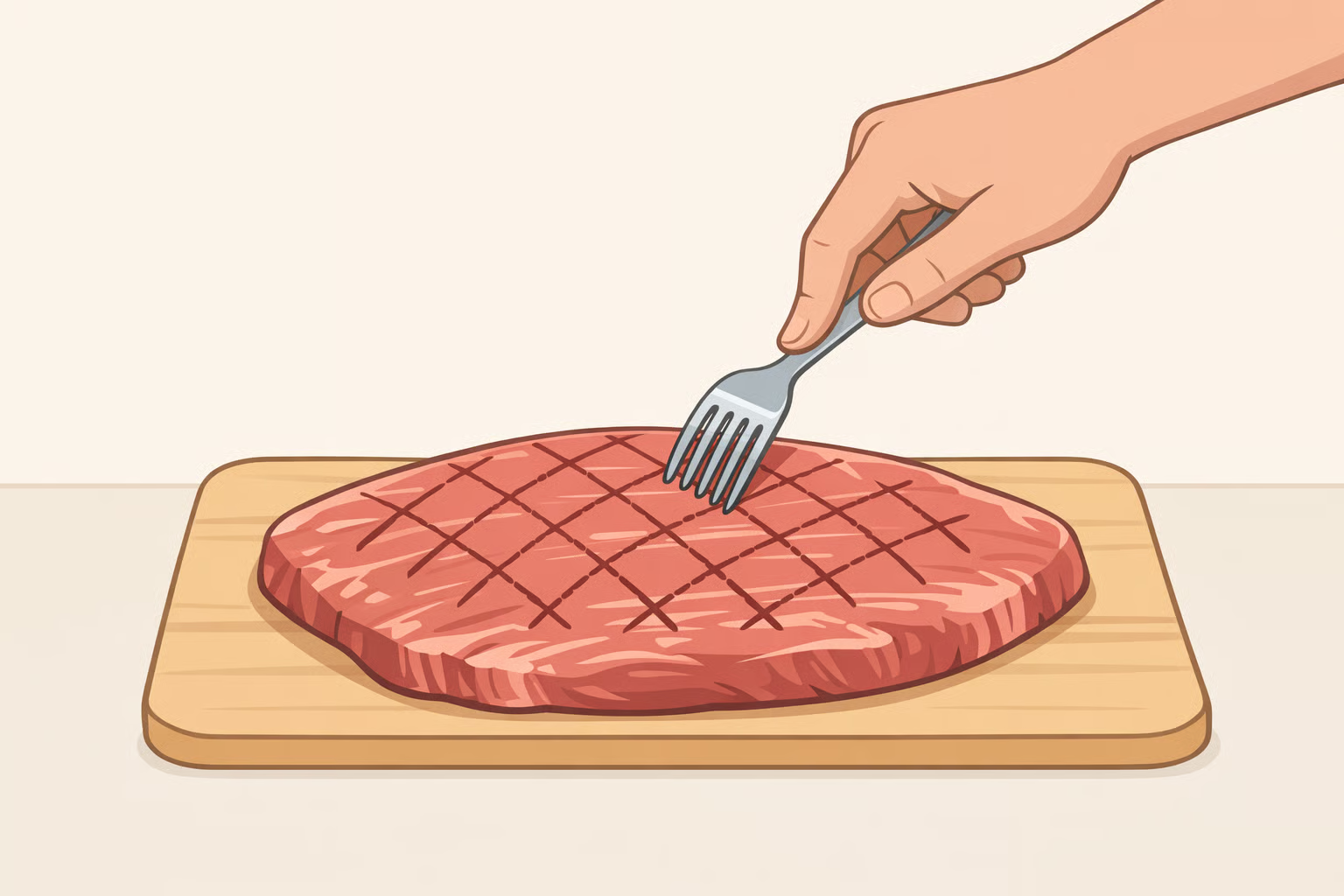
Skirt steak is thinner, cooks faster, and goes straight into the marinade. Flank steak is thicker and benefits from scoring before it goes in. ATK specifically recommends pricking or scoring thicker cuts like flank to help the marinade reach as much surface as possible. Run a fork or knife across the surface in a crosshatch pattern, then proceed. Skip this with skirt.
Step 2: Combine the marinade and refrigerate the meat
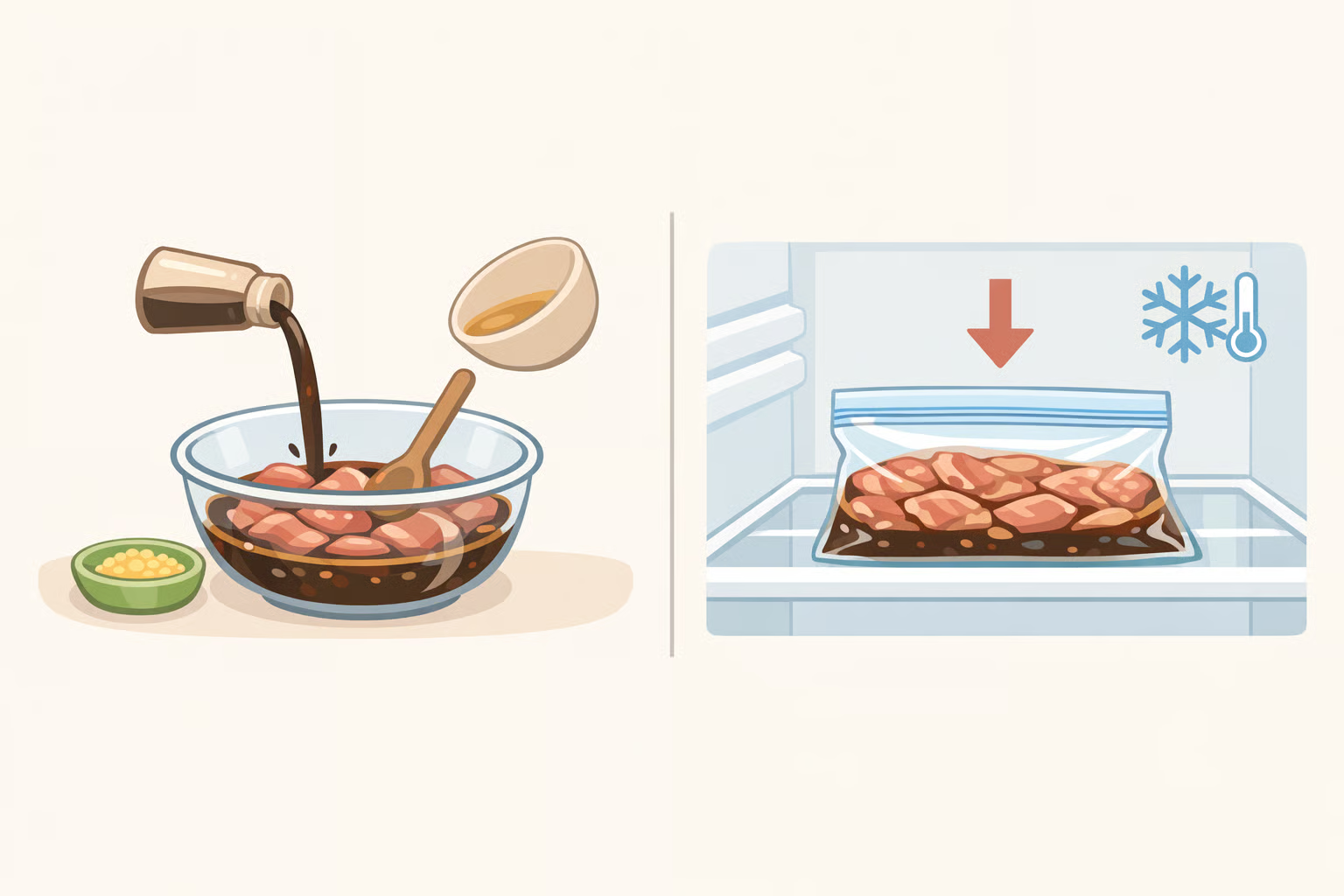
Mix soy sauce, oil, honey, and garlic in the bag or dish. Add the meat and press out excess air if using a bag. Refrigerate immediately. Raw meat left at room temperature enters the bacterial danger zone (40 to 140°F) quickly, where bacteria spread rapidly ATK is clear on this. Flip the bag or turn the meat once halfway through to keep the coating even.
Step 3: Marinate 30 to 60 minutes
That's enough time to season the surface thoroughly, which is where the marinade does its work. Because flavor penetration stalls within a few millimeters regardless of soak time, a longer marinade is unlikely to buy you much and if your marinade contains acid, extended contact starts working against you. Thirty minutes is sufficient. An hour is the ceiling.
Step 4: Wipe off most of the marinade before cooking
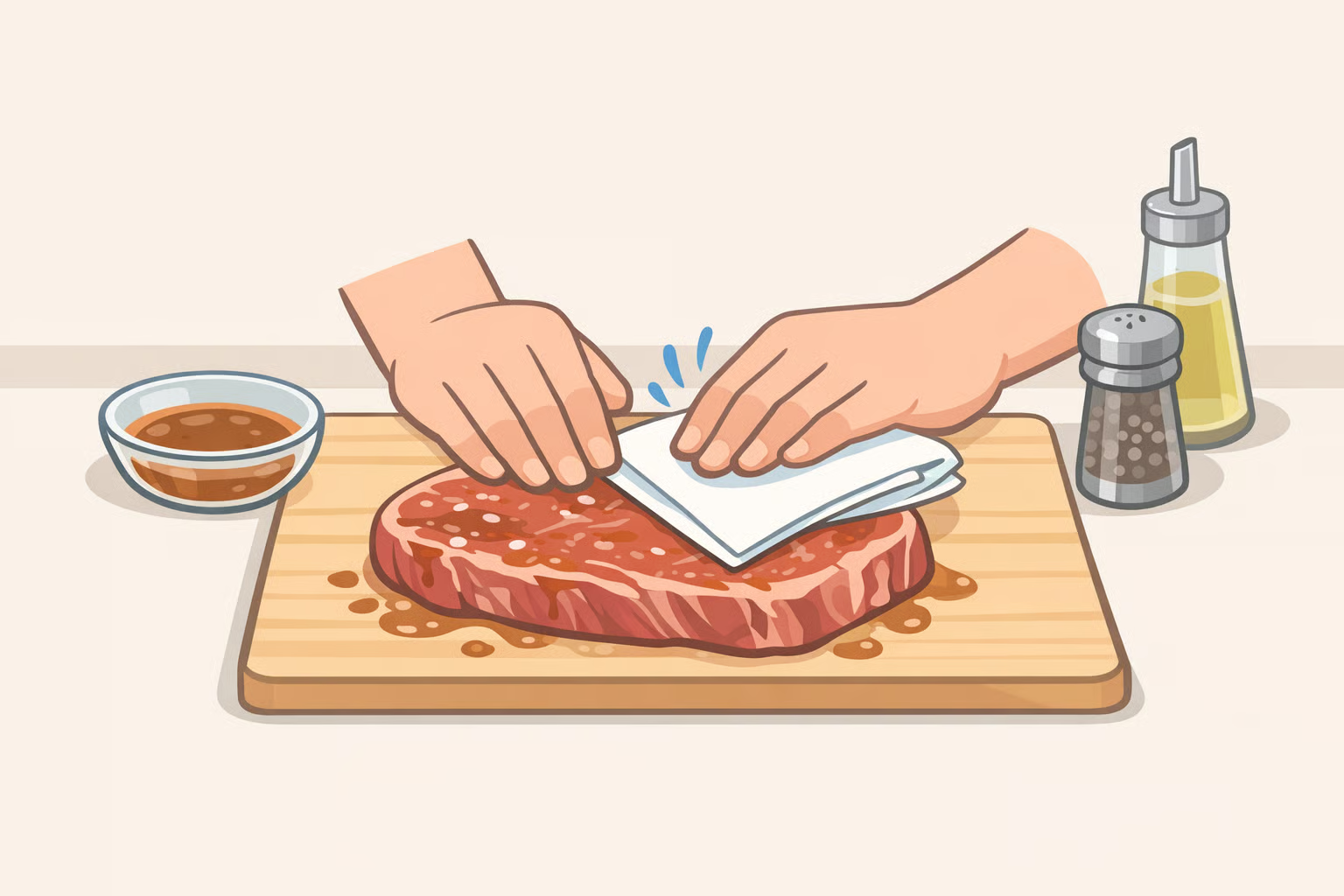
This step is where a lot of otherwise good fajitas go sideways. Excess marinade on a hot skillet creates steam and prevents browning; on a grill, it causes flare-ups. ATK recommends wiping off most of the excess while leaving a thin surface coating that's where the soy's flavor contribution lives. Don't rinse the meat; just wipe it.
Discard the used marinade entirely. Once raw meat has soaked in it, it's contaminated with raw meat juices and unsafe to brush on during cooking or use as a sauce. If you want something to drizzle at the end, mix a small separate batch before you start.
Step 5: Cook over very high heat, and don't crowd the pan
Get the skillet or grill as hot as possible before the meat goes on. For cast iron, you want it smoking; a drop of water should evaporate on contact. For a gas grill, that means full heat with the lid closed for at least five minutes before cooking.
For a skillet, work in batches. A full pound of steak in a 12-inch pan will drop the surface temperature enough to steam rather than sear. Cook in two passes if needed, and give the pan a moment to recover heat between batches. The honey in the marinade will help the surface caramelize quickly once the pan is truly hot. That's the payoff: dark, slightly charred edges and a surface with real texture.
Step 6: Rest briefly, then slice against the grain
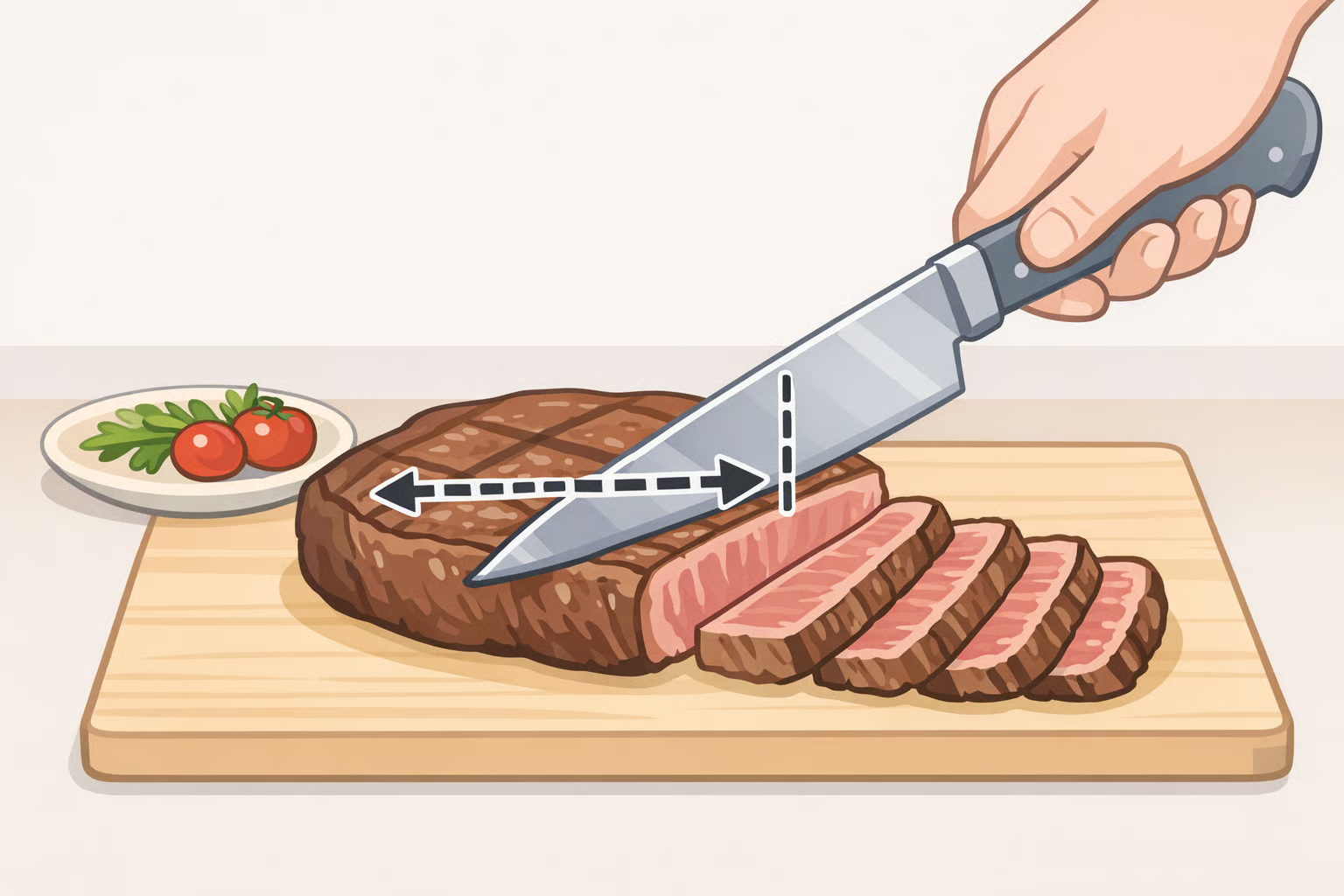
Two to three minutes of rest is enough. Then identify which direction the muscle fibers run and cut perpendicular to them. This shortens the fibers mechanically and makes both cuts easier to chew. Skirt steak's grain is wide and obvious; flank's is subtler, so take a second to look before committing.
Squeeze fresh lime over the sliced meat at the table. Lime's contribution is brightness and acidity on the palate, and it delivers that better on cooked meat than it ever does dissolved into an overnight soak.
Common fajita marinade mistakes
- Don't over-acid. Citrus juice, vinegar, wine, yogurt, and buttermilk all work only on the meat's surface, and if left too long, they turn that layer mushy rather than tender. For thin, fast-cooking cuts, that means a degraded crust and poor browning.
- Don't use bottled salad dressing. High acidity, stabilizers, and gums mean it produces mushy meat and off flavors, not a shortcut.
- Don't count on enzymes. Pineapple and papaya contain proteolytic enzymes that can break down collagen, but like acids, their reach is confined to the surface and with too much contact time, they produce the same mushy result.
- Don't reuse spent marinade. It's contaminated with raw meat juices and unsafe to use as a baste or finishing sauce (ATK).
- Don't skip the wipe. Wet meat doesn't brown. Not optional.
Skirt vs. flank: which to buy
Both cuts work with this method, but they cook differently enough that the choice matters. Skirt steak is thinner, with a looser, more open grain that absorbs surface seasoning aggressively. It cooks fast two to three minutes per side over high heat and has a richer, beefier flavor. The tradeoff is that it's less forgiving: a minute too long and it's tough.
Flank steak is denser and more uniform in thickness, which makes it easier to cook evenly. It benefits from scoring and benefits more from the full 60-minute marinade window because there's more surface to work. Slice it thinner than you think necessary the grain is tighter, and thicker slices will feel chewy regardless of how well you cook it.
Either way: score flank, skip that step with skirt, keep the soak to an hour, wipe the surface before cooking, use very high heat, and finish with fresh lime. The core method is the same for both; the cut just changes your timing.