How Much Laundry Detergent to Use Per Load Size
Most medium loads need about 1 to 1.5 ounces of laundry detergent. A shot glass full. By the end of this guide, you'll know the correct amount for your load size, understand why filling the cap to its brim works against you, and have a simple test you can run tonight to find out whether you've been overdosing for years.
The specific habit worth breaking: treating the detergent cap like a scoop. A standard liquid cap holds about 2 ounces, per CNET. Brahim Agzoul, acting housekeeping manager at Kasbah Tamadot, a five-star resort whose linens and towels are its calling card, says roughly 1 ounce is sufficient for most medium loads of 12 to 15 pounds (CNET reported in April 2026). Consumer Reports' laundry lab, which has rated more than 80 detergents, puts the figure at 1.5 ounces for an average load and specifically warns that the washer dispenser's max-fill line marks the machine's capacity ceiling, not an optimal cleaning dose (Consumer Reports Buying Guide, updated February 2025).
Those numbers aren't fixed rules. Detergent concentration, machine type, and local water hardness all shift the math. Every expert points in the same direction, though: less soap than you're probably using.
Why using too much laundry detergent is bad for clothes
Video of the Day

Agzoul is direct on this: "It's a common misconception that more detergent equals cleaner clothes. In reality, excess soap lingers in fabrics, which could cause skin irritation" (CNET). An overloaded washer compounds the problem. When clothes can't circulate freely, neither the detergent solution nor the rinse water moves through the fibers properly, and the resulting residue can trigger itching or rashes, particularly for anyone with allergies or sensitive skin (Consumer Reports, updated April 2025).
Rich Handel, Consumer Reports' lead laundry lab engineer, is equally blunt: he would never use more than the minimum recommended amount for a medium load, because concentrated formulas leave residue on clothes far more readily than older products did (Consumer Reports, updated March 2025). The machine itself isn't immune either. "Over time, residue can build up inside the machine," Agzoul notes, adding that special detergents designed for machine cleaning help prevent this (CNET).
Water hardness is another variable worth checking. Agzoul points out that ignoring local water hardness levels can cause fabrics to look dingy (CNET). If clothes consistently look dull despite regular washing, water hardness is worth investigating before reaching for more soap.
Signs of overdosing:
- Clothes smell strongly of detergent after washing
- Fabric feels stiff or slightly starchy after drying
- Skin irritation or itching after wearing freshly washed clothes
- Whites look flat or dull over time
Video of the Day
How much laundry detergent to use for a medium load
Prerequisite: Check whether your detergent is standard or concentrated. Concentrated formulas, often labeled "2x" or "3x," require proportionally less than the figures below. When the label is ambiguous, start at the lower end and adjust up only if cleaning results are genuinely poor, not preemptively.
Step 1: Stop pouring to the brim. The cap is a measuring tool. Its rim is not a target. Use the graduated markings printed inside to pour to a specific line rather than eyeballing it.
Step 2: Start with 1 to 1.5 ounces for a medium load. A shot glass holds about 1.5 ounces and is the most reliable low-tech reference (Consumer Reports, updated April 2025). Agzoul's 1-ounce figure and Consumer Reports' 1.5-ounce figure aren't contradictory; they reflect differences in detergent concentration and machine type. Both fall well short of a full 2-ounce cap. Start at 1 ounce and nudge higher only if results are genuinely unsatisfactory after a few loads.
Dosing by load size (Consumer Reports, updated April 2025):
- Small load (drum about half full): under 1 ounce
- Medium load (drum three-quarters full): 1 to 1.5 ounces
- Large or heavily soiled load: double the medium amount
Step 3: Ignore the dispenser's max-fill indicator. That marker shows the maximum amount of detergent the machine can physically handle without overflow, not a cleaning recommendation (Consumer Reports, updated April 2025). Using it as a target means overfilling by design.
Step 4: Run the half-dose test tonight. If you've been filling a full 2-ounce cap, cut to one ounce on the next load. If clothes come out smelling fresh and looking clean, that's confirmation you've been overdosing (CNET). It costs nothing to try.
Step 5: Give clothes room to move. Even precise dosing can't compensate for an overloaded drum. Handel puts it plainly: overstuffing doesn't allow clothes and the detergent solution to circulate properly, and the rinse water can't do its job either (Consumer Reports, updated March 2025).
If clothes still feel stiff or smell soapy after reducing detergent: The likely cause is an oversized load or residue accumulated from previous overdosing, not insufficient soap. Run an empty machine-cleaning cycle first, using a detergent designed for that purpose (CNET). Add more detergent to regular loads only after ruling that out.
When the numbers shift: concentrated formulas, HE machines, and hard water
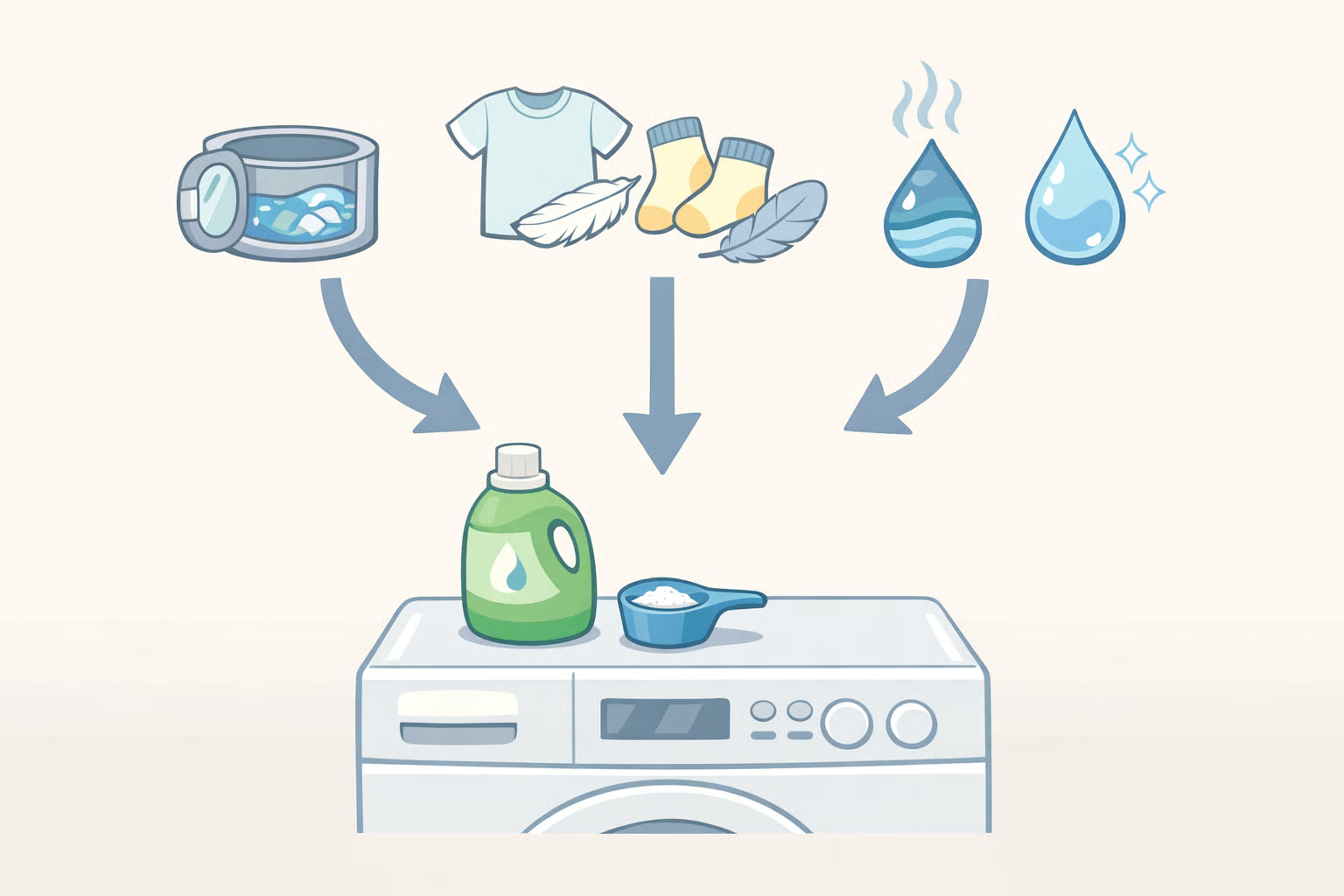
The 1 to 1.5 ounce range is a solid starting point, but three variables can push that number lower.
Concentrated formulas are the most common case. A "2x" or "3x" detergent already has more surfactant packed into a smaller volume, so the correct dose is proportionally smaller. The cap markings usually account for this, but only if you use them instead of filling to the brim.
HE washers use less water than traditional top-loaders, which means there's less to dilute and rinse away excess detergent. Consumer Reports specifically notes that powder detergents carry higher residue risk in HE top-loaders, because clothes can tangle and trap detergent between them (Consumer Reports Buying Guide, updated February 2025). Liquid detergent in an HE machine, dosed correctly, avoids that problem.
Hard water interferes with how detergent activates and rinses. The instinct is to pour more; the actual fix is to investigate the water. Most municipal water suppliers publish hardness data online, and simple at-home test strips are widely available. If hardness is the problem, a detergent formulated for hard water addresses it more directly than increasing the dose.
The other residue sources worth cutting
Detergent dosing is the biggest lever, but a few common add-ons compound the same problem.
Fabric softener deposits a coating on fabric that can irritate sensitive skin and degrades towel absorbency over time. Handel calls it a waste of money (Consumer Reports, updated March 2025). Agzoul's alternative: a cup of white vinegar added during the rinse cycle, which helps neutralize pH and supports detergent breakdown without leaving any coating behind (CNET). Dryer sheets are worth reconsidering too. The artificially scented sheets carry waxy residue that can accumulate in the dryer and pose a fire risk, and they're single-use (CNET). Wool dryer balls do the same anti-static and softening work without any of that.
On laundry sheets: Consumer Reports' lab testing of six major brands found they performed worse as a group than even the lowest-scoring liquid or pod detergents. The top-rated sheet brand, Earth Breeze, earned a score of 29; the top liquid scored 84. The sheets were particularly ineffective on coffee stains (Consumer Reports, updated August 2024). CR's guidance: sheets may work for lightly soiled routine loads, but they're not a substitute for liquid detergent when clothes are actually dirty. One middle ground CR suggests is to use sheets for everyday loads and a minimal amount of liquid for anything heavily soiled. Switching to sheets does cut down on detergent overdosing, since the dose is fixed per sheet, per Consumer Reports, though it trades a dosing problem for a cleaning one.
On bathtub laundry stripping: Handel's position is to skip it. The murky water that makes the practice look dramatic on social media is largely detergent residue from years of overdosing. Running an extra rinse or rinse-and-spin cycle in the machine, without adding detergent, produces the same result with far less mess (Consumer Reports, updated March 2025).
The short version
Cut the usual pour in half on the next load. Check results by smell, feel, and whether anything came out visibly dirty. The correct amount for a medium load is 1 to 1.5 ounces, which is roughly a shot glass and well short of a full cap (Consumer Reports, updated April 2025; CNET). If the clothes come out clean, the habit is confirmed and corrected in a single wash. That's the whole experiment.