7 Yard Sale Tricks to Attract Buyers and Boost Sales
Most yard sales share the same failure mode: boxes on a folding table, a few hand-lettered signs, and a long morning of watching cars drive past. The stuff is fine. The setup is the problem.
What separates a sale that clears the garage from one that moves three lamps and a bread maker comes down to the same forces professional retailers have studied for decades: how people decide to enter a space, how they move through it, and what triggers them to buy something they didn't plan on. A study surveying 226 shoppers in large-format grocery stores found that visual merchandising has become a primary strategy for shaping consumer behavior, from in-store atmosphere to impulse purchases (Impact of Visual Merchandising Elements on Consumer Impulse Buying Behaviour, last year). The study focused on hypermarkets. The psychological mechanisms it describes attention, atmosphere, unplanned buying work the same way whether you're selling cereal or someone's old bread maker.
This guide adapts those principles for the yard sale format. Three sequential problems: getting a car to stop, keeping a browser from leaving empty-handed, and increasing what each shopper actually spends. Seven tactics, each paired with a concrete setup choice.
What you'll need before starting: Tables or surfaces at multiple heights, price tags or stickers, a thick marker and poster board for signs, and a rough inventory count so you can group items by category before setup day.
How to get more people to stop at your yard sale
Video of the Day
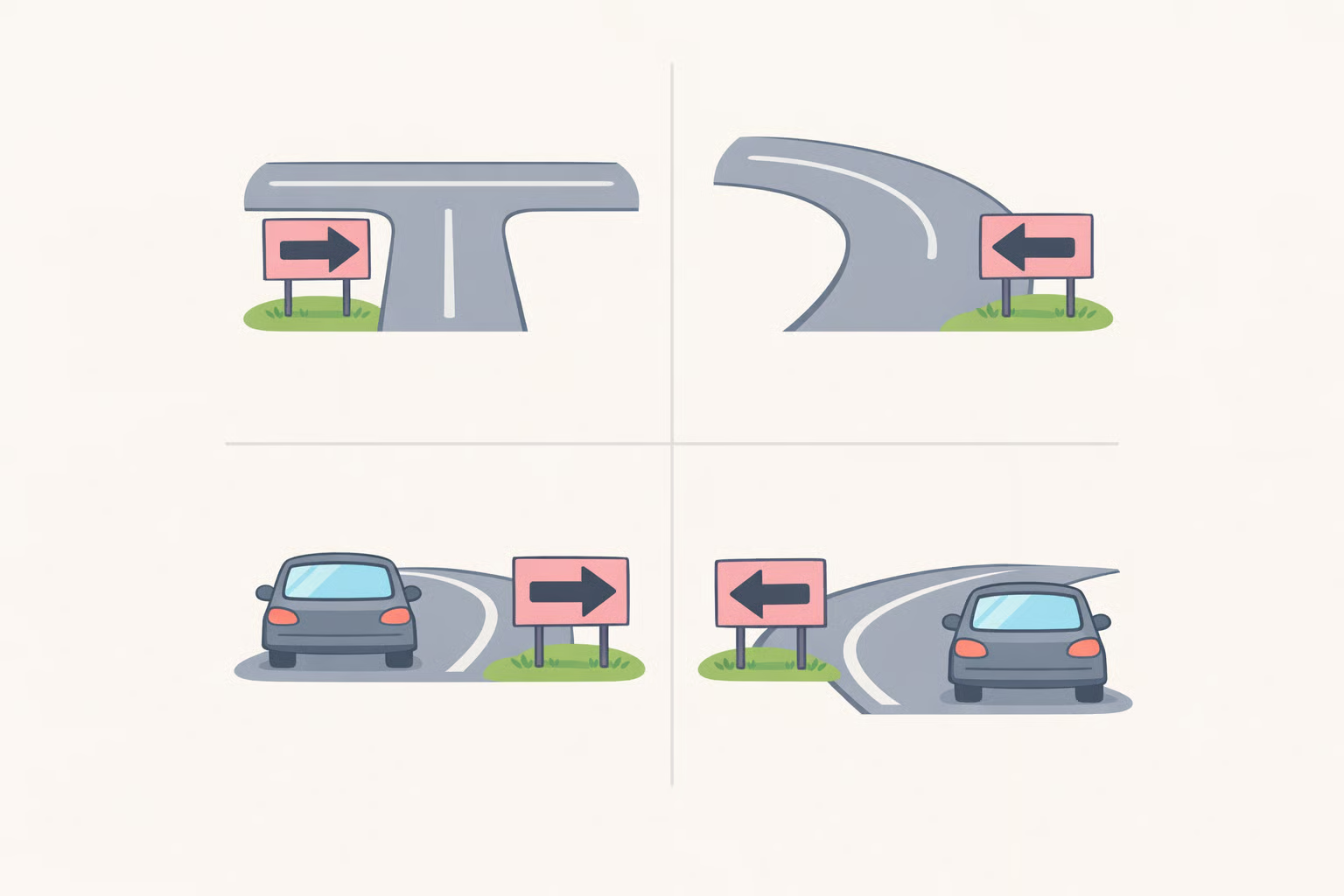
Think of the street in front of your house as a search results page. A driver has a narrow window to register that something is worth slowing down for before the moment is gone. No amount of good organization inside the sale helps if no one turns in.
These first two tactics are about curb-level visibility. Both need to be sorted the evening before the sale.
Tactic 1: Sign placement at decision points, not just at the house.
Post signs where drivers have to make choices: intersections, turns, and wherever your street branches off a main road. A sign in front of your house tells someone who's already there that they've arrived. Signs placed before the turn give drivers enough warning to actually make it in.
One line of large, readable text per sign is the right format. Something like "YARD SALE →" in thick marker, big enough to read without squinting. A sign that lists hours, categories, and your address in cramped handwriting is a sign no driver finishes reading. Bad setup: a single sign taped to the mailbox. Better setup: several signs at decision points leading to your street, each with a clear directional arrow.
If you're in a neighborhood with competing sales, go farther out rather than just larger. Drivers who are still oriented toward the main road are easier to intercept before they commit to a direction.
Tactic 2: Put your best visual items at the curb.
This is your window display. Not the easiest thing to carry outside first thing in the morning the most visually compelling item you're selling. Furniture, bikes, a working appliance, anything with mass and presence: these register at a glance. A mid-century dresser at the end of the driveway stops traffic. A card table of paperbacks does not.
The curb items don't have to be your most valuable. Their job is simpler: communicate "there's good stuff here" before anyone steps out of a car. Put a clearly visible price on the anchor item and arrange a few supporting pieces around it. Bad setup: kitchen utensils on a folding table facing the street. Better setup: a piece of furniture at the property line, priced, with a small cluster of items around it that hints at what's inside.
Video of the Day
Best yard sale setup for more sales once shoppers park
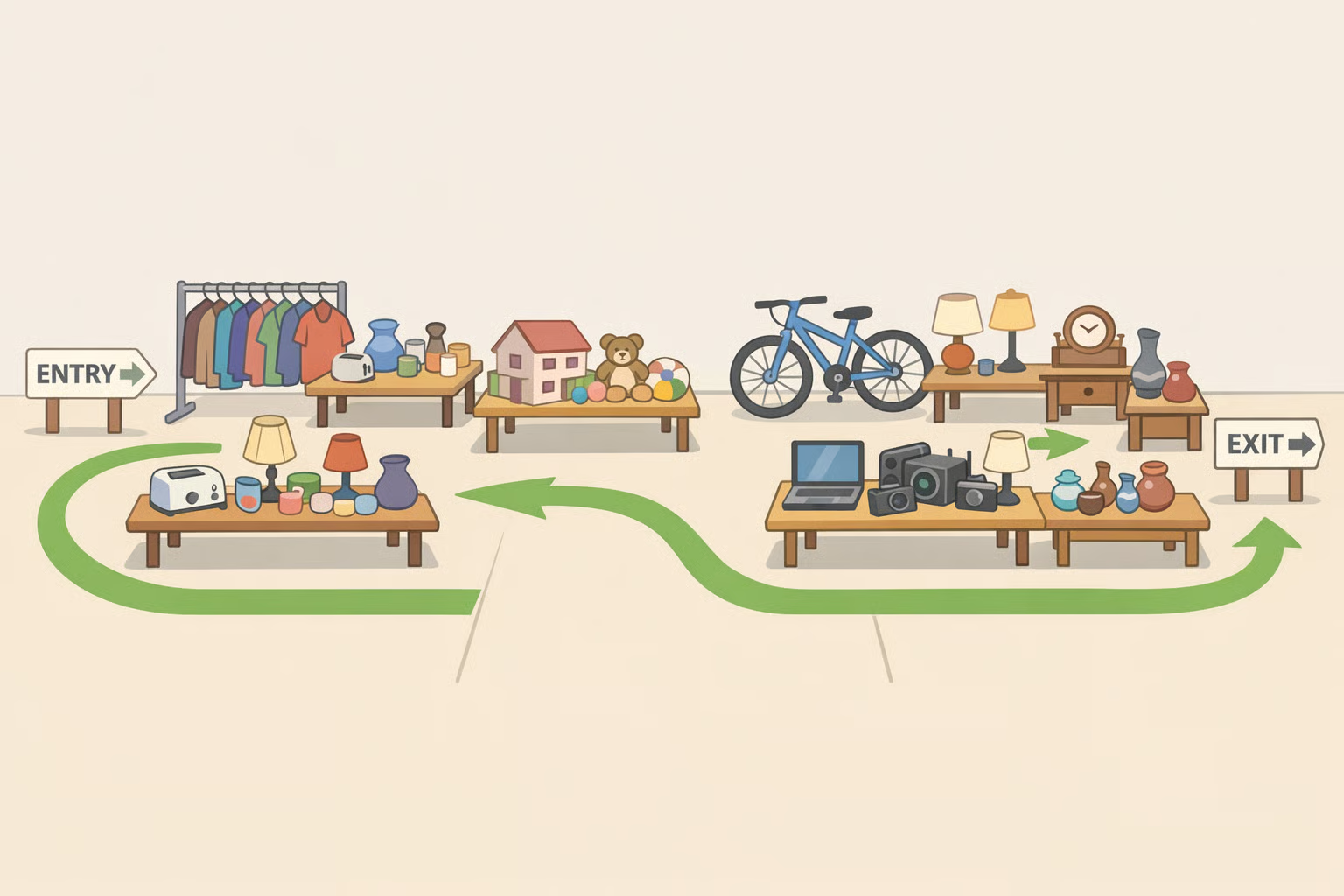
Getting someone to stop is its own problem. Getting them to buy is a different one, solved by different choices.
Once a shopper parks, the dynamic shifts from attention to experience. Research on visual merchandising points to two priorities at this stage: create a layout that's comfortable to move through, and remove friction that would send someone back to their car without buying (Impact of Visual Merchandising Elements on Consumer Impulse Buying Behaviour, last year). At a yard sale, that friction usually takes three forms: no clear place to start, items that are impossible to sort through quickly, and prices that require asking.
Tactic 3: Define a clear entry point and a natural flow.
Shoppers who aren't sure where to begin often don't. Set up the sale so there's one obvious entrance from the driveway and a layout that moves in a predictable direction left to right or in a loose U-shape that returns toward the street. Keep pathways between tables wide enough that browsers can move comfortably; cramped paths shorten how long people stay. (As a rough guide, three feet of clearance between tables works well, though the right amount depends on your space.)
Place high-interest items tools, electronics, furniture toward the back of the layout. This pulls shoppers through the full sale rather than letting them grab one thing and leave. Low-value clutter goes near the exit. Opening with a pile of worn-out items sets a tone that's hard to recover from.
If space is tight and you can't fully separate categories into distinct zones, use height to create visual separation. A shelf unit next to a flat table already signals "these are different areas."
Tactic 4: Group by category, not by box.
How items landed in storage is not how shoppers want to find them. Cluster like items: kitchen goods together, books in one place, tools, kids' items, and clothing each in their own areas. Shoppers move toward sections that interest them and spend more time there when they can quickly assess what's available. Mixed piles cost people effort, and most shoppers won't spend that effort on a stranger's driveway.
Label each zone with a short handwritten sign if there's any ambiguity. "Kitchen," "Kids," "Tools" takes thirty seconds to write and saves every shopper the work of figuring out what they're looking at. A zone that looks intentional signals that the seller knows what they have. When space forces categories to share a table, separate them visually: books on one half, kitchen items on the other, with a small gap or a piece of tape marking the boundary.
Tactic 5: Bring items up to eye level.
Flat tables at knee height require buyers to crouch and sort. Shelving units, stacked milk crates, or tiered display boards create height variation that makes a table easier to scan while standing. A table that's flat all the way across is easy to dismiss in a single glance; one with items at different heights reads as more worth exploring.
Hang clothing on a rack rather than folding it on a table. Folded clothing on a flat surface reads as a donation pile. Clothing on a rack reads as inventory someone might actually want.
Tactic 6: Price everything, visibly.
Unmarked items stop sales. Shoppers don't want to ask what something costs; it creates a social pressure they didn't come ready for, and most will just set the item down and move on. Sticker every item, or use clear zone pricing with a hand-lettered sign: "Everything on this table: $1." Whatever system you use, make prices readable from a normal standing distance.
One note on sentimental value: what an item meant to you and what a stranger will pay are reliably different numbers. Price to move.
Mid-sale triage: what to do when things go quiet
Pre-sale setup handles most of the work. But sales stall, and it's worth knowing how to respond without overhauling everything.
If foot traffic is low by mid-morning, the first move is the curb. Pull one or two items from inside preferably something with visual presence that wasn't visible from the street and move them to the property line. This costs nothing and changes what passing drivers see. Sometimes a sale is slow simply because the right item wasn't visible from the road.
If a specific category isn't moving, try relocating two or three pieces from it somewhere more prominent rather than discounting everything immediately. Items that don't sell in one spot sometimes sell quickly in another. A set of mixing bowls buried in a table of kitchen clutter might move fast on its own near the checkout area.
When it's clear that prices are the issue rather than placement nothing from a section is moving despite good foot traffic a simple handwritten sign works faster than retagging individual items. "Make an offer on anything here" reframes the dynamic without requiring you to reprice everything by hand. Most shoppers came hoping to negotiate at least once; giving them a clear opening to do it is usually enough.
An hour before close, post a sign signaling that you're ready to deal on whatever's left. This shifts the framing from "am I paying too much?" to "I'm getting a deal," which makes negotiation feel comfortable rather than awkward. It also clears remaining inventory without a last-minute repricing session.
How to make more money at a yard sale: increasing what each shopper spends
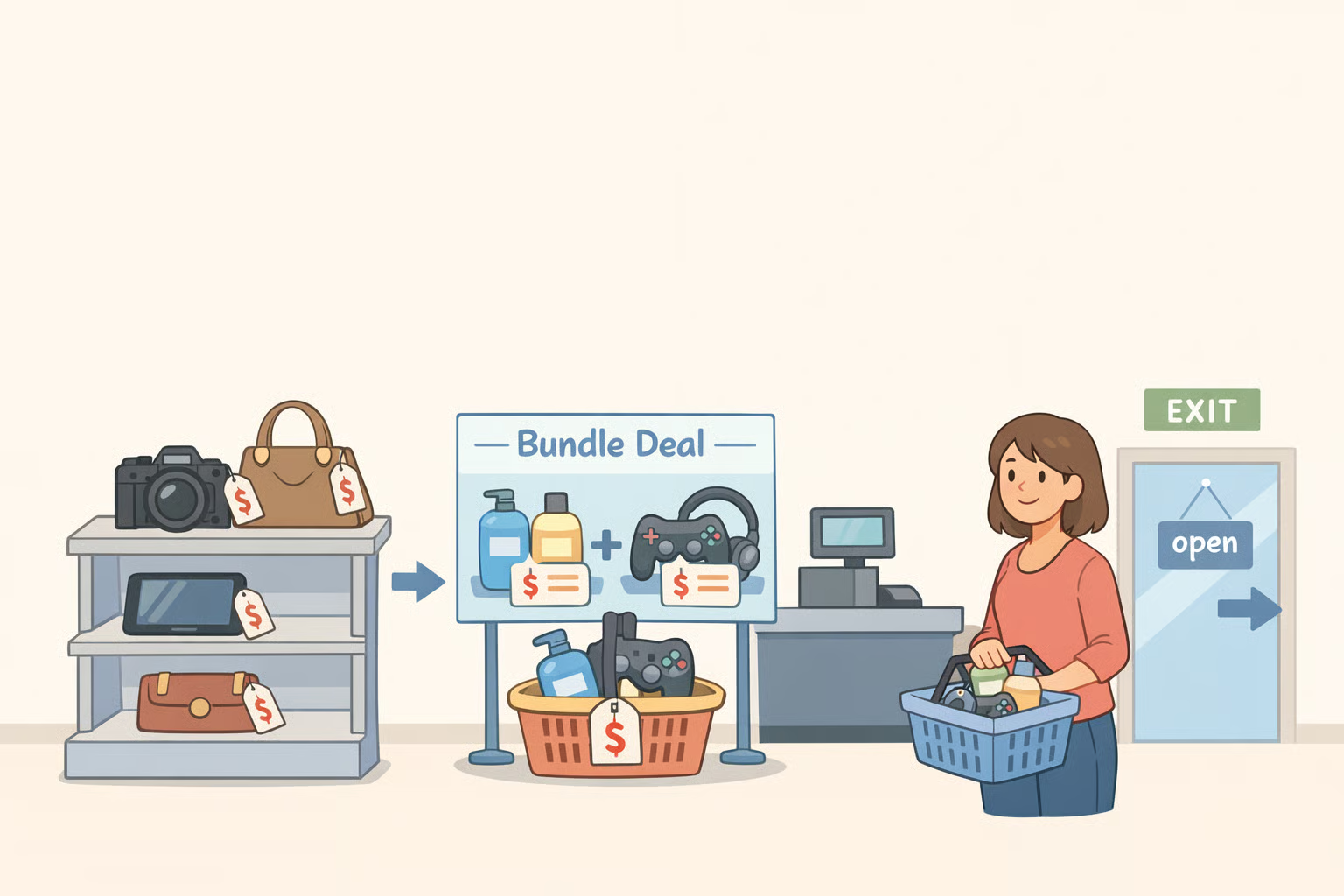
Foot traffic and sell-through rate are the first two metrics. The third is average transaction size whether someone leaves with one item or six. This is where pricing structure does its most useful work.
Once customers are on-site, the goal shifts toward maximizing what each visitor buys (Impact of Visual Merchandising Elements on Consumer Impulse Buying Behaviour, last year). Two practical tools move that number without requiring any real-time negotiation.
Tactic 7: Use anchor pricing and bundling to shape how shoppers read value.
Place two or three higher-value items a piece of furniture, a working appliance, a piece of art with fair and clearly marked prices somewhere prominent early in the layout. A shopper who sees a well-priced lamp early starts building a mental scale. Smaller items priced reasonably feel like good deals by comparison. That's how price perception works in any shopping environment, and it costs nothing to set up.
Bundling serves a different purpose. Group related items into a clear deal: four wine glasses together, a box of paperbacks, a set of mixing bowls. Bundles give deal-seeking shoppers an obvious win, move the items most likely to end the day unsold, and raise the average transaction without negotiation. Give bundled items their own dedicated table or section so they're easy to spot.
Placement note: Put the checkout table near the exit, not the entrance. Shoppers who walk back through the full sale to pay get one more pass at everything they passed earlier, and add-ons on the way out are a reliable pattern.
Before you close up
The seven tactics here follow a single sequence: visibility gets the stop, layout keeps the browser, and pricing structure closes the sale. Most of the gap between a productive yard sale and a slow one comes down to decisions made the evening before how items are grouped, where the furniture goes, whether everything has a price on it.
If inventory is heavy, a two-day format is worth considering. Day-one prices hold firm; on day two, you can drop them across remaining items to clear what's left. (These are common approaches, not rules backed by data adjust based on how much you need gone versus how much you care about returns.) Whatever doesn't sell by close is worth listing on Facebook Marketplace that evening or dropping at a donation center on the way home. Carrying it back into storage just means doing this again.