Used Tea Bags for Plants: How to Reuse Them Safely
The folk wisdom holds up. Used tea bags for plants is a legitimate kitchen hack spent tea leaves retain roughly 4% nitrogen by weight, along with smaller amounts of phosphorus and potassium, enough to classify them as a nitrogen-rich "green" material in composting terms (Biology Insights, earlier this year). They also add organic matter that improves soil structure, water retention, and microbial activity. Dylan Scollon, orchard assistant at Bennett Compost in Philadelphia, puts it plainly: "Any addition of organic matter to the soil is good for soil health" (The Spruce, last summer).
The catch is that most reuse advice stops there. Many conventional tea bags contain polypropylene or synthetic mesh to seal the edges materials that don't decompose and can shed microplastics into soil (Biology Insights, earlier this year; Texas Real Food, early 2024). The leaves are useful. The bag may be the problem. Three minutes spent checking the bag material determines whether this trick helps your plants or quietly degrades your soil.
Step 1: Identify your bag before you touch your soil
Video of the Day
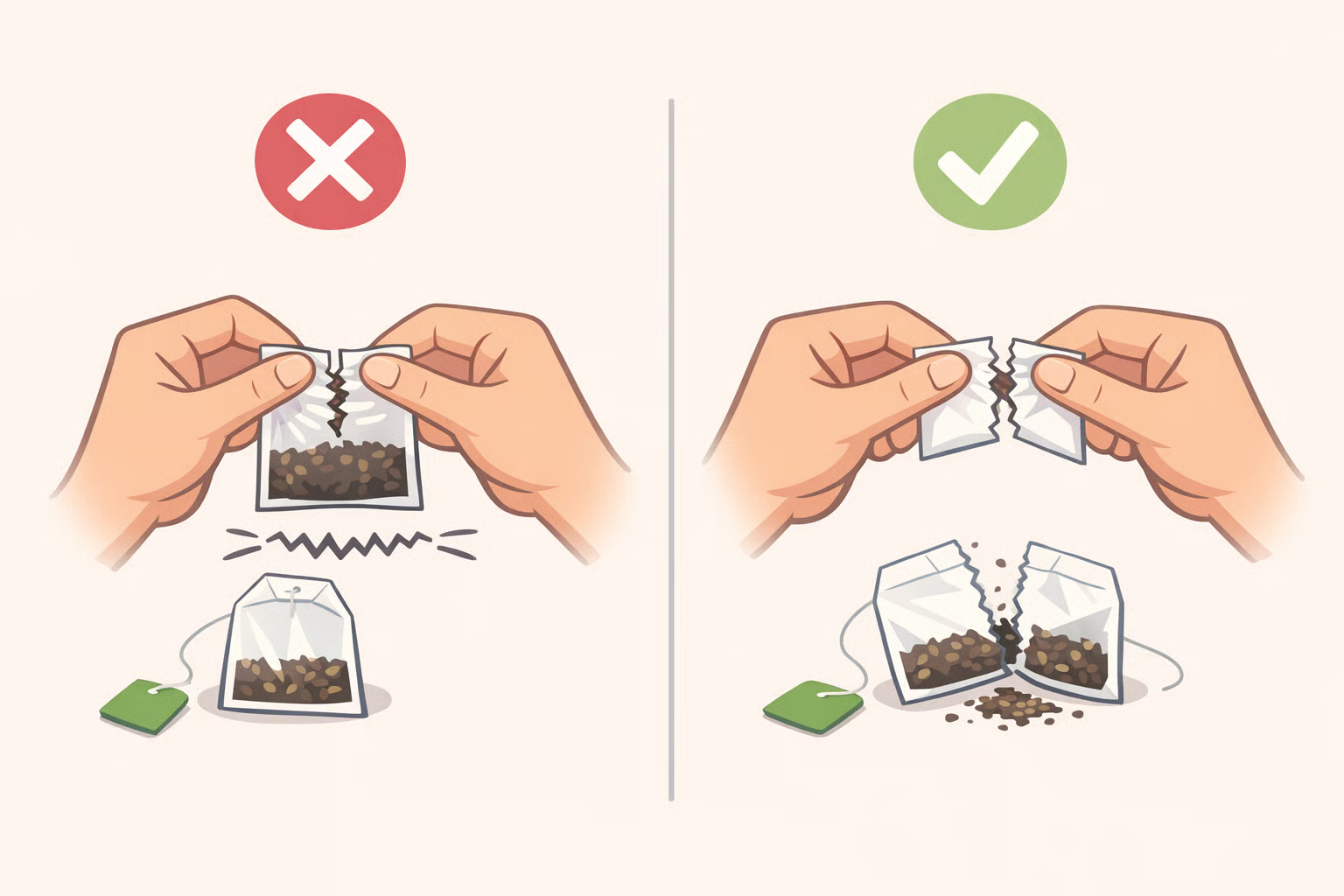
Check the bag material first. Compostable bags are typically made from paper, hemp, or abaca plant fiber. Non-compostable ones contain polypropylene or synthetic mesh that persists in soil and fragments into microplastics over time (Texas Real Food, early 2024). Scollon offers a practical field test: if you can't tear the bag with your hands, treat it as plastic and keep it out of your soil and compost (The Spruce, last summer). A silky or sheer texture can also signal synthetic fiber, though the tear test is the more reliable indicator. If the bag feels like paper or thin cotton and tears cleanly, it's likely safe.
Regardless of bag material, remove strings, staples, and tags before any soil application. The string holding the tag is often plastic, and staples are metal; neither belongs in compost or soil (The Spruce, last summer; Biology Insights, earlier this year). The safe default: open the bag, use only the leaves, and bin everything else unless you've confirmed the bag is plastic-free.
Check the tea itself. Plain black, green, and unflavored herbal teas are suitable for reuse. Flavored teas, anything used with milk or sugar, and teas with artificial additives should go straight in the bin residual sugars and oils attract fungus gnats and ants (ShunCy, earlier this year; Biology Insights, earlier this year). Worth noting: black tea carries higher tannin concentrations than green or herbal varieties, which matters for soil pH covered in the next section.
Video of the Day
Step 2: Match the leaves to the right plant
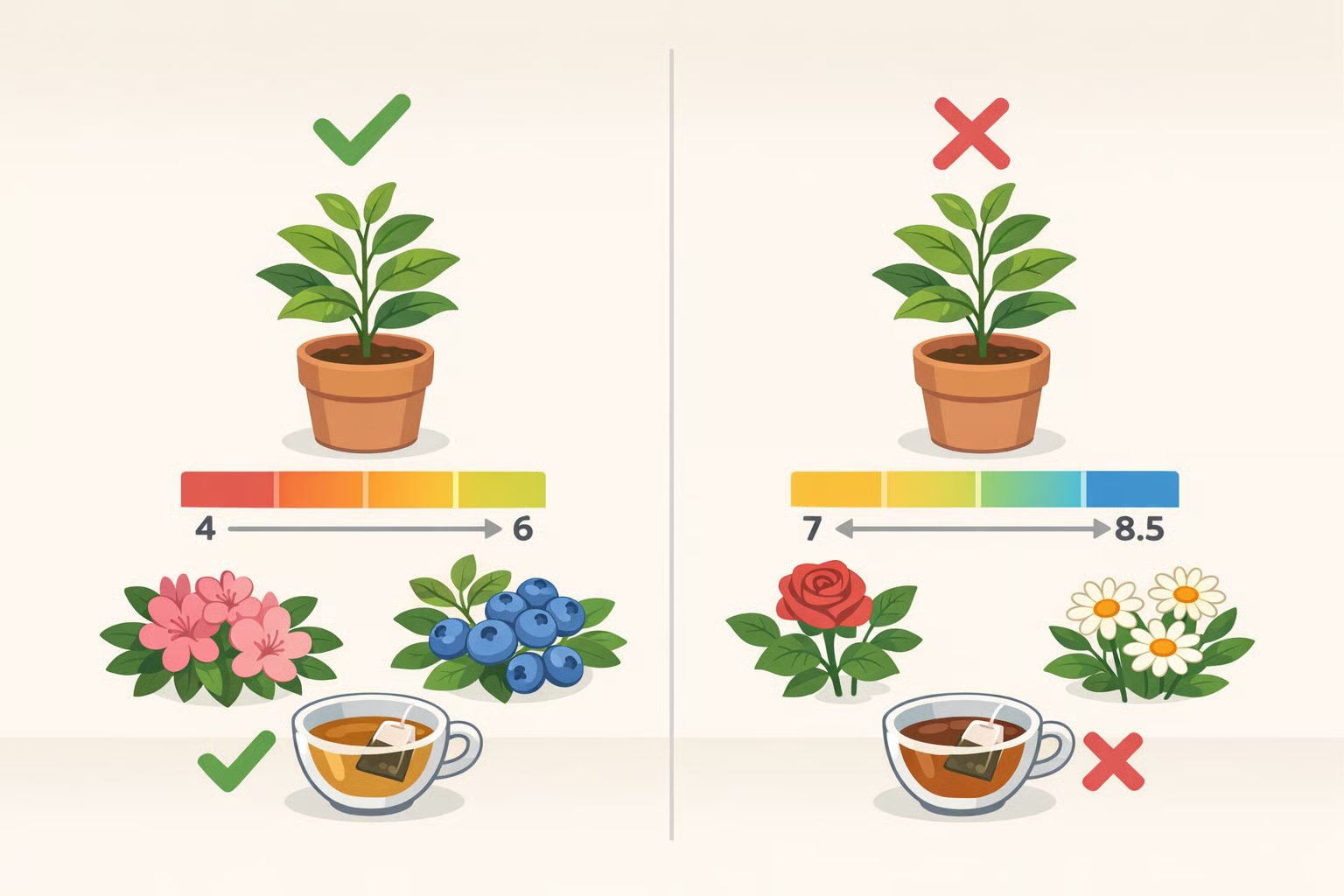
Tea can nudge potting mix toward more acidic conditions over time, which matters more for container plants than for garden beds. In a large outdoor plot, Scollon notes, the effect tends to dilute to insignificance but targeted application to a single pot with limited soil volume is where it can actually register (The Spruce, last summer). That's why this guide focuses on indoor and container plants.
As the leaves decompose, the tannic acid they contain gently lowers soil pH. That's a feature for some plants and a problem for others.
Best suited for: Acid-preferring varieties. Ferns, gardenias, azaleas, and fruiting plants like blueberries are frequently cited examples (ShunCy, earlier this year; Edmonton Horticultural Society, last summer). Blueberries specifically require soil with a pH between 4.5 and 5.5, and tea leaves can help maintain that range (Edmonton Horticultural Society, last summer). Treat these as examples of a category, not a definitive list sensitivity varies between varieties and growing conditions.
Skip entirely for: Plants that prefer neutral to alkaline soil, or anything that needs fast drainage. Lavender, succulents, cacti, geraniums, and begonias are all poor candidates (Edmonton Horticultural Society, last summer). Succulents are a particular mismatch: the moisture-retaining quality of decomposing organic matter works directly against their drainage requirements and can cause root rot. Legumes like peas and beans fix their own nitrogen from the atmosphere and gain nothing from the additional input excess can push growth toward foliage at the expense of pods (Edmonton Horticultural Society, last summer).
A note on African violets: sources conflict here. Some list them as beneficiaries of tea leaf applications; others caution that black tea's higher tannin levels can acidify soil past the point African violets tolerate (ShunCy, earlier this year). Where guidance conflicts, the conservative call is the right one: when uncertain about a specific variety, skip it or test with a small, infrequent application first.
Tea leaves are a supplement, not a replacement. Nutrient levels are modest compared to commercial fertilizers, compost, or worm castings (ShunCy, earlier this year; The Spruce, last summer). Think of them as a light top-up between regular feedings, not a stand-in for proper fertilizing.
How to use used tea bags in soil: three methods
Method 1: Direct soil incorporation
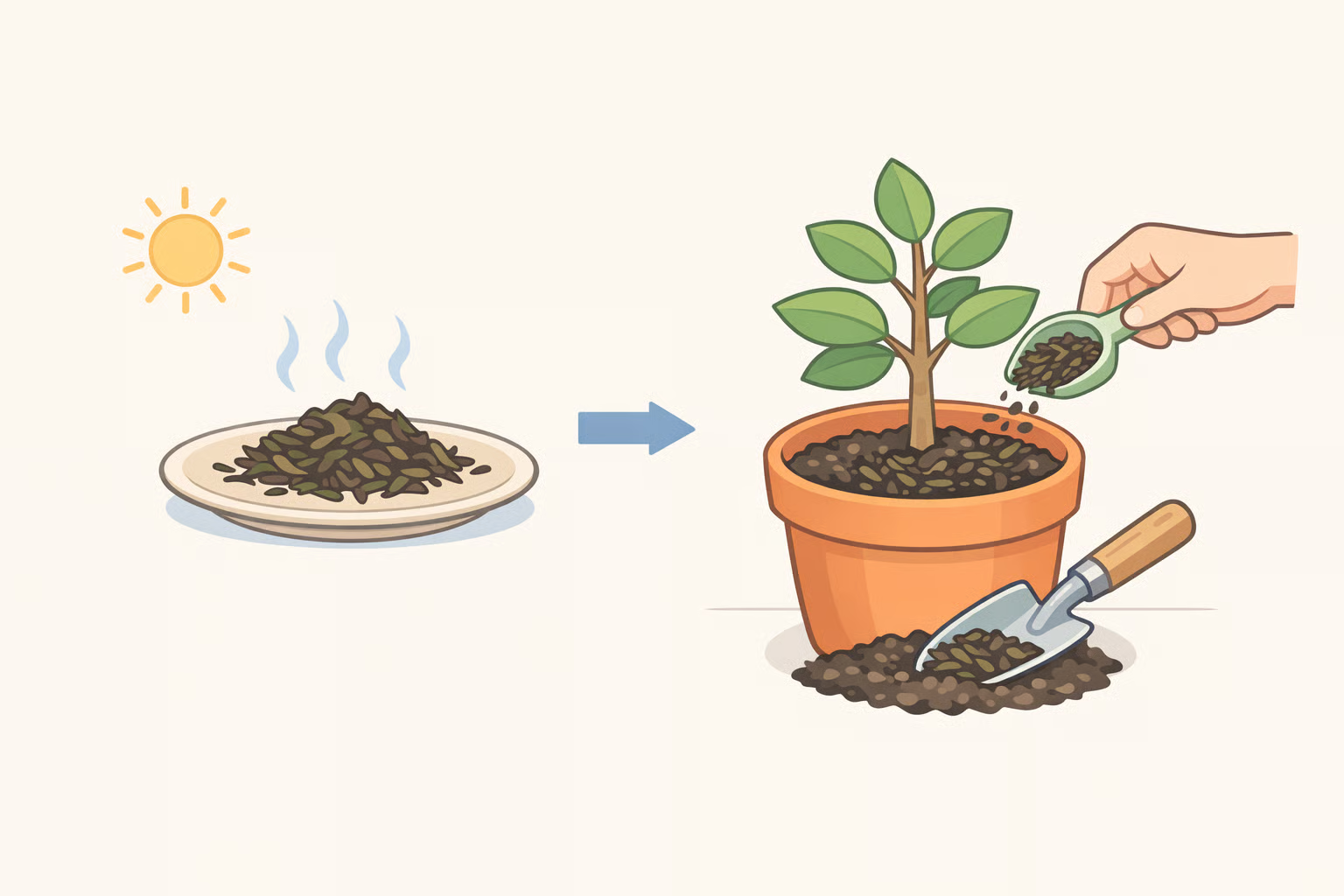
- Open the bag and spread the spent leaves on a clean surface. Let them dry fully before touching the potting mix.
- For a small potted plant, work roughly one teaspoon of dried leaves per gallon of soil volume into the top inch of the potting mix. A small handful is a reasonable upper limit for larger containers (ShunCy, earlier this year).
- Mix the leaves in rather than piling them on the surface. Clumping on top traps humidity and invites fungal growth.
- Repeat no more than once every four to six weeks. More frequent application in a container risks salt buildup and cumulative pH drift (ShunCy, earlier this year).
Gotcha: Skipping the drying step is where most people go wrong. In a humid room or a pot that stays moist, damp tea on the surface will mold. Dry the leaves first, every time.
Method 2: Weak liquid feed
- Empty spent leaves from two or three bags into a jar. Cover with water and steep at room temperature for 24 to 48 hours (ShunCy, earlier this year).
- Strain out all solids before use. Leaving leaf fragments in the watering liquid reintroduces the mold risk at the next watering.
- Use the strained liquid as-is for established acid-preferring plants. For seedlings or anything sensitive, dilute it at least by half before applying.
- Pour around the base of the plant, not over the leaves.
Gotcha: Source guidance on exact dilution ratios is inconsistent and lacks solid experimental backing figures from 1:2 to 1:20 appear across sources. Don't try to engineer a precise ratio. Treat the steeped liquid as a mild supplement and apply with a light hand.
Method 3: Composting
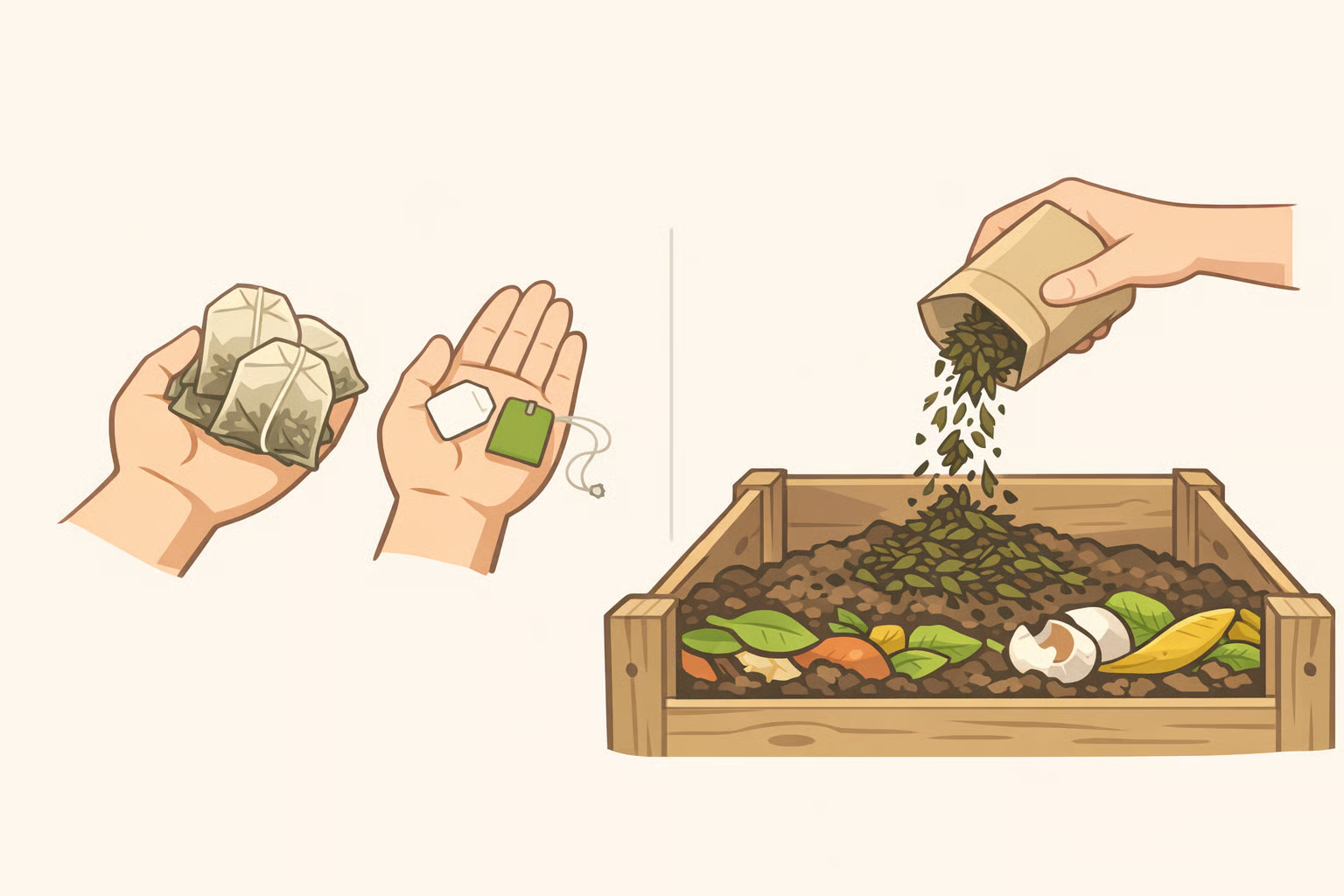
- Open the bag and empty the leaves directly into your compost pile or bin. Tea leaves are a nitrogen-rich green material that helps balance carbon-heavy inputs like dried leaves and cardboard (Biology Insights, earlier this year; Texas Real Food, early 2024).
- If the bag passed the tear test and contains no plastic mesh or staples, it can go in whole. Remove the string, tag, and any metal staple regardless.
- Mix the leaves into the pile rather than dropping them on top this speeds decomposition and keeps the pile balanced.
- Tea leaves are particularly attractive to earthworms, which process them into nutrient-dense castings that improve finished compost quality (Biology Insights, earlier this year).
Gotcha: Silky, mesh-like, or plastic-feeling bags go in the bin, not the compost. Synthetic fibers don't break down they fragment into microplastics that persist in soil and move into whatever grows there.
Who this is actually for
Tea leaves as a natural fertilizer for houseplants are worth the effort for a specific type of gardener: someone who already keeps acid-loving container plants, or who composts regularly and wants to get more out of kitchen scraps. Diverting food waste from landfill has a genuine environmental upside organic material buried in landfills generates methane as it breaks down (Texas Real Food, early 2024). Used tea leaves fit neatly into that picture, provided the bag doesn't introduce a contamination problem that's harder to fix.
For most people with succulents, neutral-soil houseplants, or a cabinet full of flavored teas, the effort isn't worth it.
The simplest long-term fix is to switch to loose-leaf tea or clearly labeled plastic-free bags, at which point the leaves and the bag can both go into compost though strings, staples, and tags still need to come off first. If staying with standard bags: open them, use the leaves, bin the rest.
One addition worth making to any regular tea-leaf routine: pick up an inexpensive soil pH test strip. It's the only reliable way to confirm whether cumulative acidification is staying in a useful range or starting to work against you (Edmonton Horticultural Society, last summer).
Quick decision checklist:
- Bag feels silky or plastic-like: open it, use only the leaves, discard the bag
- Bag tears like paper: leaves and bag can both go to compost (remove string and staple first)
- Plant prefers acidic soil (ferns, gardenias, azaleas, blueberries): apply sparingly, once every 4-6 weeks
- Plant prefers neutral or alkaline soil, or needs fast drainage (succulents, lavender, cacti): skip entirely
- Tea was flavored, sweetened, or used with milk: skip entirely
- Unsure about your plant's pH preference: test the soil first, or don't bother