How to Store Leftover Hot Dogs: Fridge and Freezer Guide
Opened hot dogs go in an airtight container if you'll eat them within a week. Keeping them longer than that? Freeze them individually. The rest of this guide is the execution.
The method most people default to, a rubber band around the original package back in the fridge, scored dead last in a five-method comparison test, earning 5 out of 10 for convenience, cleanliness, and texture preservation, per The Kitchn's head-to-head testing this week. The better options require almost no extra effort.
Hot dogs are pre-cooked, but they can still carry Listeria, a bacterium that refrigeration doesn't eliminate, according to the CDC. The methods here address both freshness and that basic safety floor. A specific note for high-risk readers appears in the spoilage section.
Which storage method is best?
Video of the Day
The Kitchn's five-method test rated each approach on convenience, texture integrity, cleanliness, and ease, not food safety or longevity, which USDA guidance covers separately. Here's how the options ranked:
| Method | Score | Best for |
|---|---|---|
| Freeze individually | 10/10 | Keeping longer than a week |
| Purpose-built hot dog container | 9/10 | Neatest short-term fridge option |
| Airtight container | 7/10 | Best no-special-equipment fridge option |
| Zip-top bag | 6/10 | Acceptable short-term fallback |
| Original packaging with rubber band | 5/10 | Last resort only |
The airtight container beat the zip-top bag on cleanliness in side-by-side testing, though not as tidy as the purpose-built container, which slots each dog separately and keeps them not overly moist, per The Kitchn. Freezing individually rated highest overall because it solves the flexibility problem: pull exactly what you need, thaw quickly, no waste.
Food experts align with this hierarchy. Transferring opened hot dogs out of the original packaging into a resealable bag or airtight container is the baseline recommendation, even when the original package is resealed as tightly as possible, per Better Homes & Gardens.
Video of the Day
How long do hot dogs last in the fridge?
An unopened package keeps safely in the refrigerator for up to two weeks, per USDA guidance reported by The Kitchn this week. Once opened, that window drops to one week, and the best-by date printed on the package no longer applies, since it was calculated for an intact seal, per Better Homes & Gardens.
Cooked leftovers follow a shorter clock. Once grilled, boiled, or pan-cooked, hot dogs last three to four days in the fridge, per The Takeout. The same spoilage checks apply, more on those below.
Step 1: Short-term storage how to keep hot dogs fresh after opening
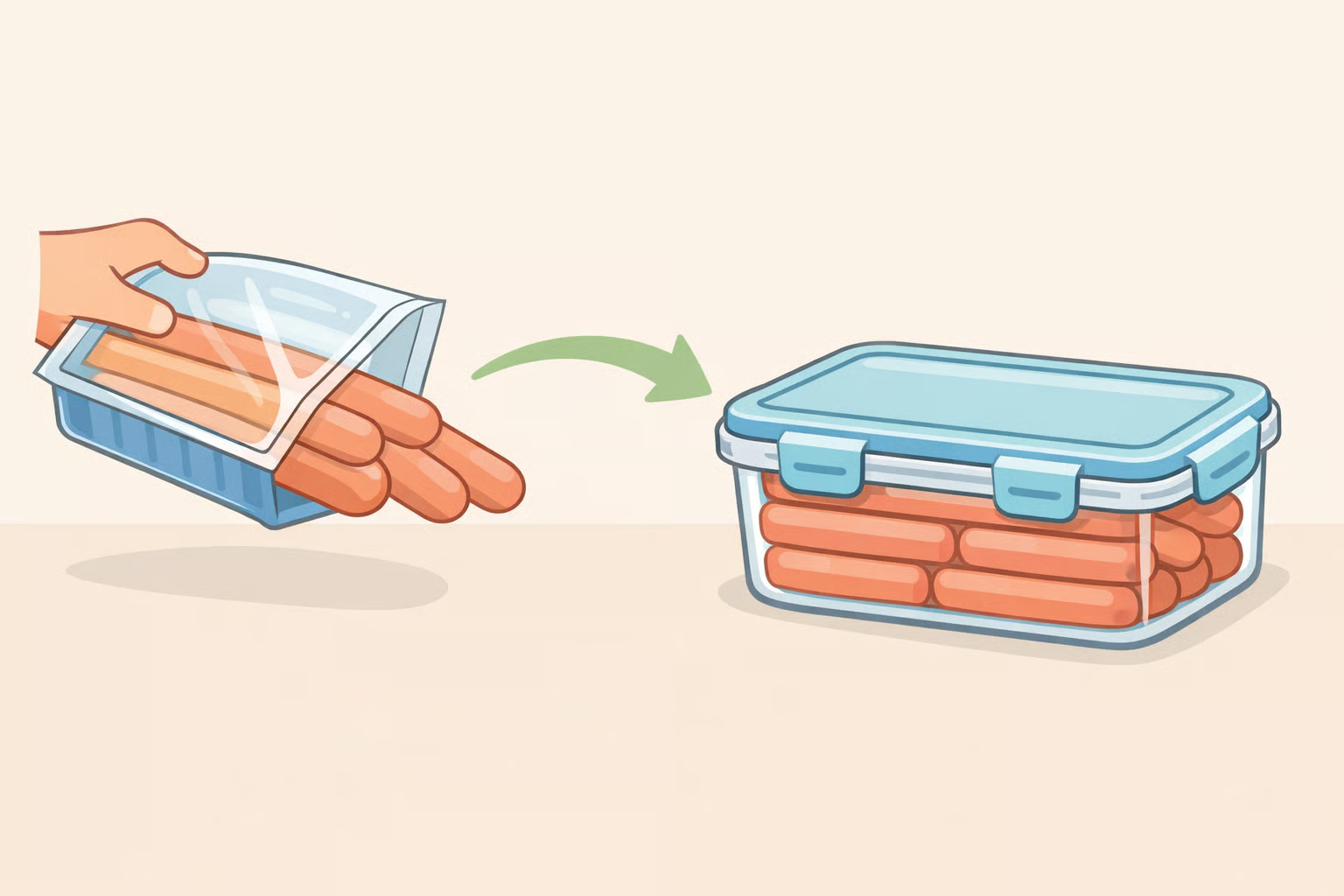
For hot dogs you'll use within a week, this is the complete process. No special equipment required.
Step 1: Transfer out of the original packaging. Pull the hot dogs out and set the original pack aside. Once the seal is torn, the packaging doesn't close effectively enough to rely on.
Step 2: Place in an airtight container. Lay the hot dogs inside; if you're keeping them in their inner wrapper, set it cut-side up. Seal the lid. A purpose-built hot dog container, which gives each one its own slot and keeps them separated and not overly moist, is an upgrade if you have one. A zip-top bag works as a fallback; press out as much air as possible before sealing (The Kitchn; Better Homes & Gardens).
Step 3: Store in a part of the fridge that stays at or below 40°F. Avoid the door and upper shelves, which tend to fluctuate more. Middle or lower shelf is the safer spot (Better Homes & Gardens).
Room temperature clock: Once out of the fridge, hot dogs have a two-hour window before bacterial growth becomes a concern. That drops to one hour when the ambient temperature exceeds 90°F. Both Listeria and Staphylococcus aureus can reach unsafe levels quickly outside refrigerated conditions (Better Homes & Gardens; The Takeout). For routine fridge storage this rarely comes up, but it's the main practical edge case at a summer cookout.
Ignore the best-by date after opening. That date only applies while the seal is intact. Once opened, the rule is seven days from opening, full stop (Better Homes & Gardens).
Step 2: Long-term storage how to freeze hot dogs the right way
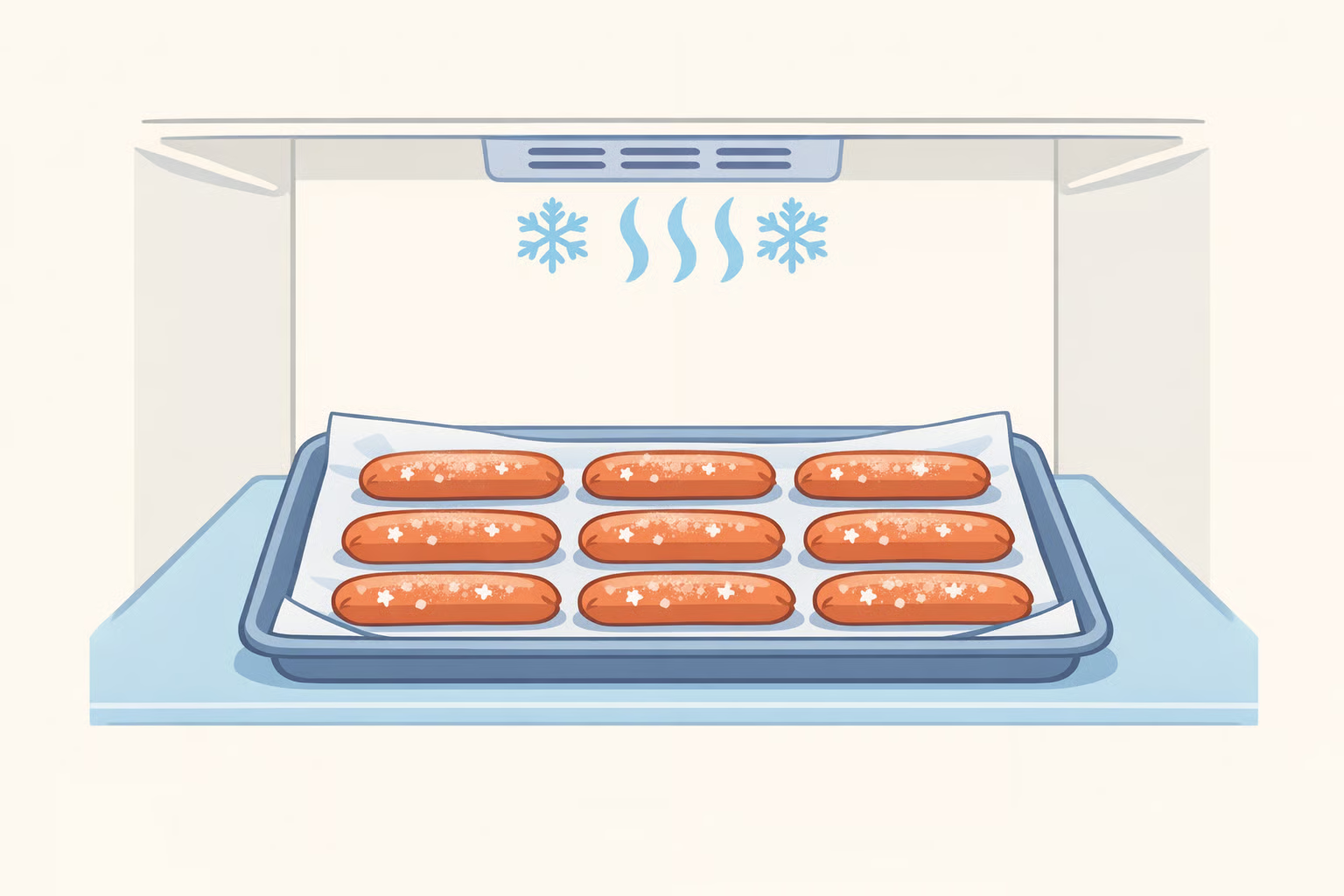
Tossing the whole open pack in the freezer works, but you end up with a frozen block and no easy way to pull just two dogs on a Tuesday night. The individual-freeze method fixes that.
Step 1: Line a rimmed baking sheet with parchment or foil. Arrange the hot dogs in a single layer with enough space between them that they're not touching.
Step 2: Freeze until solid, about two hours (The Kitchn). Don't skip this step. It's what keeps them from welding together into a single mass.
Step 3: Transfer to a zip-top freezer bag. Press out as much air as possible, write the date on the bag, and return it to the freezer.
If the package is still sealed, skip all of this and put the whole unopened pack directly in the freezer (The Takeout). The individual method is for packs that have already been opened.
Hot dogs handle freezing unusually well. Their springy texture doesn't suffer the way denser proteins do, and their small size means they thaw fast enough to be genuinely useful on a weeknight, per The Kitchn. From a safety standpoint they'll keep indefinitely in the freezer, but quality starts to decline after one to two months, still edible past that point, just not quite as good (Better Homes & Gardens; The Takeout). Freeze them promptly rather than waiting until they're already close to the one-week fridge deadline.
Thawing options:
- Safest: overnight in the fridge at or below 40°F
- Faster: sealed bag submerged in cold water; change the water every 30 minutes; cook immediately after
- Fastest: microwave on defrost; cook immediately, don't let them sit
One firm rule: hot dogs thawed by any method other than in the refrigerator should not go back into the freezer (Better Homes & Gardens).
How to tell when hot dogs have gone bad
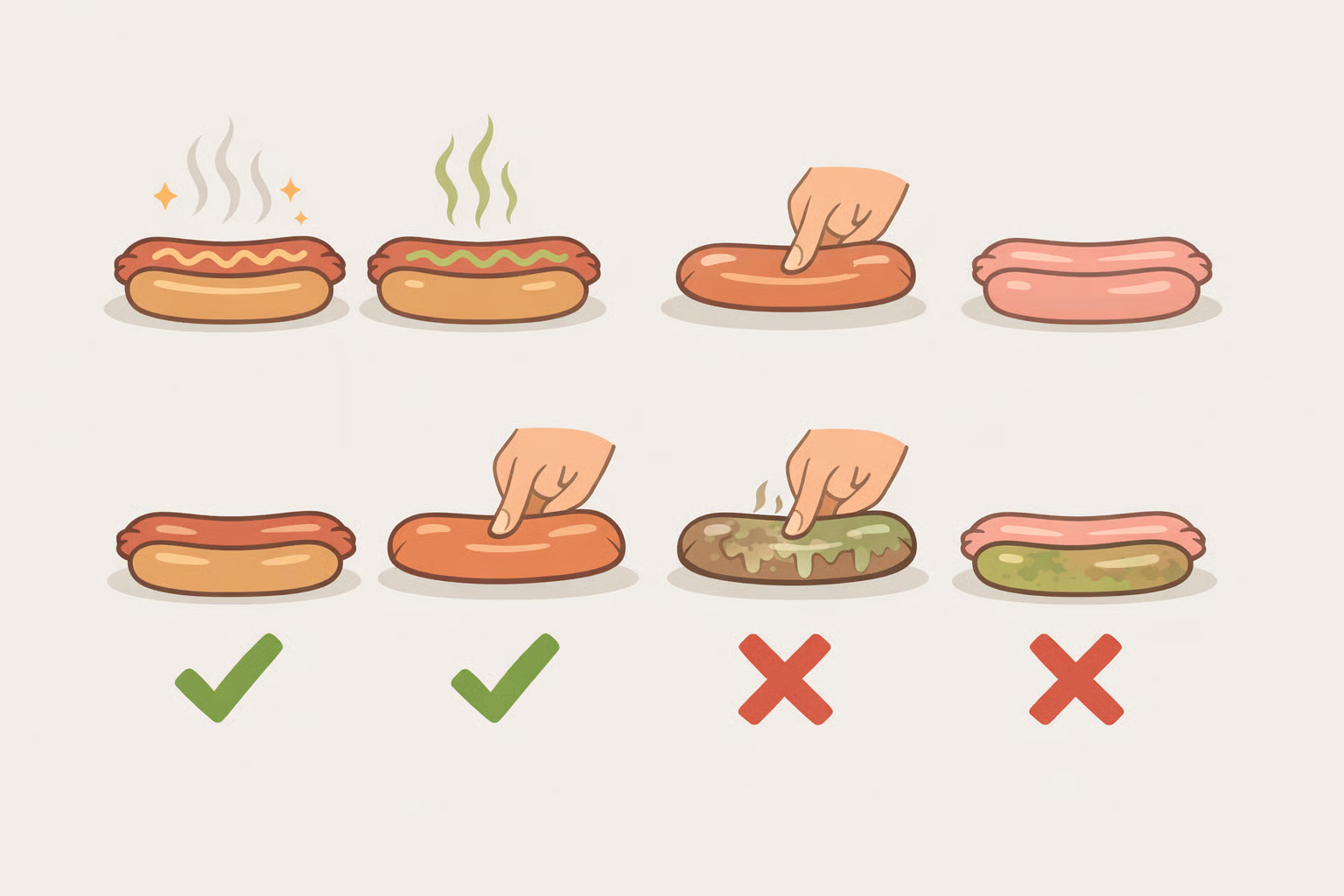
Three things to check, roughly in the order you'd check them.
Smell. Fresh hot dogs have a mild, meaty scent. Pungent, sour, or slightly sweet in a rotten-meat way means they've turned. Trust the nose and throw them out (Better Homes & Gardens; The Takeout).
Texture. A slimy or tacky surface is a reliable spoilage signal. If they feel different from when you stored them, don't eat them (Better Homes & Gardens).
Color. Fresh hot dogs should look consistently pink. Greyish, greenish, brownish, or noticeably faded means they go in the trash (Better Homes & Gardens).
For cooked leftovers, apply the same checks but shorten the mental clock: three to four days in the fridge, not seven (The Takeout).
For high-risk readers: Refrigeration doesn't kill Listeria, it only slows it. The CDC notes that reheating ready-to-eat meats before eating will kill any bacteria present, which matters most for people who are pregnant, elderly, infants, or immunocompromised. For everyone else the risk is lower, but worth knowing.
"When in doubt, throw it out" (Better Homes & Gardens). A hot dog costs less than a sick day.
Quick reference
- Using within a week: Airtight container in the fridge at or below 40°F. Purpose-built hot dog container if you want the neatest result. Go by seven days from opening, not the best-by date (The Kitchn; Better Homes & Gardens).
- Keeping longer: Freeze individually on a sheet tray, transfer to a freezer bag, use within one to two months for best quality (The Kitchn; Better Homes & Gardens).
- Cooked leftovers: Three to four days in the fridge, same spoilage checks apply (The Takeout).
The individual-freeze method takes about two hours of mostly hands-off time. It pays back every time you need a couple of dogs fast without having to choose between cooking the whole pack or throwing half of it out. Hot dogs are among the more forgiving items in the fridge and freezer: pre-cooked, preservative-assisted, and genuinely freezer-friendly. These methods clear a low bar with room to spare.