How to Remove Hard Water Stains: By Surface and Severity
Hard water stains are mineral deposits calcium, magnesium, and sometimes iron left behind when water evaporates on a surface. Most appear chalky white; when iron is the dominant mineral, the staining turns brown or rust-colored and needs a different product (Good Housekeeping, this week). Start with vinegar for hard water stains on glass, chrome, and ceramic tile. Switch to a commercial descaler when vinegar can't cut it. Never use acid on natural stone. Bleach doesn't belong anywhere in this process it's formulated for biological stains, not mineral ones.
Left alone, mineral deposits bond more deeply and can become impossible to remove entirely (Good Housekeeping, last November). Catch them early.
Stain vs. damage check this first. If a surface looks cloudy even after acid treatment and thorough rinsing, the problem may be etching rather than residue. Etching is physical damage to the surface itself, most common on glass or chrome where scale has sat for a long time, or on natural stone cleaned with acid. A surface that responds to acid but turns cloudy again within days still has scale. One that looks uniformly hazy or has a matte texture in the stained area has been physically altered at that point, glass polishing compounds or professional resurfacing are the options, not more acid.
Your water hardness tells you how aggressive to be. Penn State Extension classifies water hardness as follows (Penn State Extension, last September):
| Classification | mg/L |
|---|---|
| Soft | Under 17 |
| Slightly hard | 17–60 |
| Moderately hard | 60–120 |
| Hard | 120–180 |
| Very hard | Above 180 |
Penn State notes that water below about 120 mg/L will probably not cause major scaling diluted vinegar and a squeegee habit handle most of what you see at that range. Above 120 mg/L means faster buildup, stronger cleaners, and a real case for addressing the source. An inexpensive test kit from a hardware store gives you a number in minutes.
Before you start, gather:
- Distilled white vinegar (standard 5% acidity)
- Spray bottle; basin large enough to submerge small items
- Microfiber cloths, a squeegee, a soft-bristle toothbrush
- Non-abrasive sponge or melamine foam sponge
- Rubber or nitrile gloves
- Commercial descaler (CLR, Lime-A-Way, or Bar Keepers Friend) for severe cases
What to use first and when to reach for something stronger
Video of the Day
Mineral scale is alkaline. Dissolving it requires acid. Clorox's in-house scientist Mary Gagliardi is direct: always reach for a low-pH cleaner for hard water deposits, not bleach (Good Housekeeping, this week). University of Georgia Extension confirms the underlying chemistry acids dissolve hard-water deposits and mineral discoloration, and household acids like white vinegar and lemon juice work through the same mechanism as commercial products (UGA Extension, 2017).
Match your method to the severity:
- Fresh or light deposits (soft to slightly hard water): 50/50 vinegar and water, 15-minute dwell time, wipe, rinse, dry
- Moderate buildup (moderately hard water): Warm the vinegar in the microwave for 30–45 seconds before applying and extend dwell time to 20–30 minutes (P&J Cleaners, last March)
- Heavy or stubborn scale (hard to very hard water): Commercial descalers containing stronger acids phosphoric, sulfamic, or hydrochloric are formulated for this level of buildup (P&J Cleaners, last March). Follow the label's contact time precisely and rinse completely; prolonged contact can damage surfaces
- Brown or rust-colored staining: Iron is the likely cause (Good Housekeeping, this week); choose a descaler formulated specifically for rust and lime rather than a general-purpose acid product
- No improvement after 2–3 attempts: Stop repeating the same approach. What you're seeing may be etching, or the buildup may require higher-concentration formulations and specialized applicators that professionals use (P&J Cleaners, last March)
One safety rule, no exceptions: Never mix vinegar or any commercial descaler with bleach. The reaction produces chlorine gas, which is acutely toxic in an enclosed bathroom (P&J Cleaners, last March). Wear gloves, open a window, run the exhaust fan, and spot-test on a hidden area before treating any full surface.
Surfaces where acid causes damage:
- Natural stone (marble, travertine, granite, limestone): acid etches these permanently. Use only pH-neutral cleaners formulated for stone (P&J Cleaners, last March)
- Grout: prolonged vinegar contact degrades sealer over time; keep contact brief and rinse thoroughly
- Chrome, acrylic, fiberglass: vinegar is safe, but abrasive pads or steel wool cause permanent scratching. Soft cloths only (P&J Cleaners, last March)
Video of the Day
Step-by-step: how to remove hard water stains by surface
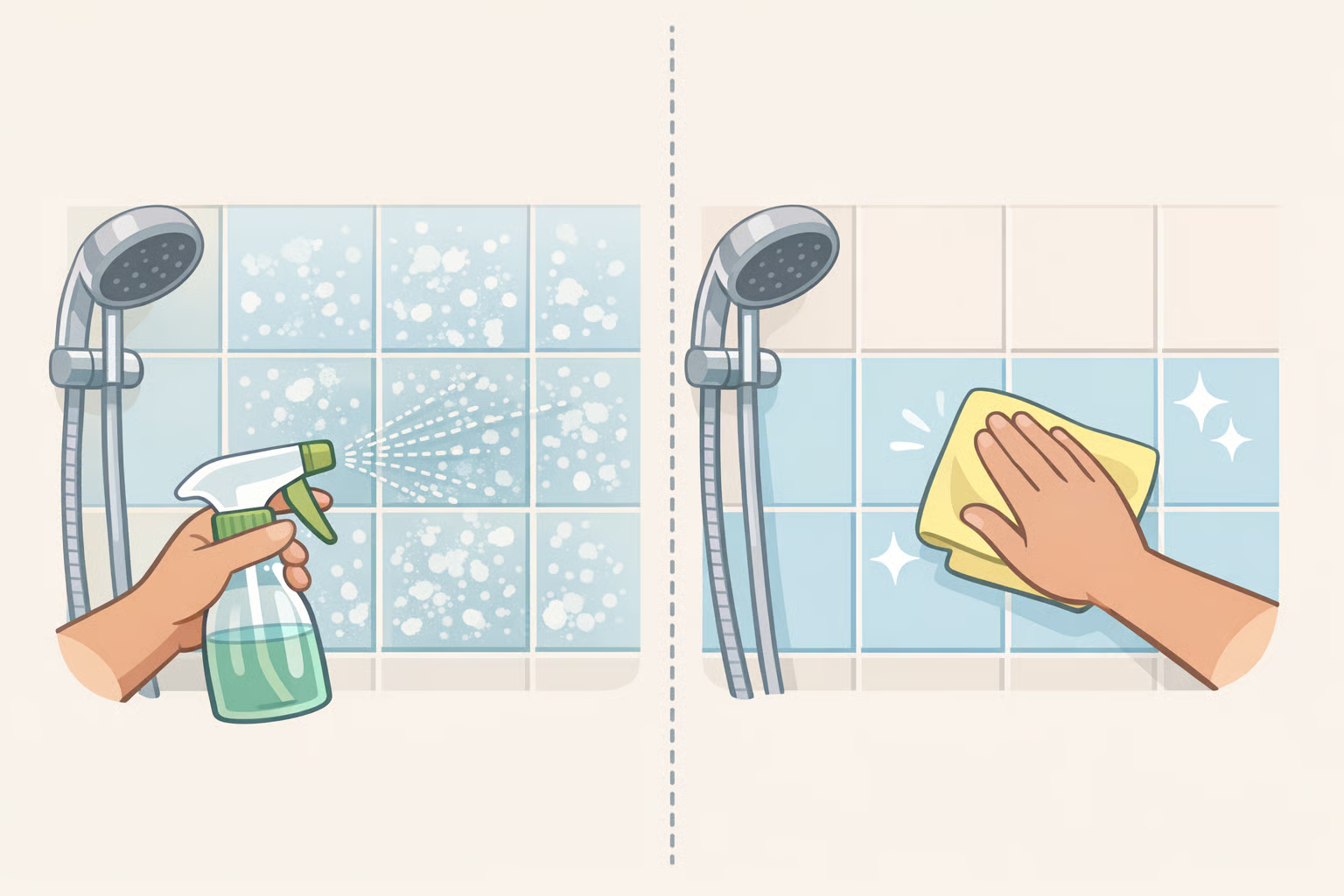
Apply acid, allow dwell time, scrub gently, rinse completely, dry immediately. What changes by surface is contact time, application technique, and which tools are safe to use.
Shower walls and tubs
- Mix equal parts white vinegar and water in a spray bottle.
- Spray all affected surfaces and leave for at least 15 minutes.
- Wipe with a microfiber cloth. For stubborn spots, use a melamine foam sponge no abrasive pads.
- Rinse and dry.
How to remove hard water stains from glass and shower doors
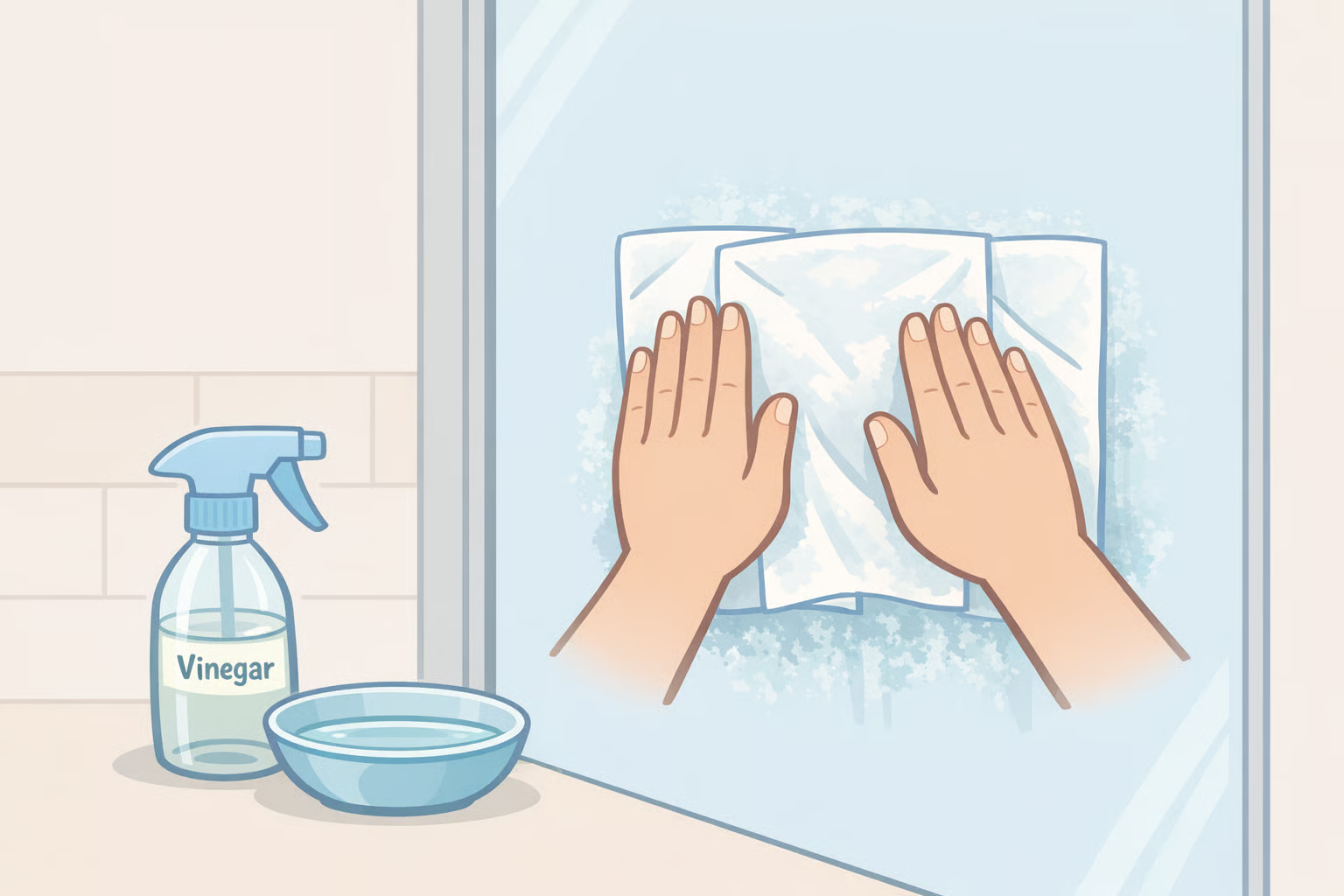
Glass holds mineral deposits visibly and needs careful handling to avoid scratching. The paper towel technique makes a real difference on vertical surfaces.
- Mix equal parts white vinegar and water; add one teaspoon of dish soap to help the solution cling to the glass.
- Spray the door, then press vinegar-soaked paper towels flat against the surface. This keeps the acid in full contact for 15 minutes without it running off (P&J Cleaners, last March). For heavy deposits, warm the vinegar first.
- Remove the paper towels and wipe with a microfiber cloth. For stubborn spots, use a melamine foam sponge. No abrasive pads.
- Rinse, then squeegee or buff dry immediately. Any water left to evaporate restarts the cycle.
- If vinegar doesn't shift the deposit after two attempts, switch to a commercial descaler and follow the label's contact time precisely.
Chrome faucets and fixtures
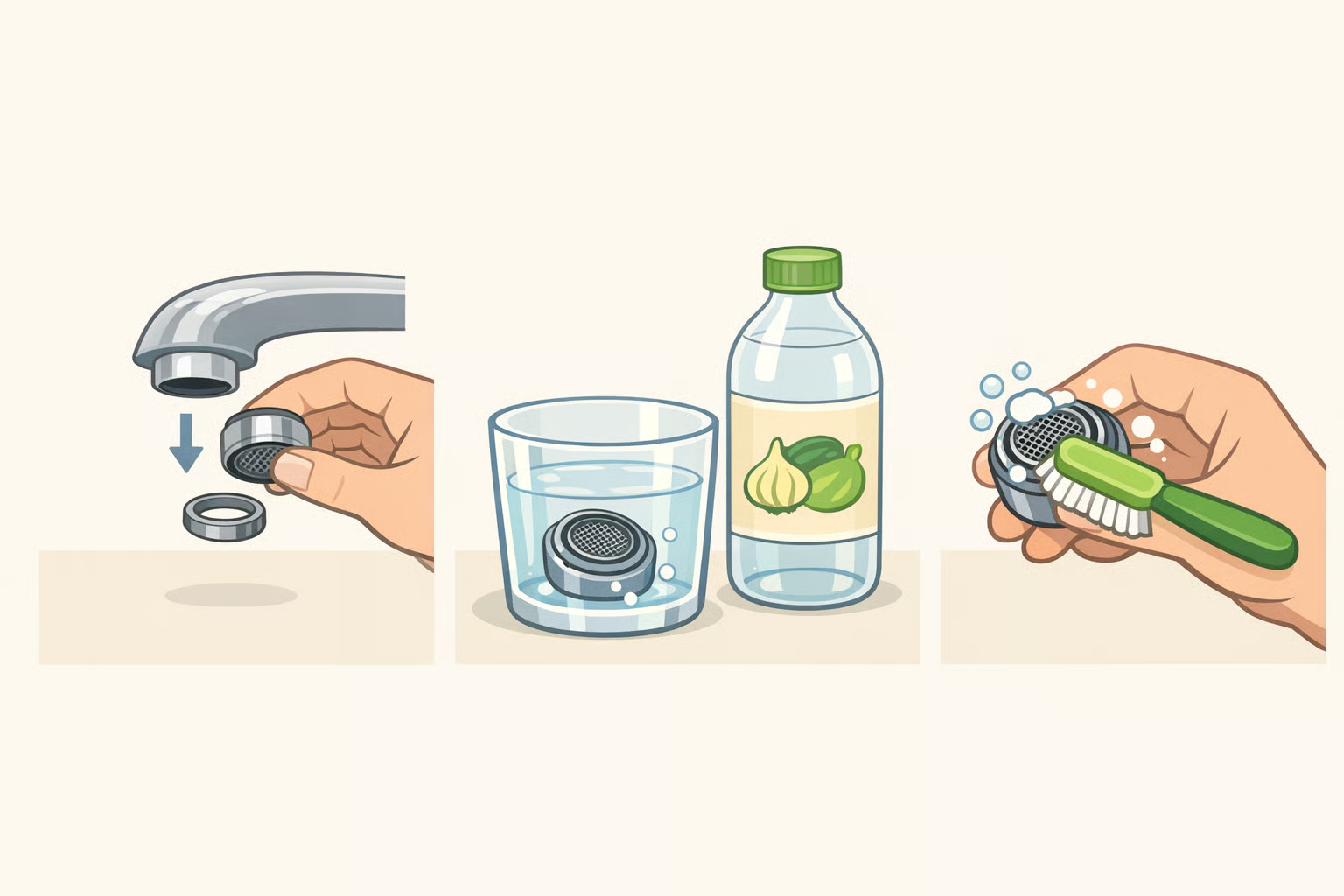
- Soak a cloth in a 50/50 vinegar-and-water solution.
- Wrap the soaked cloth around the fixture base, handles, and spout. Leave for up to 10 minutes (Good Housekeeping, this week).
- Wipe gently with a soft cloth, rinse, and buff dry.
- Unscrew the aerator (the small screen at the faucet tip), soak it in straight vinegar, and scrub with a toothbrush. A weak stream often signals mineral buildup restricting the flow opening soaking and scrubbing clears it (Good Housekeeping, this week).
Shower heads
- Dip a toothbrush in white vinegar and scrub each nozzle opening directly.
- Wipe clean, then run the shower at full pressure to flush dislodged minerals through.
- For removable shower heads: fill a plastic bag with vinegar, submerge the head, and secure with a rubber band. Check manufacturer guidance first prolonged vinegar contact can damage some decorative finishes (Good Housekeeping, this week).
Toilet bowl
Standing water dilutes anything poured into a toilet, so a dedicated mineral descaler reliably outperforms vinegar on established deposits. Use a cleaner formulated for mineral scale, not a general bleach cleaner.
Commercial descaler method: Apply under the rim and above the waterline, scrub, leave 15 minutes, scrub again, flush. Heavy buildup may need a second round (Good Housekeeping, this week).
Vinegar and baking soda method:
- Pour one cup of white vinegar around the bowl interior, swish with the brush, leave for one minute.
- Add one cup of baking soda the mixture will fizz. Leave for 10 minutes.
- Add a second cup of vinegar, swish, and leave for 30 minutes.
- Scrub and flush. Repeat if needed (Good Housekeeping, this week).
For hardened deposits along the waterline: A pumice cleaning stone, made from crushed and compressed glass, scrubs scale away without scratching porcelain. Keep both the stone and the bowl wet throughout dry pumice scratches (Good Housekeeping, last November).
Small items: drinking glasses, aerators, strainers
- Warm white vinegar in the microwave until warm but not boiling.
- Submerge items in a basin of warm vinegar for 10 minutes, rotating glasses to cover all sides.
- Remove, sprinkle baking soda directly on each item, and rub gently to lift remaining residue.
- Rinse and buff dry (Good Housekeeping, this week).
This soak-and-neutralize method works equally well for aerator screens, removable faucet heads, and sink strainers anything small enough to submerge.
Kitchen appliances
- Dishwasher: Place a bowl of white vinegar on the top rack and run the hottest cycle. This clears mineral buildup from interior walls, spray arms, and drain components (Good Housekeeping, this week).
- Coffee maker: Run a 50/50 vinegar-and-water solution through one full brew cycle, then immediately follow with a plain water cycle to flush residue from the system (Good Housekeeping, this week).
- Kitchen faucet spray head: Fill a plastic bag with 50/50 vinegar and water, submerge the spray head, and secure with a rubber band. Soak for 30–60 minutes, then run water to flush loosened minerals (Good Housekeeping, this week).
How to stop hard water stains from returning
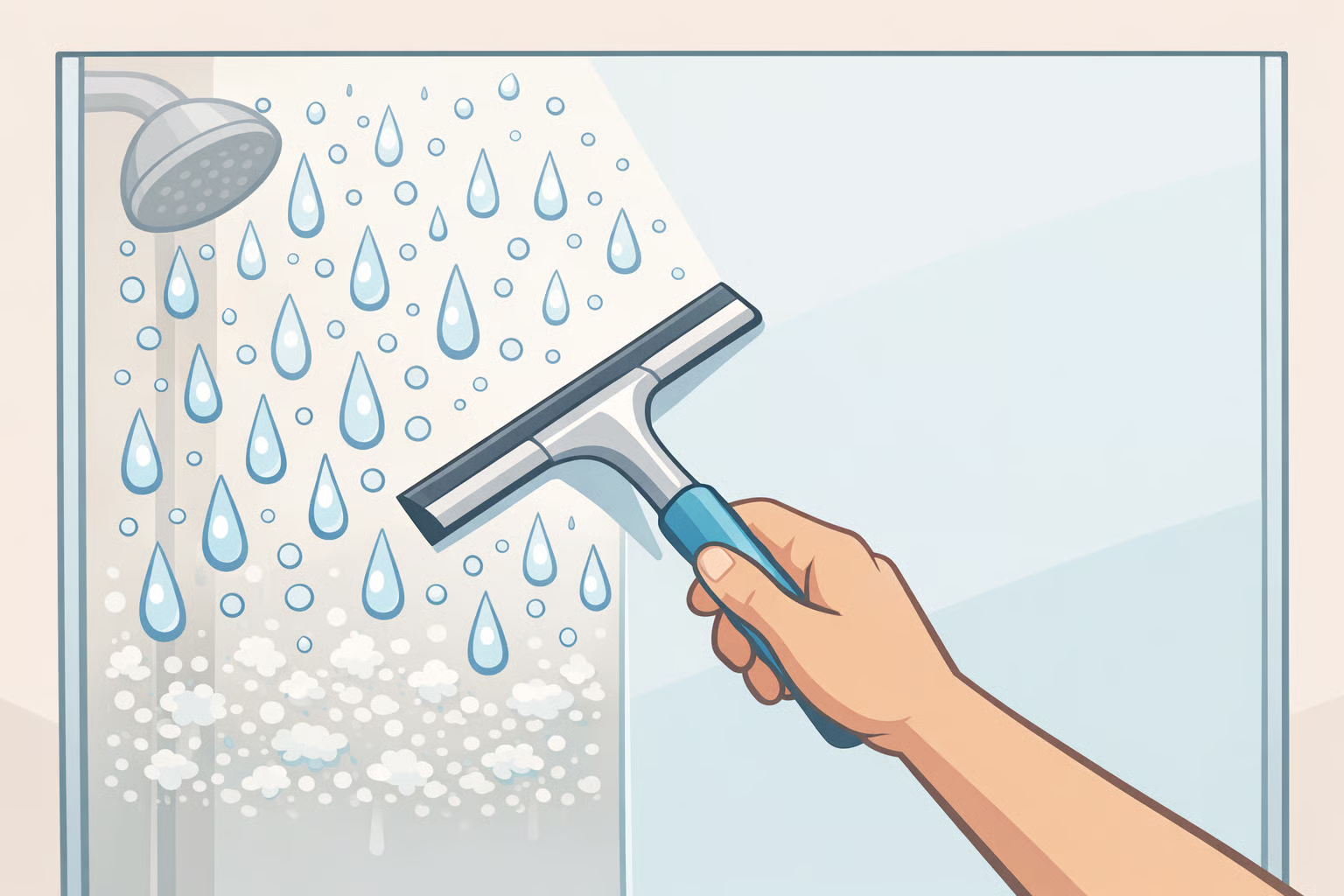
Stains only form when water evaporates on a surface. Remove the water before that happens and there's nothing to clean. These habits are ranked by effort relative to payoff.
1. Squeegee shower glass after every shower. Work top to bottom in overlapping strokes, wiping the blade after each pass. About 30 seconds of work. This removes the majority of water before minerals can deposit and stretches the time between deep cleaning sessions (P&J Cleaners, last March). Cost: the price of a squeegee.
2. Wipe down faucets, sinks, and fixtures after use. Carolyn Forte, former executive director of the Good Housekeeping Institute Cleaning Lab, identifies this as the most effective no-cost prevention: keeping wet surfaces dry stops minerals from depositing in the first place (Good Housekeeping, this week). Cost: nothing.
3. Run the exhaust fan during and after showering. Less ambient moisture means less water settling on surfaces. Run it for 20–30 minutes after a shower to clear moisture-laden air (P&J Cleaners, last March). Cost: electricity.
4. Apply a water-repellent glass coating periodically. Products like Rain-X or ceramic glass coatings bond at a molecular level and cause water to bead and roll off rather than spread and evaporate on the surface, lasting 6–12 months with proper maintenance (P&J Cleaners, last March). For anyone with hard water who doesn't want to squeegee every single day, this is the most practical upgrade between a behavioral habit and a plumbing investment.
5. Install a whole-home water softener. A salt-based ion exchange softener removes calcium and magnesium before water reaches any fixture, eliminating the problem at the source. Penn State Extension describes the technology as well-developed and reliable, with hardware costs running roughly $500–$1,500 before professional installation (Penn State Extension, last September). Two things worth knowing: Penn State is explicit that hardness minerals carry no health risk, so softening is a convenience decision rather than a safety one. The ion exchange process also adds a small amount of sodium to treated water, which matters for anyone on a low-sodium diet. For moderately hard water, habits one through four are usually sufficient. For hard or very hard water with scale reappearing within days of cleaning, a softener starts to make sense.
Which approach fits your situation
Three scenarios cover most cases.
Soft to slightly hard water (under 120 mg/L): Diluted vinegar, a squeegee after every shower, and a weekly wipe-down handle it. No specialist products needed.
Hard to very hard water (above 120 mg/L): Use commercial descalers for existing scale, apply a glass coating for ongoing protection, and consider a softener if deposits are returning faster than you can keep up with them.
No improvement after cleaning, or persistent haziness: Stop. A surface that looks cloudy after acid treatment and full rinsing may be etched rather than dirty adding more acid changes nothing. At that point the options are glass polishing compounds, professional resurfacing, or a professional cleaner who can apply higher-concentration formulations (P&J Cleaners, last March; Penn State Extension, last September). Knowing when to put the spray bottle down is half the job.