What time is too early to mow the lawn: laws and wet grass
There is a defensible answer to this question, but it's not a single clock time. It's the overlap of two things: when local noise rules permit you to start, and when your grass is actually dry enough to cut well. Those two windows tend to align in mid-morning, which is why mid-morning is the most consistently safe recommendation. But that's the conclusion, not a universal rule, and getting there requires clearing two separate hurdles first.
Most homeowners don't realize that mowing before permitted hours isn't just a courtesy issue. In many jurisdictions it's a code violation, enforceable by local police or code enforcement officers responding to a neighbor complaint. LegalClarity notes that fine schedules in some municipalities run from a warning on a first offense to around $100 for a second, $500 for a third, and up to $1,000 for continued violations though these are illustrative examples, not a universal schedule. Your city may be more lenient or more aggressive.
Here's where most people land:
- Weekdays: before 7:00–8:00 a.m. is legally risky in many places; the exact cutoff depends on your city or county
- Weekends and holidays: start times are often pushed to 9:00 a.m. the morning you're most likely to want an early start is usually the morning the rules run latest
- HOA households: community rules may push the window another hour beyond city ordinance
- Once legal hours clear: wait for dew to dry mid-morning, roughly 9:00–11:00 a.m., is where legal compliance and dry-grass conditions reliably overlap
- Note: this timing guidance applies primarily to cool-season grasses common in northern states; warm-season lawns follow different dormancy and growth patterns
The rest of this piece explains the legal layer first, the lawn-science layer second, and then the one condition summer drought and dormancy where the right answer is often to skip mowing altogether.
Legal lawn mowing hours: what your city and HOA can restrict
Video of the Day

There is no federal noise standard for yard equipment. Rules are set at the city or county level, and they vary. That said, LegalClarity's review of municipal ordinances finds a common pattern worth using as a starting point: on weekdays, permitted start times commonly fall between 7:00 and 8:00 a.m.; on weekends and holidays, that window often shifts to 9:00 a.m. Evening cutoffs follow the same logic, with loud yard equipment restricted after 8:00 or 9:00 p.m. in places that have adopted these rules. Treat those as broad patterns, not firm rules your municipality may differ, and only your local code gives you the authoritative answer.
The weekend restriction deserves particular attention because it's the most practically relevant. A Saturday morning start at 8:00 a.m. may be fine on a Tuesday and a violation on a holiday weekend. That single-hour shift accounts for a substantial share of early-mowing complaints, because most homeowners assume weekend mornings are no more restricted than weekdays.
When a neighbor does complain, local police or code enforcement officers handle the response which makes this a practical risk, not a hypothetical one, as LegalClarity notes. A first offense often brings a warning. Repeat violations can escalate, with LegalClarity citing example schedules that run around $100 for an initial fine, $500 for a second, and $1,000 for ongoing violations. These are examples drawn from real ordinances, not a standard schedule the point is that the consequences can compound.
HOA households face a second layer on top of this. LegalClarity is direct on the obligation: residents are legally required to follow whichever rule is stricter. So if the city allows mowing from 9:00 a.m. on weekends but the HOA prohibits outdoor maintenance before 10:00 a.m., a 9:15 a.m. start is a valid HOA violation even though it clears the municipal bar. HOAs can also levy their own fines independently of any city penalty, meaning a single early-morning session can draw consequences from two directions at once.
To find your actual window: search "[city name] noise ordinance" and look for sections covering yard equipment or power tools. HOA residents should check their CC&Rs under "maintenance," "landscaping," or "noise." If the CC&Rs are ambiguous, a quick email to the HOA asking for clarification gives you a written record of whatever they tell you.
Video of the Day
When is it okay to mow the lawn if the grass is still wet?

Clearing the legal window is step one. Step two is checking whether the grass itself is ready to cut and early morning, even when legally permitted, usually fails this test.
The problem is dew. Wet grass sticks to mower decks rather than dispersing cleanly, and wet soil is more susceptible to ruts from mower wheels, according to UGA Today. University of Georgia turf specialist Clint Waltz puts the guidance plainly: "It's better to mow when the canopy, or grass leaves, are dry." In practice, that means waiting until after dew has dried, which Waltz notes is usually around mid-morning, even in the humid Southeast.
Think of it like cutting wet hair: technically possible, but the result is uneven and harder on the tool.
So mid-morning roughly 9:00 to 11:00 a.m. is where the two requirements converge for most people. It's often past legal quiet hours even on weekends, and it's consistently past the dew-dry window even in humid climates. Not the only acceptable time to mow; just the window that reliably clears both hurdles at once.
For anyone who can't mow mid-morning, Waltz also endorses late afternoon around 5:30–6:00 p.m. as a sound backup, per UGA Today. By that point the grass has dried out fully and there's still enough daylight to finish the job comfortably.
A quick summary of how the day breaks down:
- Before local quiet hours end: legally risky
- Legal start time through dew-dry window: permitted, but agronomically suboptimal
- Mid-morning (~9:00–11:00 a.m.) once dew has dried: legal and optimal for most situations
- Late afternoon (~5:30–6:00 p.m.): reliable backup
- After evening cutoff (~8:00–9:00 p.m. in many places): legally risky again
Mowing height compounds the timing question in a way worth flagging. Waltz notes that mowing at the right height optimizes canopy density, root depth, and root volume and that a more extensive root system allows turf to pull moisture from greater depths, making it more resilient against drought and other stressors, per UGA Today. Cutting too short works against all of that. Ohio State Extension notes that scalping stresses the grass plant directly. A practical rule: to maintain a 3-inch lawn, mow before the grass reaches 4.5 inches, never removing more than one-third of the blade in a single pass.
Weekend lawn mowing times are often later and summer drought changes the question entirely
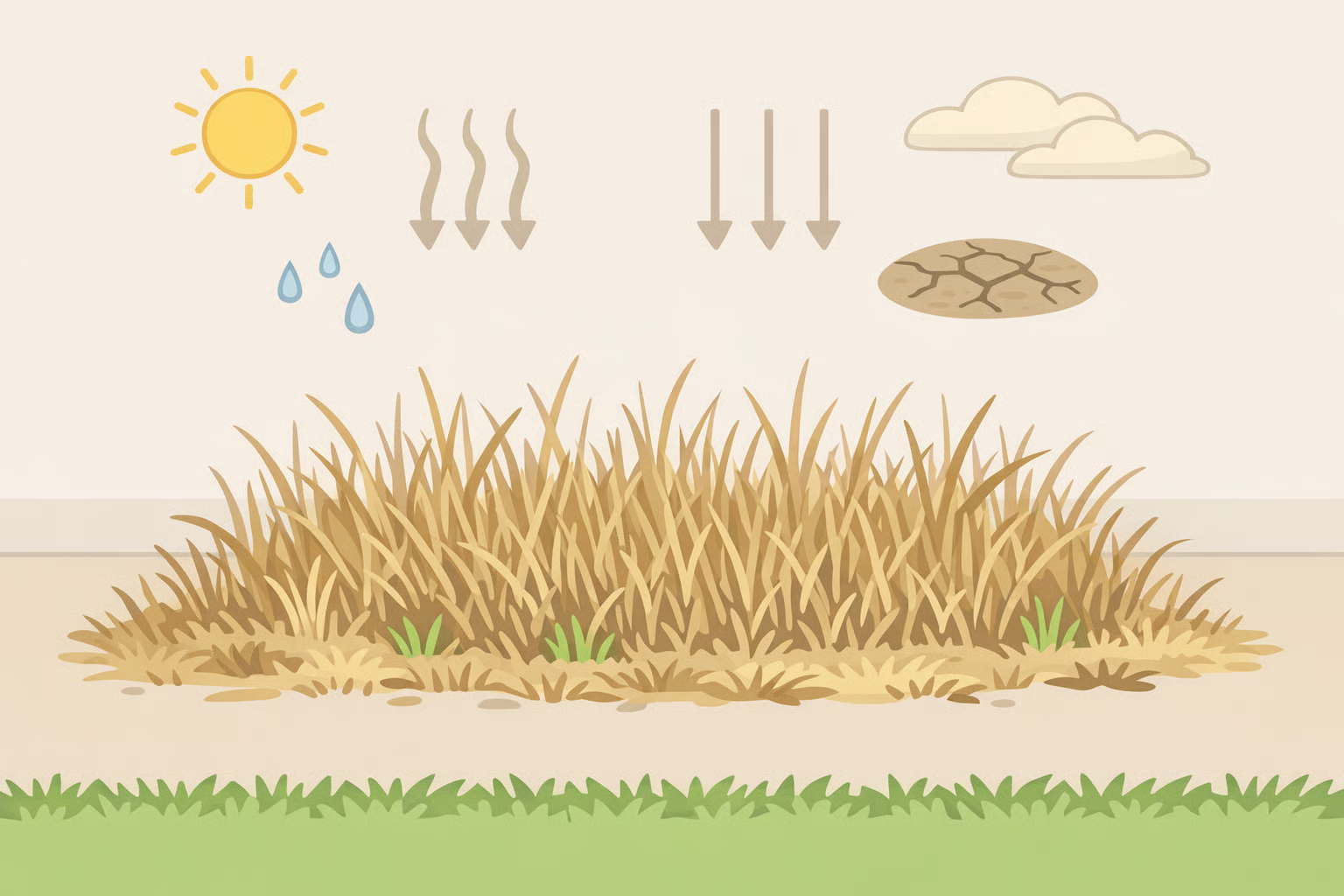
The timing guidance above assumes the lawn is actively growing and ready to be cut. Under drought stress or summer dormancy, that assumption breaks down. The question stops being when to mow and becomes whether to mow at all.
Cool-season grasses Kentucky bluegrass, fine fescues, and similar varieties actively grow during the cooler temperatures of spring and fall. Mid-summer heat and drought cause these grasses to stop growing or slow significantly and turn brown. That browning is a stress response, not a sign the lawn needs cutting; the grass should green up again as temperatures cool. University of Minnesota Extension guidance on mid-summer lawn care makes this point directly, recommending that homeowners raise mower height and mow less often, or skip mowing entirely, to minimize damage to grass already struggling with heat and low moisture.
Adding mechanical stress on top of heat stress makes recovery harder. If the lawn isn't growing, running a mower over it doesn't help it just compounds the problem.
Warm-season grasses bermuda, zoysia, St. Augustine follow different dormancy and growth patterns. The cool-season guidance above doesn't apply to them in the same way; your state's cooperative extension service is the best source for region-specific advice.
Start here, then go outside
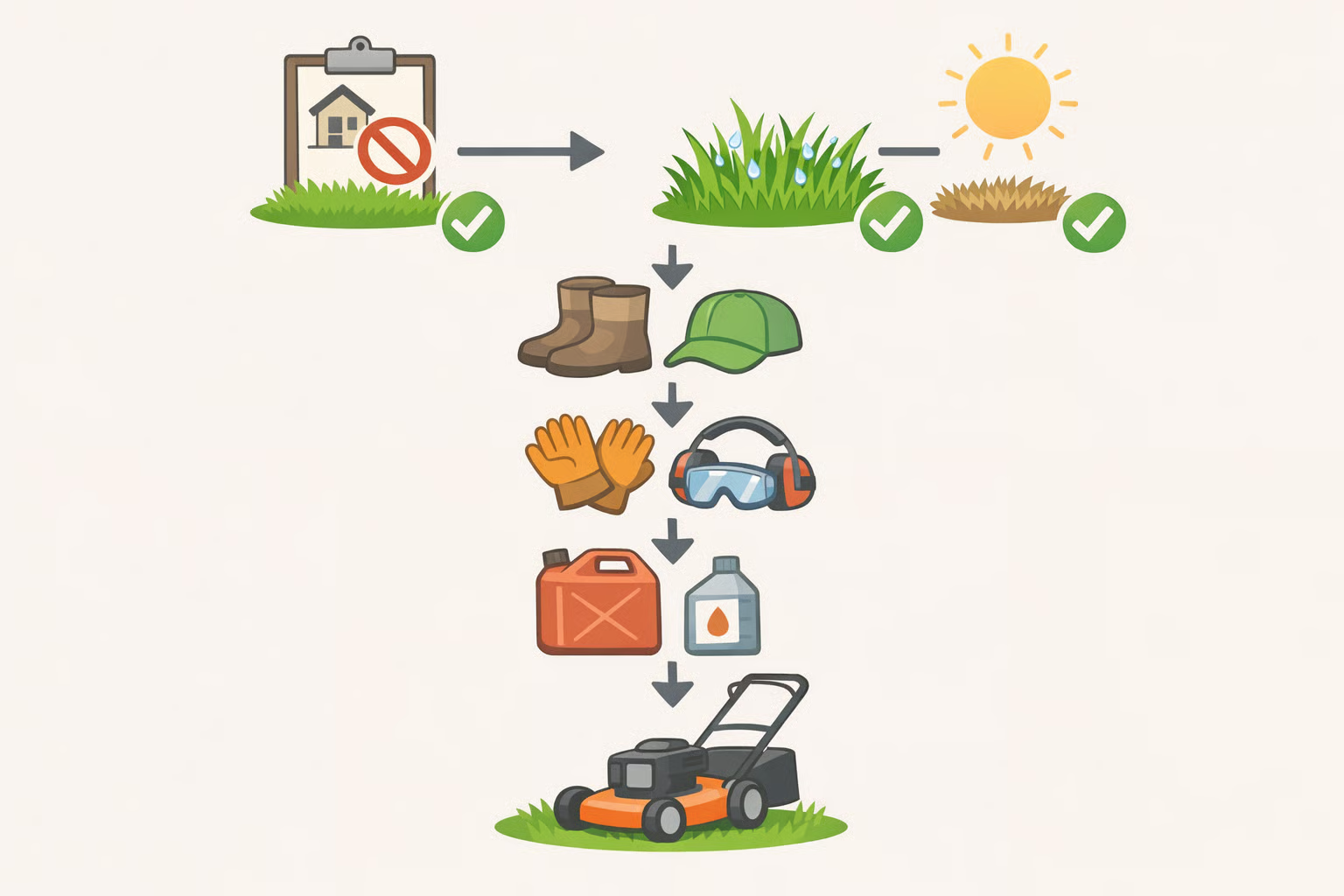
The sequence is short. Find the noise ordinance for your city or county search "[city name] noise ordinance" and look for the yard equipment or power tools section. If you have an HOA, pull out the CC&Rs and look under maintenance or landscaping, then follow whichever rule is more restrictive. Check whether it's a weekday or weekend, because that single variable shifts the permitted start time by an hour in many jurisdictions and is the most common source of early-mowing violations, per LegalClarity.
Once the legal window opens, wait for the dew to dry. Mid-morning, roughly 9:00–11:00 a.m., is where legal compliance and dry-grass conditions overlap reliably, according to UGA Today. Late afternoon around 5:30–6:00 p.m. works just as well if mid-morning isn't practical. And if the lawn is dormant or browning from summer heat, raise the deck, cut less often, and let the grass recover on its own terms before putting the mower back to work.
The right time to mow is rarely sunrise. It's the first legal hour after the lawn has dried out and sometimes it's not today at all.