Cool Ranch Pickle Chips Recipe: Air Fryer Coating Guide
This cool ranch pickle chips recipe delivers a genuinely crunchy snack with ranch flavor built into the crust, not just the dipping cup. Three core ingredients do the work: dill pickle chips, panko breadcrumbs seasoned with a ranch packet, and an egg to help the coating stick. You'll also need flour, milk, and cooking spray to make the breading adhere and brown properly. Start to finish, it runs about 30 minutes.
At a glance:
- Yield: 6 servings
- Prep: 20 minutes | Cook: 8-10 minutes per batch | Total: ~30 minutes
- Equipment: 6-quart air fryer, three shallow bowls, paper towels
Ingredients (full list):
- 1 (24 oz.) jar dill pickle chips, drained
- 1 cup panko breadcrumbs (plain, not Italian-seasoned)
- 1 store-bought dry ranch seasoning packet (about 1 oz.), or 2 tablespoons homemade ranch mix (see Step 2 note)
- ½ teaspoon paprika
- ¼ cup all-purpose flour
- 1 large egg + 2 tablespoons milk, whisked together
- Non-stick cooking spray
The "3 core ingredients" framing refers to the flavor trio that makes this what it is: pickles, ranch seasoning, and breadcrumbs. The flour, egg, and milk handle adhesion. That distinction is worth keeping in mind if you need to troubleshoot.
Two things to know before starting. First, crispiness in an air fryer is almost entirely a moisture problem, not a temperature problem. Chowhound identifies patting pickles dry as the single most critical step, since residual brine prevents the coating from adhering and causes it to steam rather than crisp. Second, "cool ranch" flavor belongs in the coating. According to Evolving Table's ranch seasoning breakdown, the two defining flavors in ranch are buttermilk and dill, with garlic powder, onion powder, parsley, and chives rounding out the profile. All dry, all suited for a breadcrumb crust. Wet ranch dressing turns gummy under heat and should stay on the table as a dip.
How to make this cool ranch pickle chips recipe
Video of the Day
Step 1: Drain and dry the pickle chips aggressively.
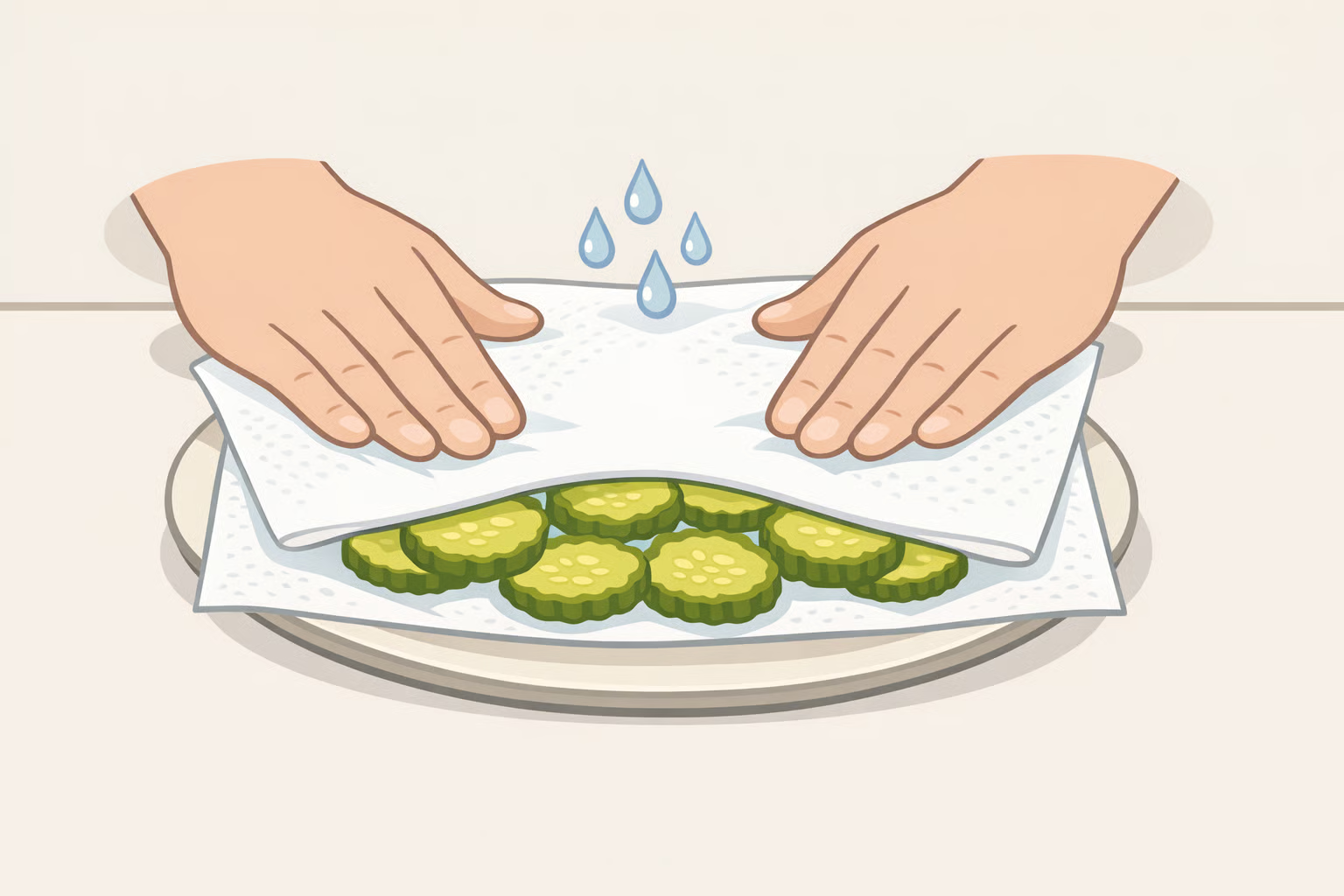
Spread the drained pickle chips in a single layer on a paper towel-lined plate. Press a second layer of paper towels firmly on top and hold for 30 seconds. Replace the towels and press again. The chips should feel nearly dry to the touch, no surface sheen, no pooling liquid. This is the step most people rush, and it determines whether the coating stays on. As Chowhound notes, wet batters fail entirely in an air fryer; even a dry breadcrumb crust won't perform if the pickle surface is still carrying brine.
Step 2: Build the seasoned breadcrumb coating.
In a shallow bowl, combine 1 cup panko breadcrumbs with the full contents of one dry ranch seasoning packet, plus ½ teaspoon paprika and ¼ teaspoon black pepper. Mix until evenly distributed and taste a pinch; it should read salty, tangy, and herby. If the ranch flavor feels weak, add another pinch of dried dill and garlic powder.
If making your own ranch seasoning instead of using a packet: Evolving Table uses ⅓ cup buttermilk powder, 1 tablespoon garlic powder, 1 tablespoon onion powder, 2 teaspoons dried dill, 2 teaspoons dried parsley, 1 teaspoon dried chives, 1 teaspoon salt, and ¼ teaspoon pepper as the base. One serving of that mix is 2 tablespoons, which is what to use per cup of panko here. The buttermilk powder creates the tangy background note that makes ranch taste like ranch; don't skip it if going the homemade route.
Step 3: Set up the three-bowl breading station.
- Bowl 1: ¼ cup all-purpose flour
- Bowl 2: 1 large egg whisked with 2 tablespoons milk
- Bowl 3: The seasoned panko mixture
Evolving Table describes this sequence as the key to getting thick breading to actually stick. Flour gives the egg wash something to grip; egg wash gives the breadcrumbs something to bond to. Skip the flour and the coating typically slides off during cooking.
Step 4: Bread each chip individually.
Working one at a time, dredge a dried pickle chip in flour and shake off any excess. Dip it in the egg wash, let the excess drip off, then press it into the seasoned breadcrumbs, coating both sides fully. Set the breaded chip on a clean plate. Don't stack them; they'll fuse together. The coating should look opaque and fully covered before it goes in the fryer. Bare patches will stay pale and soft.
Step 5: Preheat the air fryer and lightly oil the basket.
Set the air fryer to 400°F before loading, the temperature used in Evolving Table's tested recipe. Lightly spray the basket with non-stick cooking spray. Chowhound recommends a light oil spray on the coated pickles themselves as well, which promotes even browning and keeps the coating from sticking to the basket. Air fryers move fast; according to the same source, they cook roughly twice as quickly as a conventional oven.
Step 6: Cook in a single layer for 8-10 minutes, flipping once.
Place chips in a single layer in the basket with no overlap. Spray the tops lightly with cooking spray. Air fry at 400°F, flipping halfway through. Evolving Table targets 8-10 minutes for a golden result; start checking the color at the lower end of that range. Look for a deep golden crust, not a pale one. Once a batch is done, set it aside and cook the remaining chips separately.
Overcrowding is the most common mistake. Chowhound is direct about this: a crowded basket blocks the airflow that does the crisping. Two batches is not inconvenient when each takes under 10 minutes.
Video of the Day
When things go wrong
Coating came out pale and soft. The basket was likely overcrowded, or the pickles went in still carrying surface moisture. Return to the single-layer rule and the drying step; both are sourced as the core fixes by Chowhound and Evolving Table.
Coating slid off during cooking. Pickles weren't dry enough before breading, or the flour stage was skipped. Either leaves the egg wash with nothing to grip. Go back to Step 1 and press longer.
Ranch flavor was faint. The seasoning wasn't evenly distributed in the panko, or the ratio was too low. Use 2 tablespoons of homemade mix per cup of panko, per Evolving Table's serving size guidance, and stir the bowl thoroughly before coating. If using a store-bought packet, taste a pinch of the breadcrumb mixture before you start breading; it's easier to adjust dry than to fix it after.
On storage: Evolving Table notes that cooked chips keep in an airtight container in the refrigerator for up to five days and reheat well at 350°F in the air fryer for 2-3 minutes. Freezing the finished chips isn't recommended; the coating absorbs moisture and softens. For a make-ahead option, Serious Eats notes that breaded, uncooked pickle chips can be frozen on a parchment-lined sheet for up to three months, then cooked from frozen with up to 2 extra minutes added. That method applies to their deep-fried version, but the same freeze-before-cooking setup would likely work here; expect to add a little time in the air fryer. The dry ranch seasoning mix itself stays fresh for one to two years stored in a sealed container in a cool, dry spot, which makes a larger batch worth the effort.
Serving and variations
Serve immediately. Ranch dressing for dipping is the obvious call.
From here the method adapts without much fuss. Serious Eats uses cayenne in their fried pickle coating; ¼ teaspoon in the breadcrumb mix adds heat without overwhelming the ranch profile. For a calorie comparison: Evolving Table's air-fryer version lists 114 calories and 2 grams of fat per serving, while Serious Eats' deep-fried version lists 305 calories and 20 grams. Those are different recipes with different formulas, so treat it as directional. Deep frying is richer; the air fryer gets you a genuinely crispy result without a pot of hot oil and in about half the time.
Two rules that carry through every variation: dry the pickles completely before breading, and put the ranch in the coating.