Southern pasta salad recipe: creamy macaroni salad guide
Most macaroni salad fails before it ever gets dressed. Cook elbow macaroni to al dente, chill it, and the starches undergo retrogradation the same staling process that hardens day-old bread leaving noodles that are tight, chalky, and sealed against flavor. Serious Eats identified this mechanism back in 2015, and it holds: pasta cooked only to al dente firms further as it cools, which is why so many southern pasta salad recipes taste dull straight from the fridge.
Three method changes fix it. Cook the pasta two to three minutes past the package's al dente time. Season it with vinegar while it's still hot. Add the dressing in two stages, half before chilling and half just before serving. The ingredient list matters, but these moves are what separate a genuinely good bowl from the forgettable one that sits untouched at the end of the table.
What makes this specifically a Southern-style macaroni salad is the dressing: mayo-based, tangy from white vinegar, balanced with a measured amount of sugar, and deepened with yellow mustard. Southern Living treats each ingredient as essential rather than optional celery for crunch and aroma, mustard as part of the dressing's structure rather than an afterthought. This is not the same dish as a deli macaroni salad or a vinaigrette-dressed summer pasta salad. The profile is creamy, tangy, and faintly sweet, built to hold up next to smoked meat and hot sides.
Serves 8 to 10. Active time about 20 minutes; total time roughly 50 minutes with a minimum 30-minute chill. The salad can be assembled up to 12 hours ahead before the final dressing addition and keeps refrigerated for up to 3 days, per Southern Living.
What goes into a southern macaroni salad
Video of the Day
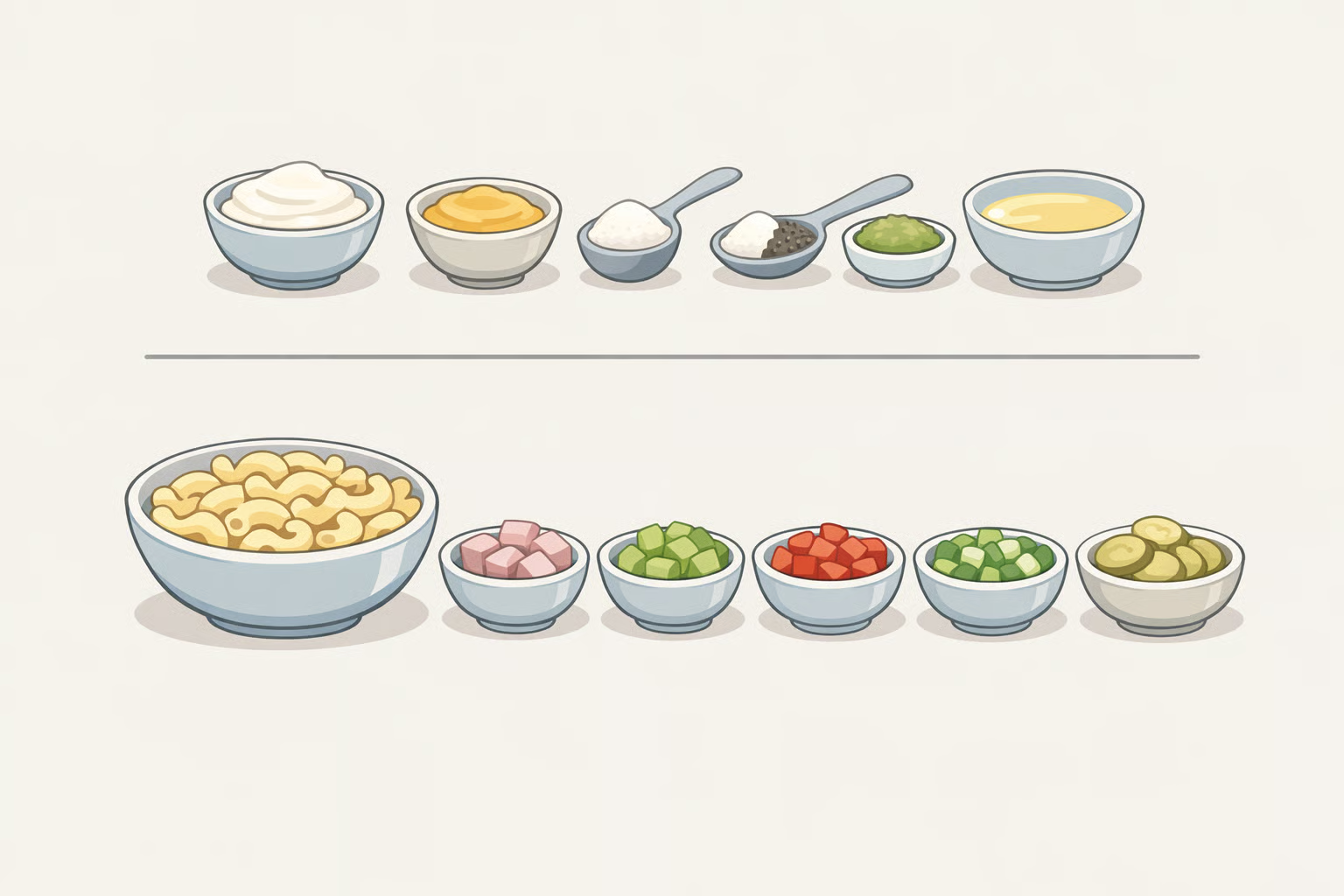
Ingredients:
- 1 lb (16 oz) dried elbow macaroni
- 1¼ cups mayonnaise
- 3 tablespoons white vinegar (plus 2 to 3 tablespoons for seasoning the hot pasta)
- 3 tablespoons granulated sugar
- 1 tablespoon yellow mustard
- 2 teaspoons kosher salt (Diamond Crystal; use half as much if using table salt or Morton's)
- ½ teaspoon black pepper
- ½ teaspoon granulated garlic
- ½ teaspoon onion powder
- ½ cup finely chopped celery (about 3 stalks)
- ½ to 1 cup finely chopped red onion
- 3 tablespoons drained diced pimientos
- Optional: 3 hard-boiled eggs, sliced or chopped
- Garnish: sliced scallions or celery leaves
The dressing quantities come from Southern Living. On the eggs: The Slow Roasted Italian includes three eggs per two pounds of pasta in a family version of this dish, crediting them with adding body and richness without shifting the flavor. Scaled to one pound, three eggs is still reasonable if you want that extra substance.
On Miracle Whip: some regional versions blend mayo with Miracle Whip for extra sweetness and tang. That's a legitimate variation. The Slow Roasted Italian notes the amounts in that style of recipe tend to be generous, and cutting back is worth considering if you want a less sweet result. This recipe sticks to straight mayo.
On the celery and onion: don't skip them and don't cut them thick. Their crunch is what keeps the salad from being just richness in a bowl.
Video of the Day
Step-by-step: southern pasta salad recipe
You'll need a large pot, colander, large mixing bowl, small mixing bowl, and whisk. Clear refrigerator space for a covered bowl. Budget at least 30 minutes of chilling time; 1 to 2 hours is noticeably better.
Step 1: Cook the pasta past al dente
Bring a large pot of generously salted water to a full boil. Add the elbow macaroni and cook it two to three minutes beyond the package's stated al dente time, until it's fully tender throughout, not just soft at the surface. You want the noodle to yield easily when pressed without being mushy or falling apart.
Serious Eats explains the reason: boiling the pasta until very tender allows it to absorb vinegar and dressing far more effectively once drained, and it firms back up to a pleasant texture as it cools. Pasta that's only cooked to al dente ends up chalky and resistant in the finished salad.
What you should see: A noodle that looks slightly puffed and tastes a little soft, noticeably past the bite-with-resistance stage. That's correct.
Step 2: Drain and immediately season with vinegar
Drain the pasta and transfer it straight to a large bowl while it's still hot. Do not rinse it. Pour in 2 to 3 tablespoons of white vinegar and stir steadily until fully absorbed, about a minute.
Serious Eats applies this technique specifically to macaroni salad: hot pasta absorbs liquid deeply, so the tang becomes part of each noodle rather than sitting on the surface. The macaroni will taste aggressively sharp on its own at this stage. That's expected; the dressing rounds it out completely.
Common mistake: Rinsing the pasta with cold water here stops absorption cold. Skip the rinse.
Step 3: Let the pasta cool before adding dressing
Spread the vinegar-coated pasta on a sheet pan or leave it in the bowl uncovered. Let it cool for about 10 minutes, until warm to the touch but no longer steaming.
Adding mayo-based dressing to actively hot pasta loosens and dilutes it. The brief rest preserves the dressing's texture and ensures it coats rather than absorbs unevenly. Serious Eats builds this rest period into the method deliberately.
Step 4: Build the dressing
In a small bowl, whisk together the 1¼ cups mayonnaise, 3 tablespoons white vinegar, 3 tablespoons granulated sugar, 1 tablespoon yellow mustard, 2 teaspoons kosher salt, ½ teaspoon black pepper, ½ teaspoon granulated garlic, and ½ teaspoon onion powder until smooth. Southern Living combines all dressing components first so the seasoning is already balanced before it touches the pasta.
Optional variation: Serious Eats builds a different dressing with sour cream, Dijon, Worcestershire, and hot sauce for more complexity. Good recipe, different dish. This one stays in the Southern lane: yellow mustard, white vinegar, sugar. If you want more depth within that profile, a small splash of apple cider vinegar in place of some of the white is the move.
Step 5: Add vegetables and half the dressing, then chill
Finely dice the celery and pimientos. Finely chop the red onion and soak it in ice water for 10 minutes, then drain and pat dry. Southern Living recommends this soak specifically to soften the sharpness of raw red onion. If it still bites hard after 10 minutes, soak it for up to 20.
Add the celery, onion, and pimientos to the cooled pasta. Add the hard-boiled eggs here if using. Pour in roughly half the prepared dressing and fold to coat thoroughly. Cover the bowl and the reserved dressing separately and refrigerate for at least 30 minutes, up to 12 hours. Per Southern Living, letting the salad sit with half the dressing helps it absorb flavor while everything cools together.
Step 6: Add the reserved dressing just before serving
Pull the salad from the refrigerator. Add the reserved dressing and stir until the salad is loose, evenly coated, and creamy rather than stiff or clumped. Southern Living frames this as a deliberate structural move: pasta absorbs dressing as it chills, so the second addition restores the proper creamy consistency rather than arriving overdressed or gluey. Taste and adjust salt, vinegar, or sugar as needed. Garnish with scallions or celery leaves.
Step 7: Rest before serving
Let the dressed salad sit out for 15 to 20 minutes before serving. Serious Eats notes that pasta salad pulled straight from the refrigerator tends to taste flat and can feel unpleasantly firm as chilled fats stiffen. The brief rest makes a real difference in both flavor and texture.
One hard limit: per Serious Eats, more than two hours at room temperature raises food safety risk meaningfully. At outdoor events, keep the bowl nested in ice if it will be out longer.
Troubleshooting and make-ahead notes
Too dry or tight after chilling: The pasta absorbed more dressing than expected. Stir in a spoonful of mayo and a splash of white vinegar or milk to loosen it. This is normal on day two or three.
Too bland: Cold suppresses flavor. Let it rest at room temperature for 15 to 20 minutes before tasting, then adjust salt. Add more dressing only if it's still flat after resting.
Too sweet or too tangy: The sugar and vinegar are balanced when fresh but the ratio can shift after chilling. Adjust one at a time in small increments half a teaspoon of sugar or a small splash of vinegar and stir before tasting again.
Onion too sharp: Extend the ice water soak to 20 minutes or reduce the quantity going in.
Too firm straight from the fridge: Expected. The room-temperature rest in Step 7 handles it. Don't add more dressing until after it has rested and you can taste it properly.
Make-ahead window:
- Minimum chill before final dressing: 30 minutes
- Best window: 1 to 2 hours (flavors deepen, texture sets properly)
- Can hold before final dressing: up to 12 hours refrigerated
- Stores after final dressing: up to 3 days in an airtight container, per Southern Living and Serious Eats
- Before serving on day two or three, stir in a small amount of mayo and a splash of vinegar to refresh the texture
What to watch the first time you make it
The pasta stage is where most people stumble. Two to three minutes past al dente sounds like a lot; it isn't. Pull a noodle and press it. Any chalkiness or firm center means it needs more time. Get that right and the rest of the recipe is forgiving.
The split dressing method transfers cleanly to other summer pasta salads. Hot seasoning, staged dressing, room-temperature rest before serving those three habits will improve almost any version of this dish you want to make.