How to Clean a Washing Machine Detergent Drawer (and Fix Smells)
If your clothes smell off after washing, start with the detergent drawer. It's free to clean, takes ten minutes, and is often the whole problem. This guide walks through how to clean a washing machine detergent drawer step by step, then covers which parts to check next in a specific order if the drawer wasn't enough.
Most people assume the drawer stays clean because it's bathed in soap and water every cycle. That assumption is wrong. Good Housekeeping Institute product analyst Noah Pinsonnault says the dispenser drawer should be cleaned because detergent residue, fabric softener buildup, and standing moisture can create a sticky film that contributes to odors, mold, and mildew growth over time making it one of the biggest buildup points in the entire machine (Good Housekeeping). That buildup can also interfere with proper dispensing performance, which has a direct consequence: a drawer that isn't releasing product correctly means clothes may not be getting the cleaning action the cycle was designed to deliver.
A peer-reviewed analysis of washing machine microbiomes found the highest bacterial diversity of any sampled location in the machine was inside the detergent drawer, ahead of the door seal, the sump, and the drum (PMC). Diversity isn't the same as odor risk, but it's strong evidence the drawer is a genuine hotspot.
Why a dirty detergent drawer makes your washing machine smell bad
Video of the Day
Detergent and fabric softener don't fully flush away during a typical wash cycle. They accumulate gradually in the dispenser housing, and combined with trapped moisture, they give microorganisms everything they need to form biofilms structured colonies significantly more resistant to disruption than free-floating bacteria (PMC). The odor those bacteria produce isn't a vague mustiness. It comes from specific volatile compounds: ammonia, hydrogen sulfide, and short-chain fatty acids.
A dirty drawer creates two problems at once. The drawer itself becomes an odor source that affects the air inside the drum. Blocked dispenser compartments can also interfere with how and when product is released, leaving clothes with less cleaning action than intended (Good Housekeeping). Clothes that aren't being properly cleaned will smell, regardless of how long the cycle runs.
Modern laundry habits can quietly make this worse. Research shows that washing with a bleach-containing detergent at 40°C or above produces dramatically higher bacterial reduction than cycles run at 30°C with a bleach-free liquid or gel formula (PMC). Cold cycles are fine for fabric care, but they don't sanitize the machine between uses. That gap is worth addressing and the prevention section at the end covers how.
Video of the Day
How to clean a washing machine detergent drawer: step by step
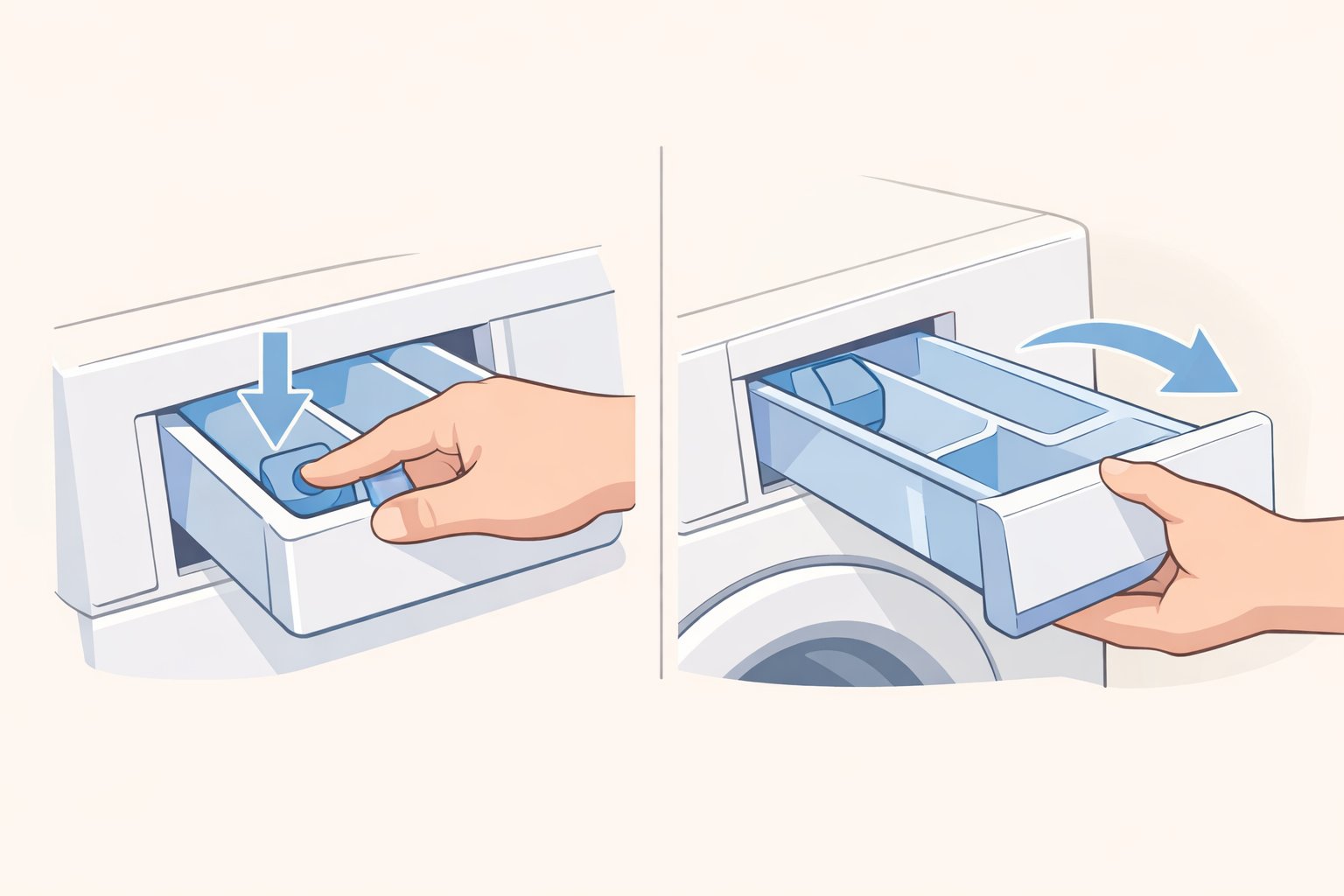
What you'll need: Warm water, a soft-bristled brush or old toothbrush, mild dish soap.
Check your machine's owner's manual before starting. Drawer removal mechanisms vary by brand, and forcing the wrong release point can crack the housing (Good Housekeeping).
-
Step 1 Remove the drawer fully. Most drawers slide straight out after pressing a small release tab, usually marked or indented inside the cavity. The drawer is designed to come out entirely; many users don't realize this (Good Housekeeping). Once removed, you'll see separate compartments typically for pre-wash, main detergent, and fabric softener. Expect visible residue in at least one of them.
-
Step 2 Rinse under warm running water. Hold the drawer under the tap and flush each compartment to loosen the bulk of the buildup before scrubbing. This removes the surface layer and makes the next step faster.
-
Step 3 Scrub every compartment, corner, and the siphon cap. Use a soft brush or old toothbrush to work through buildup in the narrow channels and corners where residue packs in (Good Housekeeping). Add a small amount of dish soap if buildup is heavy. Don't skip the softener compartment's siphon cap the small removable cap at the center of that section traps residue underneath and is easy to miss. Lift it off and clean beneath it. Also check the underside of the drawer itself, which often collects a grey, slimy film.
-
Step 4 Clean the drawer cavity. With the drawer out, wipe down the housing it slots into. Use a damp cloth or the same brush to clear residue from the back wall and sides of the slot. This area is rarely cleaned and contributes its own share to machine odor.
-
Step 5 Rinse, inspect, and replace. Rinse the drawer thoroughly soap left behind feeds the next round of buildup. Hold it up and look through the compartments before replacing. If water runs clear and there's no visible film or sludge, it's clean. Slide it back in.
How often: Once a month covers most households. If you use heavy amounts of fabric softener, run loads daily, or notice visible residue, clean it more often (Good Housekeeping).
Skip the vinegar. Distilled white vinegar comes up constantly in washing machine cleaning advice, but Consumer Reports advises against it unless your owner's manual explicitly allows it. Vinegar can damage rubber seals and hoses, potentially causing leaks (Consumer Reports). Warm water and dish soap are sufficient for the drawer.
If the buildup is gone and the next full load still smells off, the drawer isn't the only problem.
If the smell persists: a prioritized troubleshooting path
Washing machine odor has several distinct sources, and they produce recognizable patterns. Match the smell to the likely cause before cleaning everything at random.
-
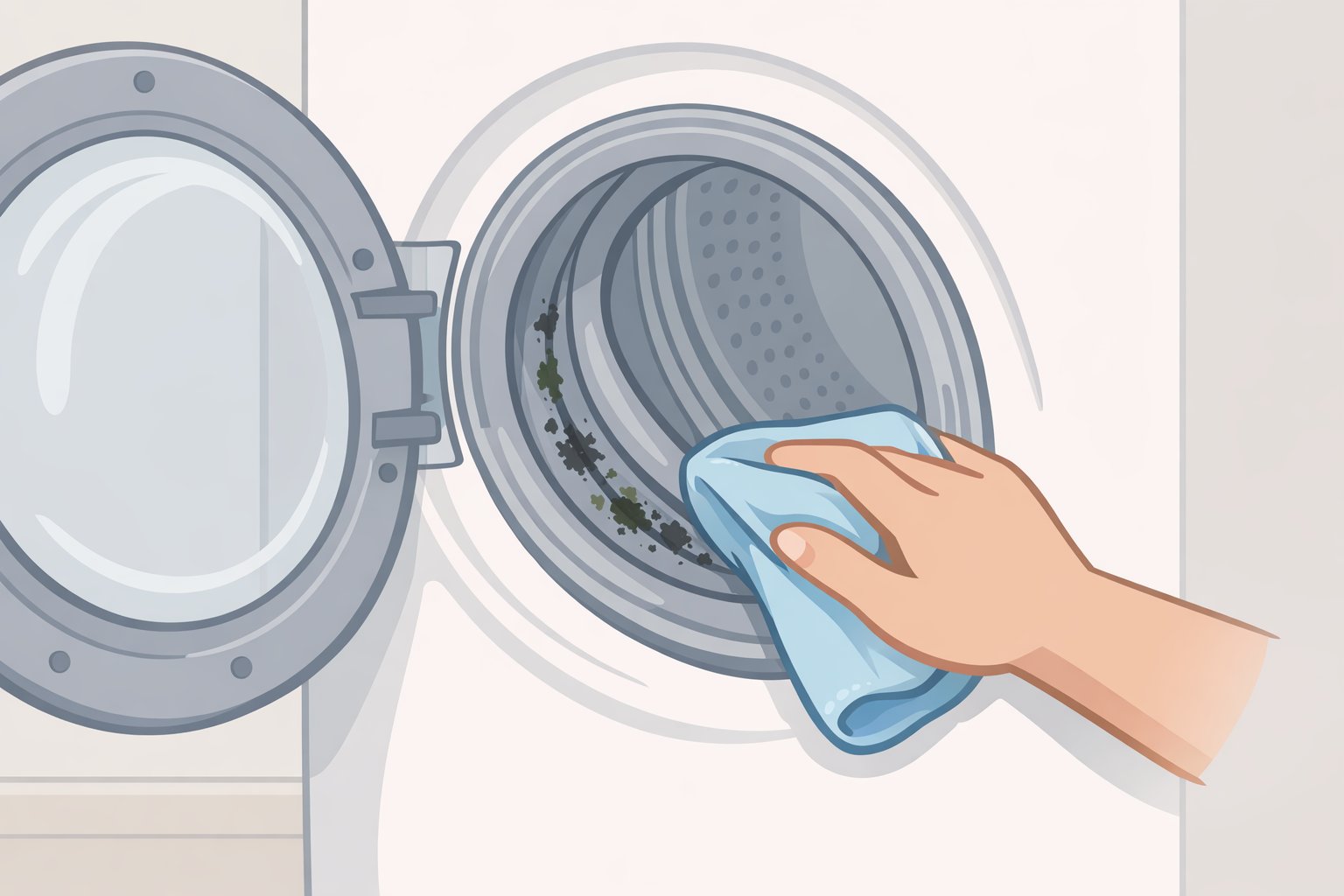
Musty or mildew smell, especially in front-loaders inspect the door gasket. The rubber seal around a front-loader door retains moisture in its folds between cycles, creating conditions similar to the drawer. A study in Frontiers in Microbiology found front-load machines carried higher microbial loads than top-loaders in the machines sampled, though the study covered only ten machines, so treat it as directional support rather than a definitive figure (Frontiers). Wipe down the gasket folds with a damp cloth monthly. Visible mildew that doesn't clear with cleaning may mean the gasket needs replacing.
-
General musty smell from the drum run a hot cleaning cycle. A dedicated washer cleaning cycle with hot water, or a service wash using a washing machine cleaner tablet, helps clear biofilm from drum surfaces and internal components. If regular washing runs at 30°C or below with a bleach-free detergent, the machine may not be getting sanitized during normal use; an occasional hot cycle compensates (PMC). Run it empty, separate from any clothing load.
-
Sewer-like smell check the P-trap. A distinctly sewer-like odor usually doesn't come from the machine itself. It points to the P-trap, a plumbing component beneath the drain that holds water to block sewer gases from entering the house. If the machine sits unused for weeks, that water can evaporate. Running the machine typically refills it. If the smell persists after a few cycles, check that the drain hose is properly connected and the P-trap hasn't dried out or become blocked (ABC Home & Commercial).
-
Persistent smell despite cleaning inspect the drain pump filter. Most front-loaders and some top-loaders have a drain pump filter that traps lint, coins, and debris. A clogged filter holds moisture and organic matter, both of which can contribute to odor. It's usually located behind a small access panel at the front bottom of the machine. Check the manual for location and cleaning instructions; annual inspection is the recommended maintenance interval (ABC Home & Commercial).
-
Smell that won't clear after all of the above call a repair technician. Persistent mildew that doesn't respond to cleaning can indicate a gasket that needs replacing or a deeper issue with internal components (ABC Home & Commercial). Another cleaning pass won't fix it.
Keeping the smell from coming back
Three habits prevent most washing machine odor from returning. Remove wet laundry promptly mold can begin developing on damp fabric and machine surfaces within 24 to 48 hours (Consumer Reports). Leave the door ajar between uses so moisture can escape. Wipe down the door gasket and drum briefly after the last load of the day.
For monthly maintenance, clean the detergent drawer, inspect the gasket folds, and run a hot cleaning cycle. Those three tasks cover the most common odor sources and take under fifteen minutes combined (ABC Home & Commercial; Good Housekeeping).
If most laundry runs cold with a bleach-free liquid or gel, the machine isn't being sanitized during those loads. Running it empty on a hot cleaning cycle once a month compensates without changing how clothes get washed. Bleach-containing detergents at 40°C or above produce dramatically higher bacterial reduction than cold liquid cycles an 8-log reduction compared to the significantly lower reductions seen with cold, bleach-free formulas (PMC).
With the drawer and drum sorted, the door gasket and drain filter are the logical next components to put on a maintenance schedule. Both have their own cleaning requirements and are worth understanding before they become a problem.