Limoncello Tiramisu Recipe That Actually Holds Its Shape
Limoncello tiramisu looks simple on paper. Swap espresso and rum for citrus, layer it the same way, let it chill. The catch is that lemon juice is a liquid, and mascarpone cream can only absorb so much before the whole thing softens into something that tilts on the spatula rather than slices cleanly.
This guide covers a reliable base limoncello tiramisu recipe a whipped-cream-and-mascarpone version that manages moisture carefully and produces a firm, bright result plus an optional curd version for anyone who wants taller, cleaner slices and doesn't mind another 30 minutes of prep. Both can be assembled the night before. Both improve with time.
A few things worth understanding before you start:
- Folding raw lemon juice into mascarpone cream the default move in a lot of lemon tiramisu recipes adds enough free liquid to produce a filling that softens and collapses rather than holds. America's Test Kitchen describes the result as "slump-y."
- Limoncello mirrors the rum-and-espresso soak in traditional tiramisu, but it's sweet. Cutting it with lemon juice in the soak adds tartness and complexity, per America's Test Kitchen.
- At a half-cup of limoncello total, the flavor is clear without dominating. Cutting that to a quarter cup produces a noticeably milder result, per Flavorful Italy.
Three decisions that determine whether this works read before starting:
- Use hard savoiardi only. Soft ladyfingers fall apart before the soak is finished. America's Test Kitchen is explicit on this.
- Soak fast. Two to three seconds per cookie, rolled not submerged. Savoiardi absorb liquid almost immediately.
- Chill long enough. Minimum four hours; overnight is meaningfully better.
Which version fits your situation:
- Whipped-cream version: 30-45 minutes of active prep, fewer components, no special equipment. The right default for most cooks.
- Lemon-curd version: Adds roughly 30 minutes for the curd. Produces taller slices and a more striking top. Worth it when the dessert is the main event.
Active prep: 30-45 minutes. Minimum chill: 4-6 hours. Serves 8.
What goes into the base recipe and why
Video of the Day
Every ingredient here is doing specific structural or flavor work. Knowing that upfront prevents substitutions from reintroducing the moisture problems this recipe is designed to avoid.
The filling:
- Mascarpone (16 oz): The dense, neutral base. It carries lemon without turning sour. Keep it at room temperature so it folds smoothly into the whipped cream without clumping this matters specifically for the folding method, where you're preserving air rather than mixing it out.
- Heavy cream (1½ cups, cold): Start cold. Cold cream whips more stably and holds structure longer. Beat it with powdered sugar, vanilla, and a pinch of salt to soft-to-medium peaks and stop there. Flavorful Italy warns that overwhipping makes the texture grainy and makes folding harder.
- Lemon zest (from 2 lemons) and fresh lemon juice (2 tablespoons): Zest delivers concentrated lemon oil with no added liquid. The 2 tablespoons of juice add tartness, kept intentionally low to limit free moisture in the filling.
- Limoncello (½ cup, divided): The bulk folds into the filling; roughly 2 tablespoons go into the soak. Splitting it this way distributes flavor through both layers.
- Powdered sugar (¾ cup), vanilla (1 tsp), salt (pinch): Powdered sugar dissolves cleanly. Vanilla softens the citrus edge. Salt sharpens everything else.
The soak:
Limoncello alone reads as sweet without enough acid to balance it. America's Test Kitchen uses ⅓ cup limoncello combined with ⅓ cup lemon juice and 2 tablespoons water this ratio adds complexity and cuts the sweetness. For the base recipe, a workable default is 2 tablespoons limoncello to 2 tablespoons fresh lemon juice, with a splash of water to extend it. Adjust toward more juice if you want sharper, more toward the straight limoncello if you want sweeter. The principle is acid as counterweight to the liqueur's sweetness.
Substitutions use these with eyes open:
- No mascarpone: Flavorful Italy suggests 12 oz cream cheese blended with 4 oz sour cream. It works but tastes tangier. One source, no rigorous testing know what you're trading.
- No alcohol: Replace limoncello with additional lemon juice plus a small amount of simple syrup. The boozy depth disappears; lemon character stays, per Flavorful Italy.
Video of the Day
Easy limoncello tiramisu recipe: step-by-step
Equipment needed: 8x8-inch glass or ceramic baking dish, stand or hand mixer, offset spatula, wide shallow bowl for the soak.
Ingredients:
- 16 oz mascarpone cheese, room temperature
- 1½ cups heavy whipping cream, cold
- ¾ cup powdered sugar, plus extra for dusting
- 1 tsp vanilla extract
- ½ cup limoncello, divided
- Zest of 2 lemons
- 2 tablespoons fresh lemon juice (filling) + more for the soak
- 24-30 hard ladyfingers (savoiardi)
- Pinch of salt
- Grated white chocolate or extra lemon zest for garnish, optional
Per Flavorful Italy.
Step 1: Whip the cream.
Combine cold heavy cream, powdered sugar, vanilla, and salt in a mixer bowl. Whip to soft-to-medium peaks and stop. Stiff peaks mean graininess and harder folding. Set aside.
Step 2: Build the filling.
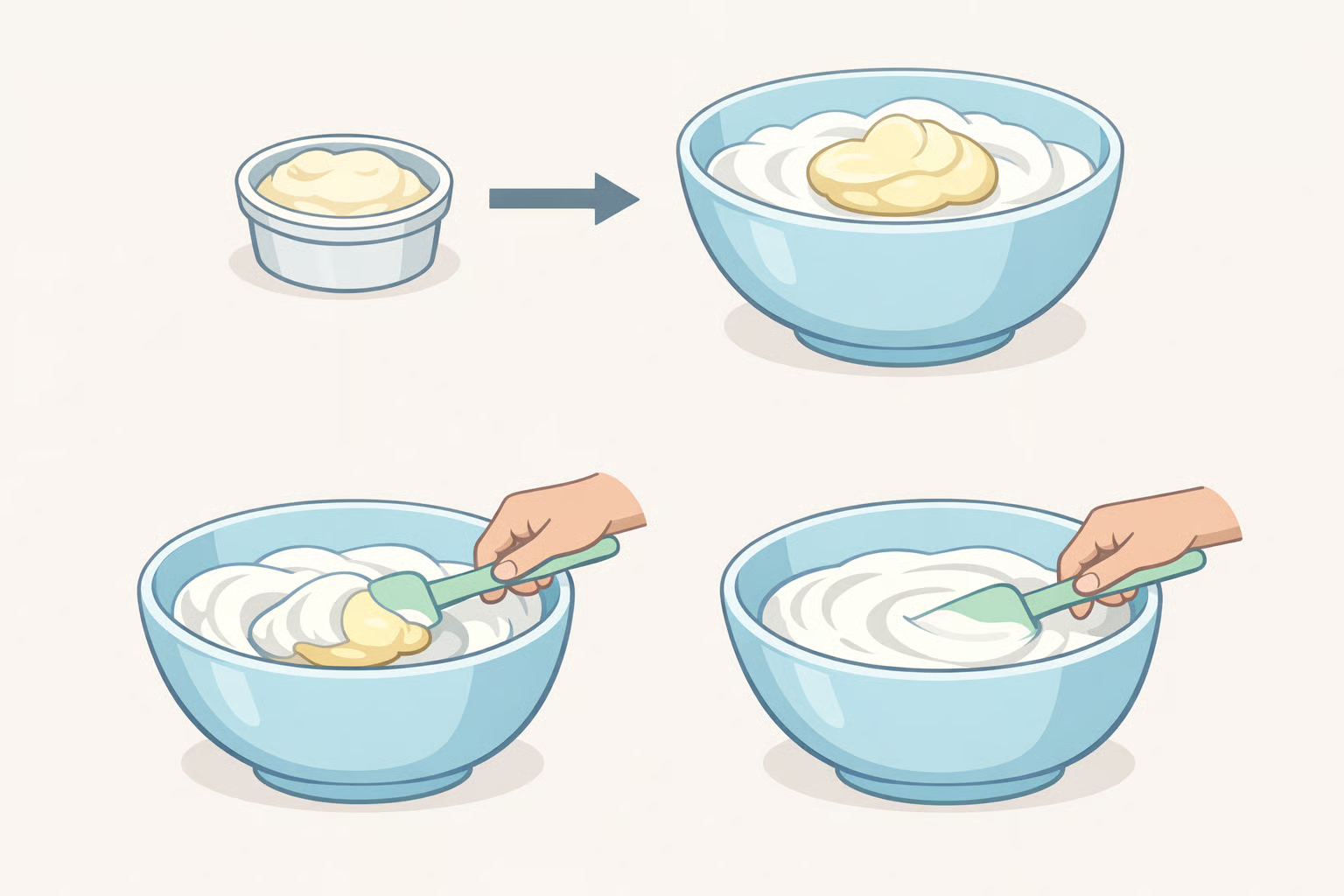
In a separate bowl, fold room-temperature mascarpone into the whipped cream in two or three additions. Work gently you're keeping the air in, not mixing it out. Add lemon zest and the 2 tablespoons of fresh lemon juice, folding until just combined. Stir in the bulk of the limoncello, keeping roughly 2 tablespoons aside for the soak.
Taste here. A little more lemon juice sharpens it; a little more sugar rounds it.
⚠️ If the filling feels loose, refrigerate it for 15-20 minutes before assembling. Flavorful Italy flags this directly: a loose filling will produce a wet final dessert, and you can't correct it once the layers are in. A brief chill firms it up before it goes into the dish.
Step 3: Make the soak.
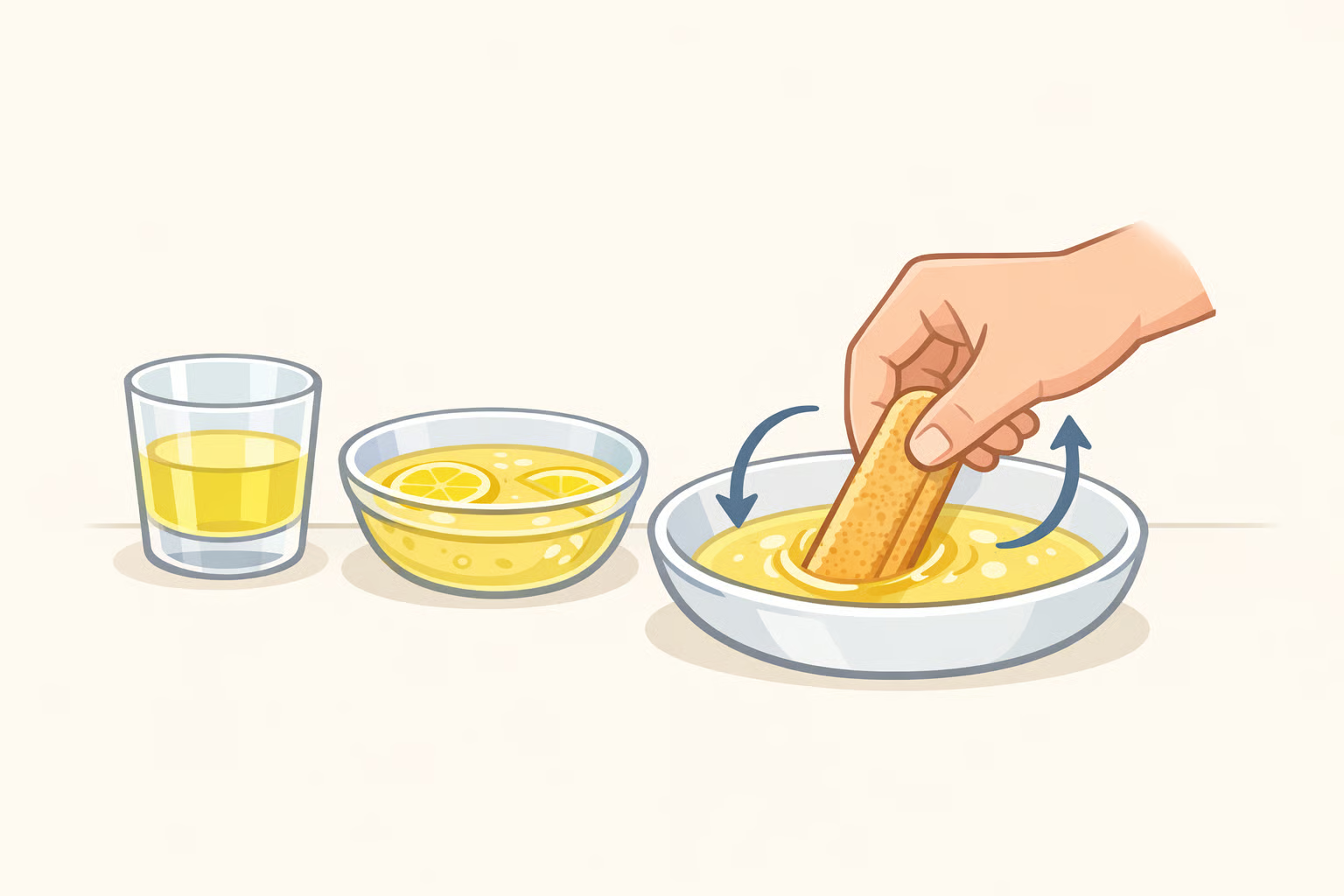
Combine the reserved limoncello with fresh lemon juice in a wide, shallow bowl wide enough to roll a ladyfinger without fumbling. A 2:2 tablespoon split of limoncello to lemon juice is a reliable starting point; add a splash of water if it tastes sharp.
Step 4: Soak the ladyfingers.
This is where most limoncello tiramisu goes wrong. Work one ladyfinger at a time. Roll it through the soak for no more than 2-3 seconds total America's Test Kitchen specifies rolling, not submerging, and shaking off the excess before the cookie goes into the dish. Flavorful Italy puts it at one second per side. A waterlogged ladyfinger adds pooled liquid to the bottom of the dish and collapses the layers above it. Count the seconds.
Step 5: Layer.
Arrange the first layer of soaked ladyfingers snugly in the dish; break some to fill gaps rather than leaving open space. Spread half the mascarpone mixture over the top, pushing it to the edges and into the corners with an offset spatula. Add the second layer of soaked ladyfingers, then spread the remaining cream over the surface and smooth it.
Step 6: Chill.
Cover and refrigerate for at least 4 hours. Overnight is better. Flavorful Italy sets the floor at 4 hours; America's Test Kitchen recommends 6-24 hours. The ladyfingers continue absorbing moisture during chilling, and the cream firms into something sliceable. Don't rush it.
Step 7: Serve.
Dust with powdered sugar just before serving. Grated white chocolate or scattered lemon zest makes a clean finish. Slice with a sharp knife dipped in hot water between cuts. Serve cold, and let guests know it's boozy the alcohol is present and noticeable.
Leftovers hold for 3-4 days refrigerated, per Flavorful Italy. Freezing is possible but degrades texture noticeably.
The lemon-curd version: taller slices, cleaner presentation
The base recipe works well. The curd version solves one problem the base works around: even 2 tablespoons of raw lemon juice introduces free liquid into the filling, and it accumulates. America's Test Kitchen sidesteps this entirely by cooking lemon juice with sugar and eggs into a curd same tartness, none of the destabilizing moisture. The curd is thick enough to fold into mascarpone without loosening it.
The result, per ATK, is "tall, proud slices" with a marbled yellow-and-white top. If presentation matters or you're making this for a crowd, the extra step is worth it.
How the process changes:
-
Make the curd first, then chill it. Cook lemon juice, sugar, and eggs to 170°F, strain immediately into a bowl, and press greased parchment directly onto the surface to prevent a skin. Refrigerate for at least 30 minutes. The recipe yields about 1 cup; ¾ cup folds into the mascarpone, and the remaining ¼ cup is reserved for the top, per America's Test Kitchen.
-
Keep the mascarpone cold don't let it come to room temperature. This is the opposite of the base recipe's approach. The curd version uses a stand mixer for integration, and America's Test Kitchen warns that mascarpone has a tendency to break when it warms before whipping. Cold mascarpone, mechanical mixing.
-
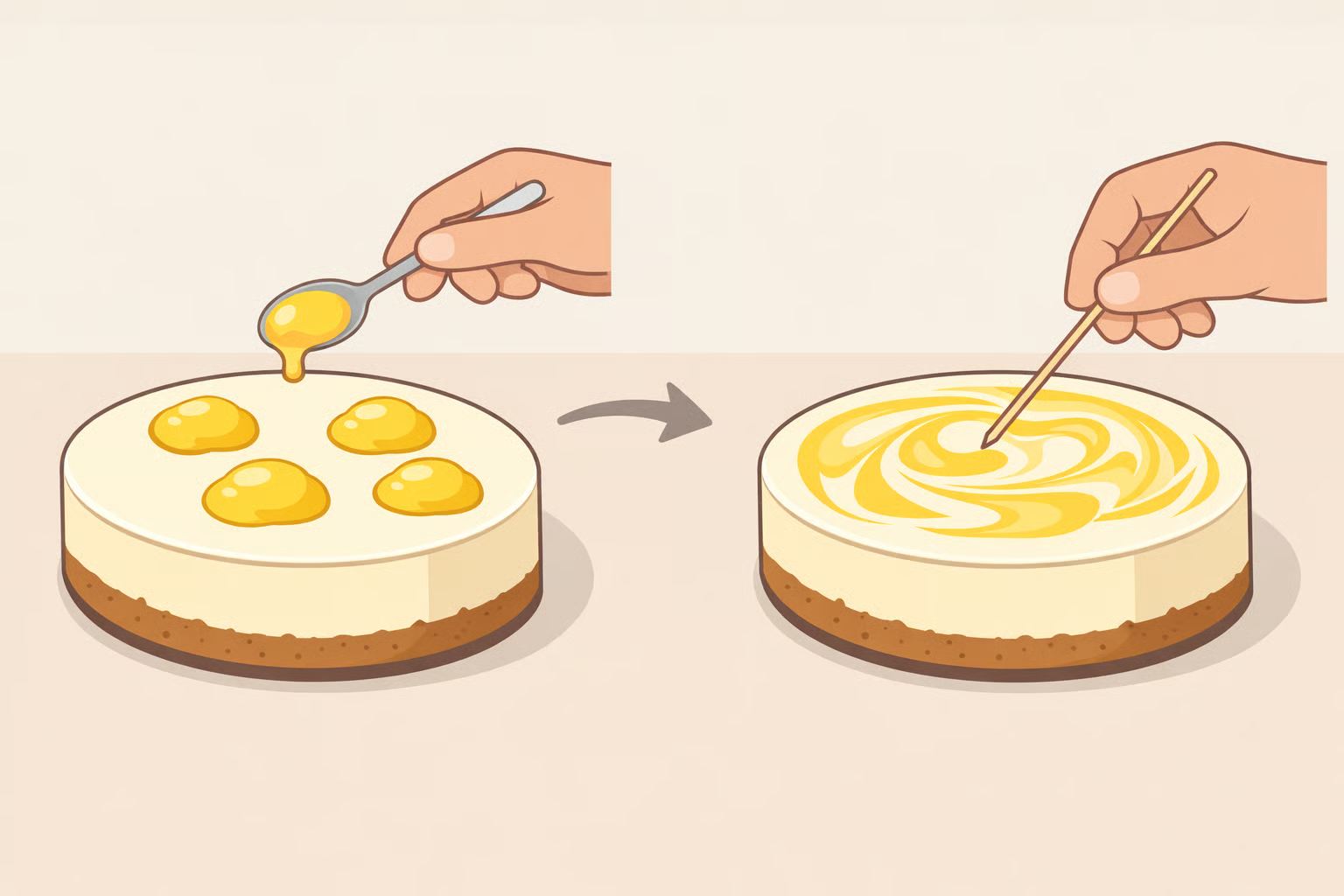
Finish the top with the reserved curd. After the final cream layer, dollop the remaining ¼ cup across the top in roughly nine spots and swirl lightly with a skewer or toothpick. This creates the marbled surface that signals what's inside and makes the dessert look intentional rather than plain.
-
Chill 6-24 hours. The longer end produces cleaner slices, per America's Test Kitchen.
⚠️ ATK specifies not to substitute store-bought lemon curd. The recipe's curd was calibrated for this filling ratio and consistency. A looser or sweeter commercial curd could reintroduce exactly the moisture problems this method is designed to eliminate.
Which version to make
Use the base recipe when you want a reliable no-bake dessert that holds together and tastes genuinely bright. Use the curd version when presentation matters or you want more structural confidence in the slices. Both are make-ahead friendly the base recipe can be assembled up to two days ahead, per Flavorful Italy; the ATK curd version holds well across the full 6-24 hour chill window and improves toward the longer end.
The variables that determine success are the same in both: hard ladyfingers soaked briefly, a filling that isn't loose before it goes into the dish, and enough time in the refrigerator to set. Get those three right, and the lemon takes care of the rest.