Fresh Ground Black Pepper: 5 Dishes Where It Makes the Biggest Difference
Open a jar of pre-ground black pepper that's been sitting in your kitchen for a few months. Take a sniff. Then crack a single whole peppercorn and hold it under your nose. The gap between those two things dusty and flat versus sharp and resinous is the entire point of this guide. Switching to fresh ground black pepper as a finishing move is the single lowest-effort flavor upgrade available in a home kitchen. No new recipes. No new techniques. Just a bag of whole peppercorns and a different habit.
By the end of this guide, you'll know which five dishes benefit most from the switch, why the flavor difference is real and how fast it disappears, and how to make the change tonight with whatever tools you already own.
Prerequisites: Whole black peppercorns and either a pepper mill, a mortar and pestle, or a heavy pan.
Where fresh cracked black pepper earns its place and where it doesn't
Video of the Day
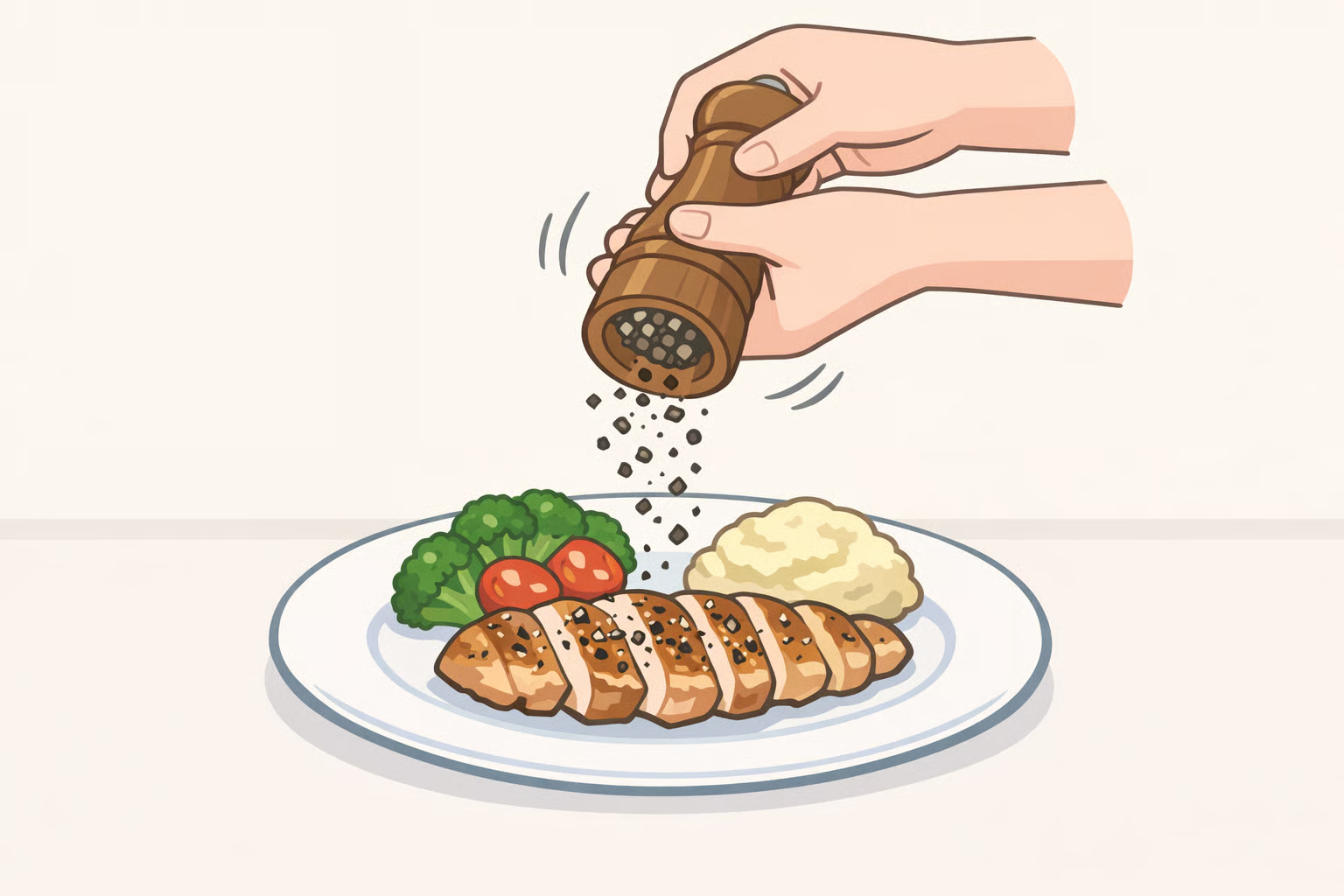
The case for fresh-ground comes down to a single condition: timing. Applied in the last seconds of cooking or directly at the table, the aromatic oils reach the nose intact. Cook that same pepper in a braise for an hour and sustained heat strips the volatile oils the same way months on a shelf already stripped the pre-ground jar. Spice Pilgrim put it plainly last month: for finishing a dish, fresh-ground is the only approach that works.
These five scenarios are where to start tonight:
- Scrambled or fried eggs. Grind in the last ten seconds of cooking, or directly onto the plate. At serving temperature, the aroma arrives with the food.
- Pasta with butter, olive oil, or a simple sauce. When pepper functions as a primary flavor as it does in cacio e pepe or aglio e olio there's nowhere for flatness to hide. Grind over the finished plate.
- Grilled or pan-seared steak. The crust does one job; the pepper does something separate. Crack coarsely over rested meat at the table, not into the pan during cooking, so the aroma arrives with the food rather than burning off in the heat.
- Roasted vegetables. Grind right before they leave the kitchen, not before they go into the oven. Spice Pilgrim makes this explicit: grind over roasted vegetables right before serving.
- Vinaigrettes and simple dressings. Pepper is fully exposed here, front-of-palate, not buried under heat. Grind in just before whisking or shaking.
Each of these is a finishing context pepper as a visible, primary flavor where its quality is audible in the dish. That's the condition fresh-grinding is designed for.
Pre-ground is a reasonable call in plenty of situations. In braises, soups, and stews, sustained heat strips volatile oils regardless of how recently the pepper was ground, as Spice Pilgrim acknowledged directly: in a simmering pot, pre-ground works. The same logic applies to overnight spice rubs, where the aroma window closes long before the food hits the table.
Grind fresh when pepper is doing finishing work. Use pre-ground when it's one background note among many in something cooking for a long time.
Video of the Day
Why freshly ground pepper tastes better: black pepper flavor loss after grinding
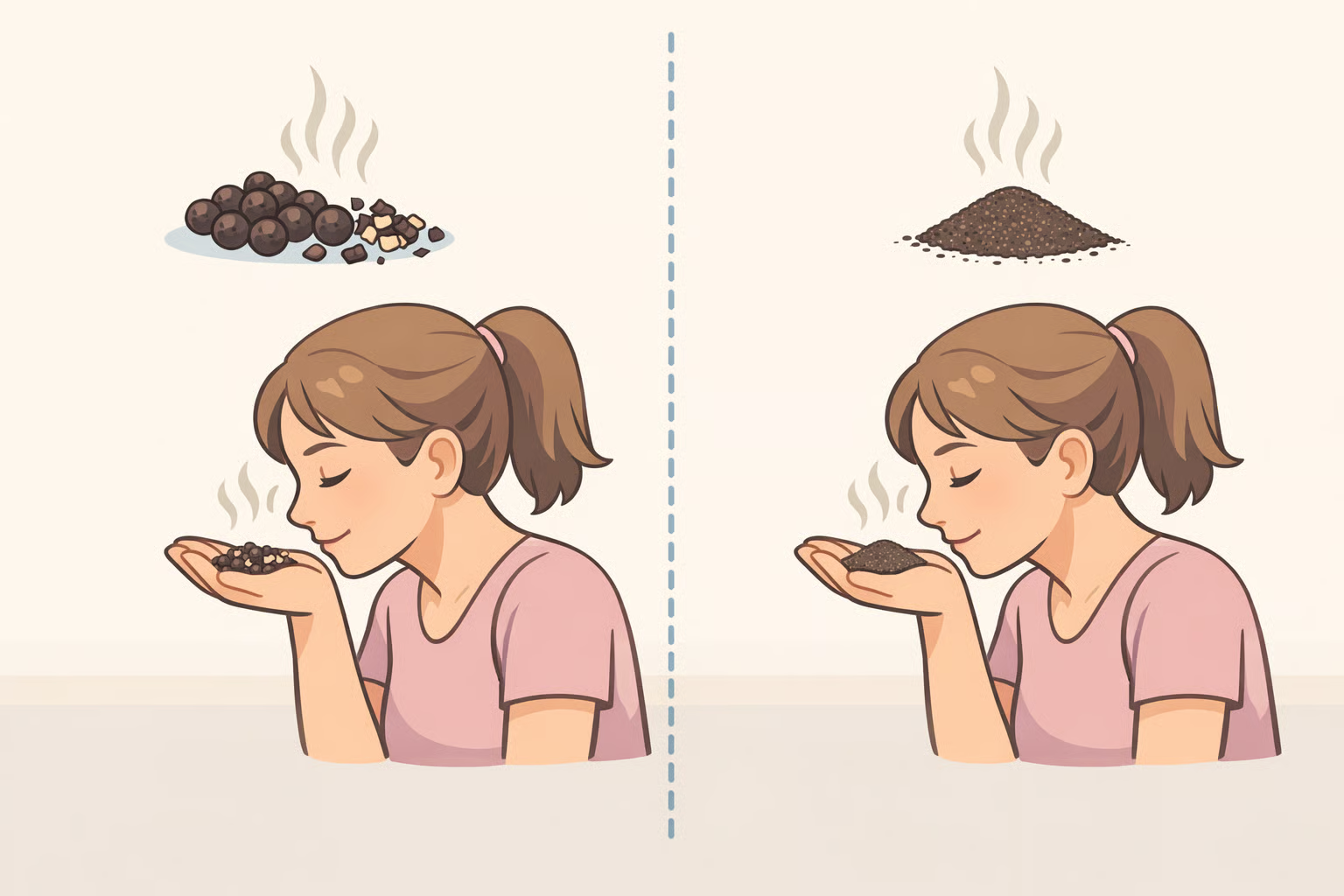
Crack a single peppercorn and hold it under your nose. That sharp, resinous smell is what goes onto the food when you grind fresh. The pre-ground jar is a useful comparison point: the difference, as Spice Pilgrim put it last month, is not subtle.
Whole peppercorns protect two distinct things. Piperine delivers the heat and is chemically stable it goes nowhere. The aromatic volatile oils, including compounds like limonene, pinene, and sabinene, give fresh pepper its brightness and complexity. Those oils are sealed inside the hard shell. Crack it, and they begin escaping immediately.
The loss is fast and front-loaded. America's Test Kitchen found that aroma starts fading the moment the shell breaks, with most of a peppercorn's flavor and scent gone within half an hour. The longer arc, per Spice Pilgrim: about half the volatile oils gone within 24 hours, flavor noticeably flat within a week, mostly piperine heat left after a month. These timelines come from food media rather than controlled laboratory studies, but every source points the same direction. The drop is steep, it's early, and it doesn't reverse.
By the time a grocery-store jar of pre-ground pepper reaches most kitchens, it has already been sitting for weeks or months, according to Spice Pilgrim. What's left is largely heat. Pre-ground doesn't spoil, but after six months it's mostly piperine with little aroma remaining the complexity is gone, and food seasoned with it tastes flat as a result.
One more thing freshness delivers, beyond aroma. America's Test Kitchen found that black pepper stimulates salivary production, which helps the palate register other flavors more completely but this effect comes only from freshly ground pepper. Pre-ground doesn't deliver it.
How to make the switch tonight: whole peppercorns, tools, and practical use
Step 1: Get whole peppercorns and a grinding tool
Buy whole black peppercorns. They're widely available and typically less expensive per ounce than pre-ground. America's Test Kitchen recommends replacing the pre-ground shaker with a pepper mill as a baseline kitchen upgrade. An adjustable mill the kind with a coarseness dial on top handles everything from a fine grind for vinaigrettes to a coarse crack for steak without switching tools.
No mill? A mortar and pestle works well and gives more tactile control over texture. No mortar and pestle either? Seal a few peppercorns in a zip-lock bag and press firmly with the flat bottom of a heavy pan. Not elegant, but functional tonight.
A note on disposable pre-filled grinders: they're better than pre-ground because the peppercorns stay whole until you use them. Reasonable as a bridge. But the coarseness is fixed, the peppercorns were packed at some point in the past, and you can't refill them. Buying whole peppercorns in a bag is better on every dimension.
Step 2: Store whole peppercorns correctly
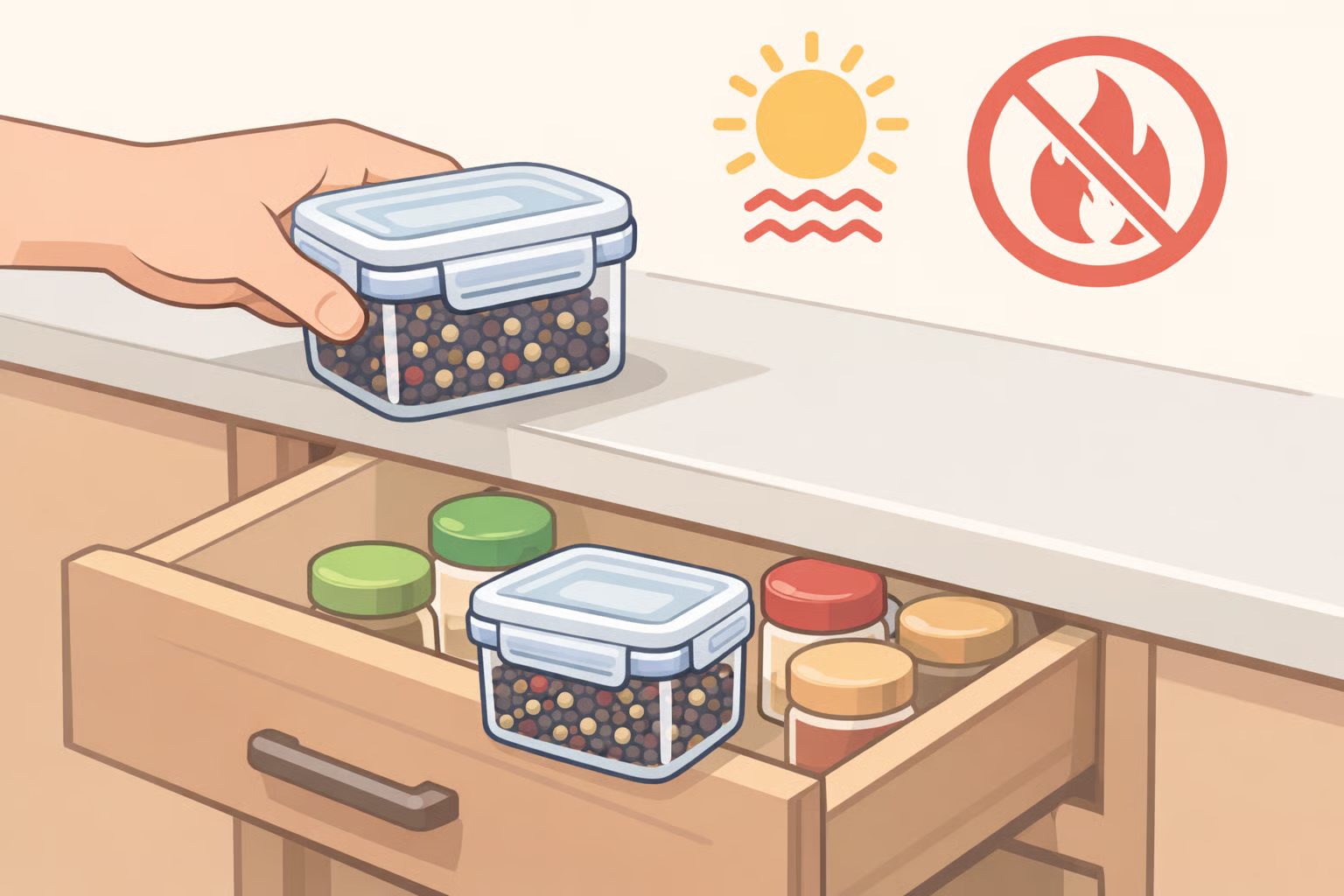
Whole peppercorns keep well for a year or longer in an airtight container away from heat and light, according to Spice Pilgrim. A spice drawer is ideal. A shelf next to the stove is not heat and ambient light accelerate oil loss even through a closed container.
Skip the freezer. The condensation that forms when peppercorns move from cold storage to room temperature does more damage than the cold prevents, per Spice Pilgrim. If the peppercorns smell flat or faintly musty when you open the container, they're past their best. Fresh whole peppercorns have a sharp, resinous smell the moment you crack one that's the baseline to expect.
Step 3: Grind directly over the dish, and use less than you think
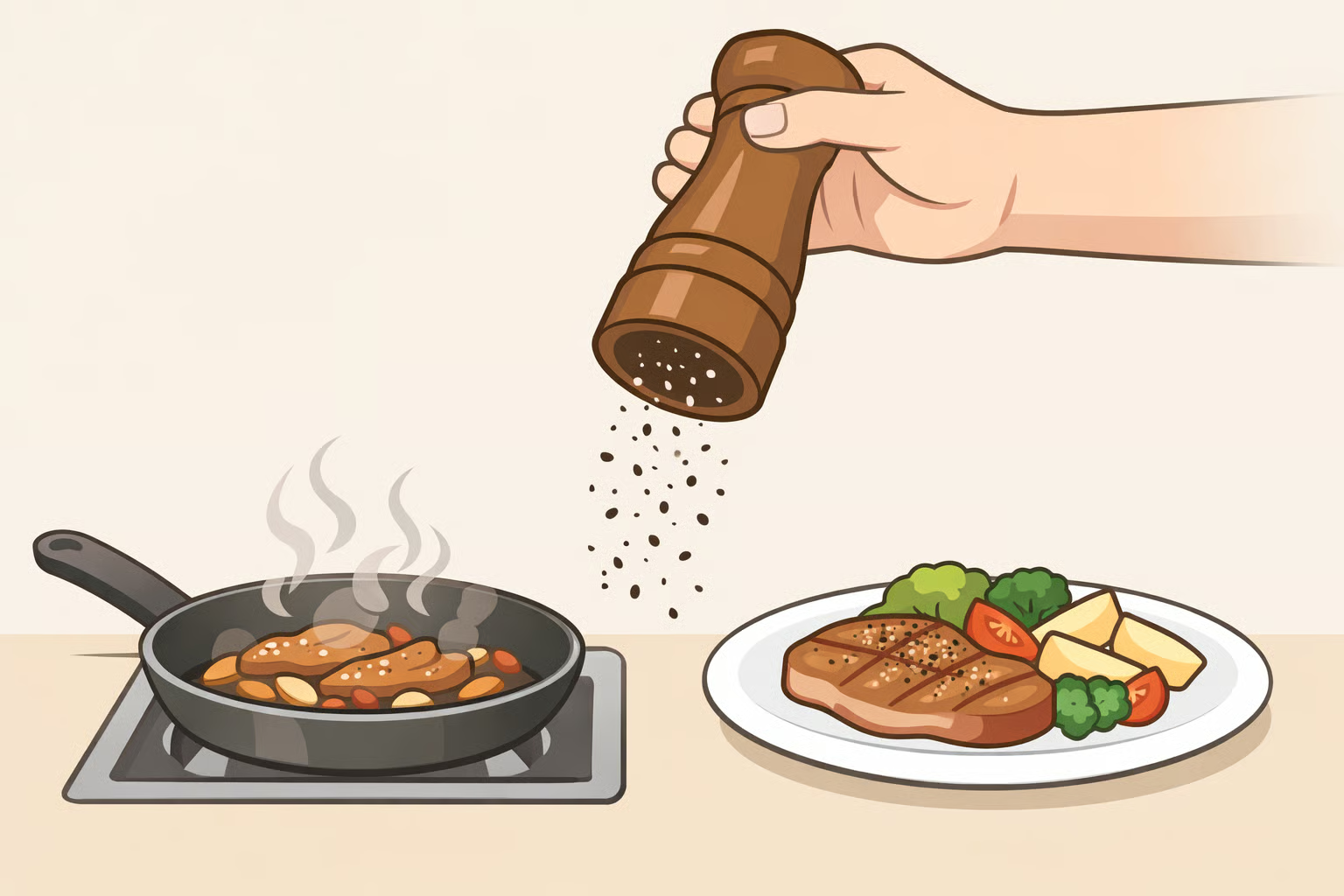
Grind over the dish in the last seconds of cooking or at the table. Grinding a portion ahead and leaving it on the counter defeats the purpose the oils are already leaving. Spice Pilgrim is direct: grind only what you need, when you need it.
Fresh-ground is meaningfully more potent than pre-ground, so recalibrate. If several shakes from a pre-ground jar has been the habit, start with two or three cracks from a mill and taste. The target, as Spice Pilgrim describes it, is depth and slow-building heat not a hit of pepper that overrides everything else.
Coarseness matters by application. Coarse for steak, eggs, roasted vegetables, and pasta anywhere texture is part of the dish and the pepper is meant to be visible. Fine for vinaigrettes and anything where the pepper should integrate rather than stand out. Spice Pilgrim frames it simply: coarse for steaks, fine for sauces.
For marinades and spice rubs applied well before serving, Spice Pilgrim suggests one to two teaspoons of cracked pepper per pound of meat as a starting baseline. Fresh-ground is still preferable to pre-ground here, but the urgency is lower some aroma will dissipate before the food reaches the table regardless.
Tonight's change is small. The results aren't.
Buy whole peppercorns, grind fresh, finish dishes at the end. That's the entire switch. As Spice Pilgrim put it last month: grinding your own is a shortcut to more flavorful cooking without changing anything else about how you cook.
Start with the five scenarios above. Stop reaching for the pre-ground jar on anything that arrives at the table without extended cooking in between. Black pepper isn't an afterthought it's a main ingredient, as Spice Pilgrim puts it. America's Test Kitchen reinforces why: it actively enhances the palate's ability to register other flavors, which means its quality compounds across everything else on the plate. Treat it accordingly.