Laundry Room Organization Hacks: 4 Fixes That Actually Work
The dryer becomes a shelf. Clean clothes migrate to a chair. The routine stalls at the last step, every time. These laundry room organization hacks address that directly: four fixes, ordered by impact, that align the space to how laundry actually moves through a room instead of working against it at every turn.
Start where your routine breaks down.
Step 1: Clear the room before you touch the organization
Video of the Day
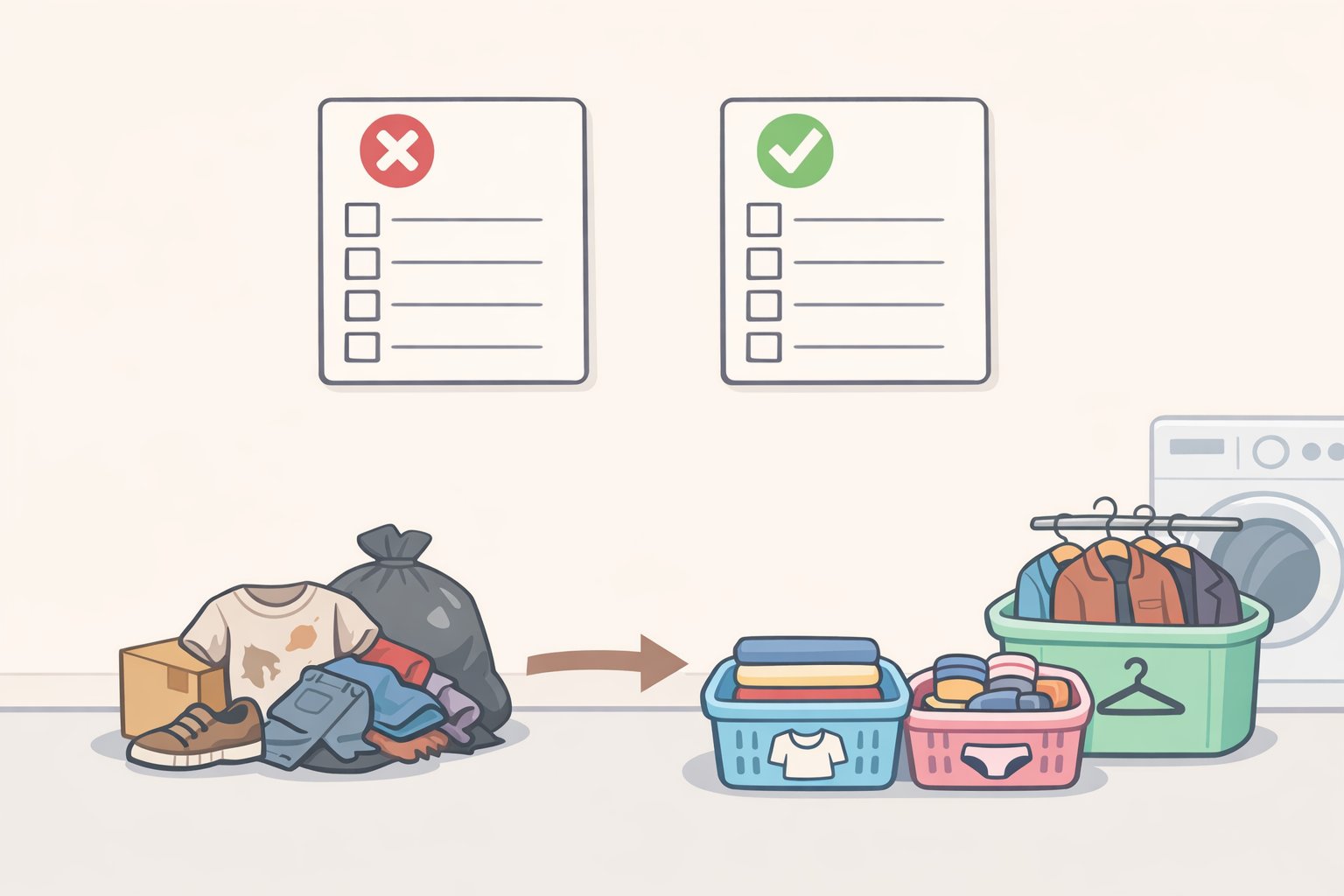
The most common impulse is to buy bins and start labeling. Skip it. Reorganizing what's already there means rearranging the problem, not solving it. The laundry room is one of the fastest spaces to clear: small footprint, narrow category set, one clear test for what stays does it support sorting, washing, drying, folding, or storing?
Laundry rooms tend to accumulate clothing waiting for repairs, products no longer used, and items from other rooms that drifted in and claimed shelf space, per Good Housekeeping. Anything that fails the task test goes. Integrated hampers can pre-sort laundry before it reaches the machine and keep floors clear, but that only works once the room contains only what belongs there, per Closet OS about four weeks ago.
What to remove: Clothing awaiting repairs. Duplicate or expired products. Anything with no laundry function that's been slowly colonizing shelf space for months.
What to keep, and where: Daily-use supplies detergent, stain treatment, dryer sheets get the most accessible positions: countertop, eye level, top drawer. Backup stock, seasonal items, and cleaning supplies for other rooms go behind closed doors or to upper shelves. Note which secondary functions the room serves beyond laundry. That matters for Step 4.
Every item that stays gets a specific category. A basket labeled "miscellaneous" is just clutter with tidier presentation.
If you only have 30 minutes, do this step and stop. A cleared laundry room with no system beats a cluttered one with excellent shelving. Once the room contains only what belongs, the actual gaps become visible and two of them almost always show up: nowhere to fold, and supplies in the wrong place.
Video of the Day
Step 2: Solve the folding problem before anything else
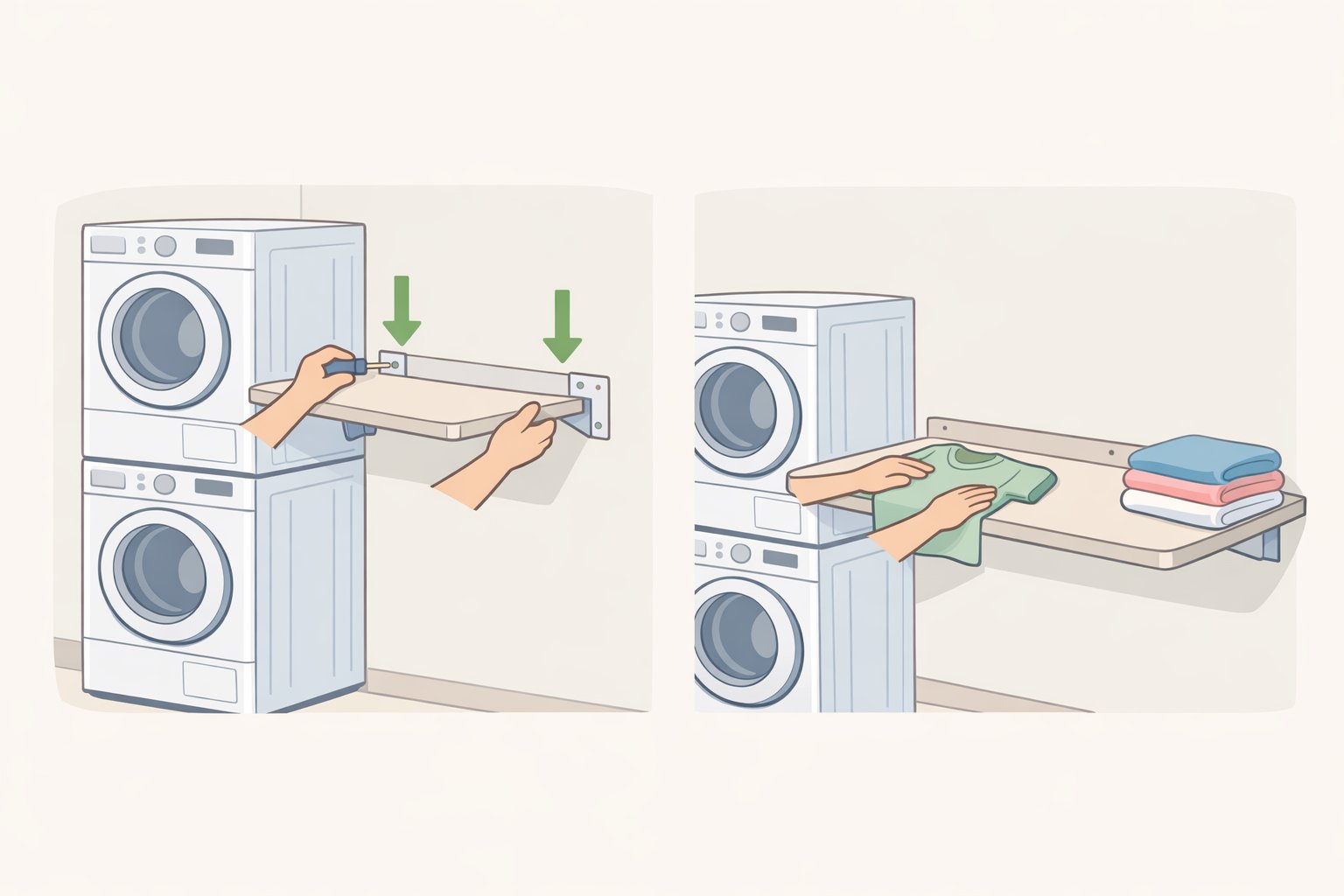
No dedicated folding surface means the dryer becomes a shelf, clean clothes sit in a pile for two days, and the routine stalls right at the end. Fix this before adding any supply storage it's where most households lose the most time.
Designer Andrea Sinkin names the absence of folding space as the single most common functional mistake she sees in laundry rooms, via Good Housekeeping about two months ago. Counter space above front-load machines creates an immediate folding station, per Laundry Room Street about four months ago. When a fixed counter isn't possible, designer Laura Hursthouse recommends a wall-mounted drop-down table or pull-out shelf as a space-neutral alternative, via Good Housekeeping. Another option: a removable countertop that sits above the machines while keeping water hookups accessible behind them the approach used in the Bless'er House renovation about three months ago.
Drying and pressing tools: A wall-mounted drying rack folds flush when not in use no freestanding rack occupying floor space between cycles. Pair it with an ironing board cabinet recessed into the wall, and neither tool claims floor space when idle, per Good Housekeeping and Bless'er House.
Sorting out of the dryer: Sort directly from the dryer into individual bins by family member. The re-sorting step at the other end disappears. Professional organizer Melissa Klug recommends this specifically for the time it saves, via Good Housekeeping.
One planning detail that trips people up: before installing any folding surface or cabinet, map out how every door and appliance opens. A drop-down shelf that blocks the dryer door, or a cabinet that prevents the washer lid from opening fully, creates friction on every single load. Interior designer Nicole Jensen identifies appliance clearance and door swing as a common planning error in laundry rooms, via Good Housekeeping. Keeping proper clearances around appliances also helps with airflow, per Laundry Room Street.
Small laundry room organization: use dead space first
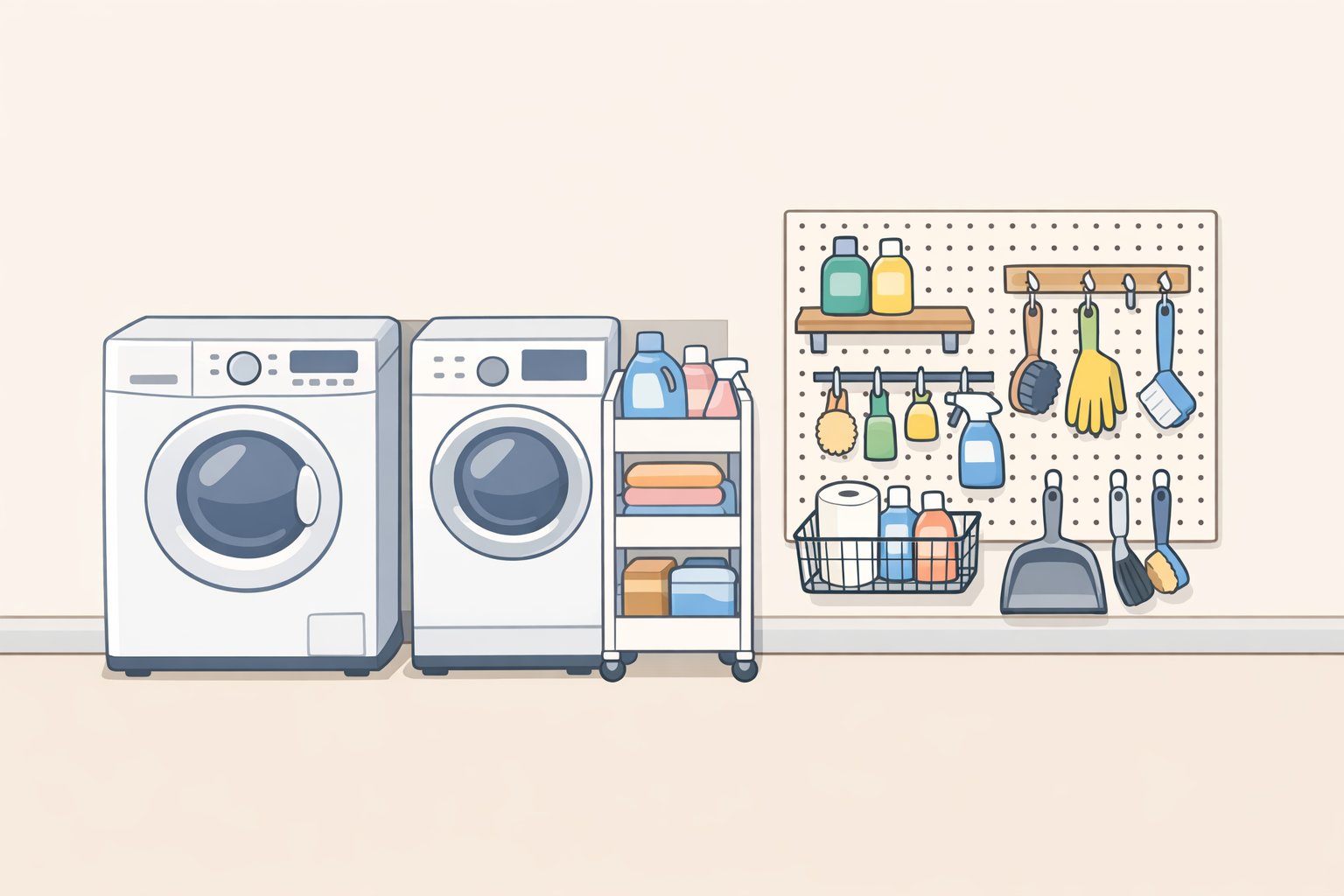
Once folding is solved, the remaining friction usually sits at the front of the workflow supplies aren't where they're needed when loading the machine. The answer isn't more shelving. It's using the space the room already contains but isn't using.
The machine gap: Slide a slim rolling cart between the washer and dryer for detergent, fabric softener, and stain treatments. Tonia Tomlin of Sorted Out names this gap specifically as the right spot for a cart; Lindsay Melvin of Orchid Organizing adds that a metal cart wipes down easily after spills, via Good Housekeeping. Supplies land where they're needed without claiming countertop or shelf space.
The wall above the machines: A pegboard or slat wall converts unused vertical surface into a customizable system for hooks, baskets, and hanging supplies. Larisa Bright of Settled recommends them for ease of installation and flexibility straightforward to reconfigure as needs shift, via Good Housekeeping.
The back of the door: For closet-style laundry rooms, an over-the-door organizer adds functional storage without touching floor or wall space. Ashley Murphy of NEAT Method calls it one of the best solutions for tight laundry closets, via Good Housekeeping. In small rooms, vertical space including the door is the primary storage strategy, not an afterthought. Stackable appliances suit narrow or closet-style rooms specifically because they free the adjacent wall for exactly this kind of vertical storage, per Laundry Room Street.
Open versus closed storage: Open shelving looks clean in photos. In daily use it tends to become visual clutter fast. Jensen warns as much, via Good Housekeeping. Closed cabinets for anything unattractive or infrequently reached, limited open shelving for items grabbed every cycle that balance is confirmed by both Closet OS and Jensen. The more that's stored behind doors, the less the room looks like chaos between loads.
Don't fill every accessible surface with everything you own. Open shelves stocked to capacity look like a stockroom within a week. Stock the reachable spots with what gets grabbed every cycle. Everything else goes behind a door.
Step 4: Zone secondary functions so they don't compete with laundry
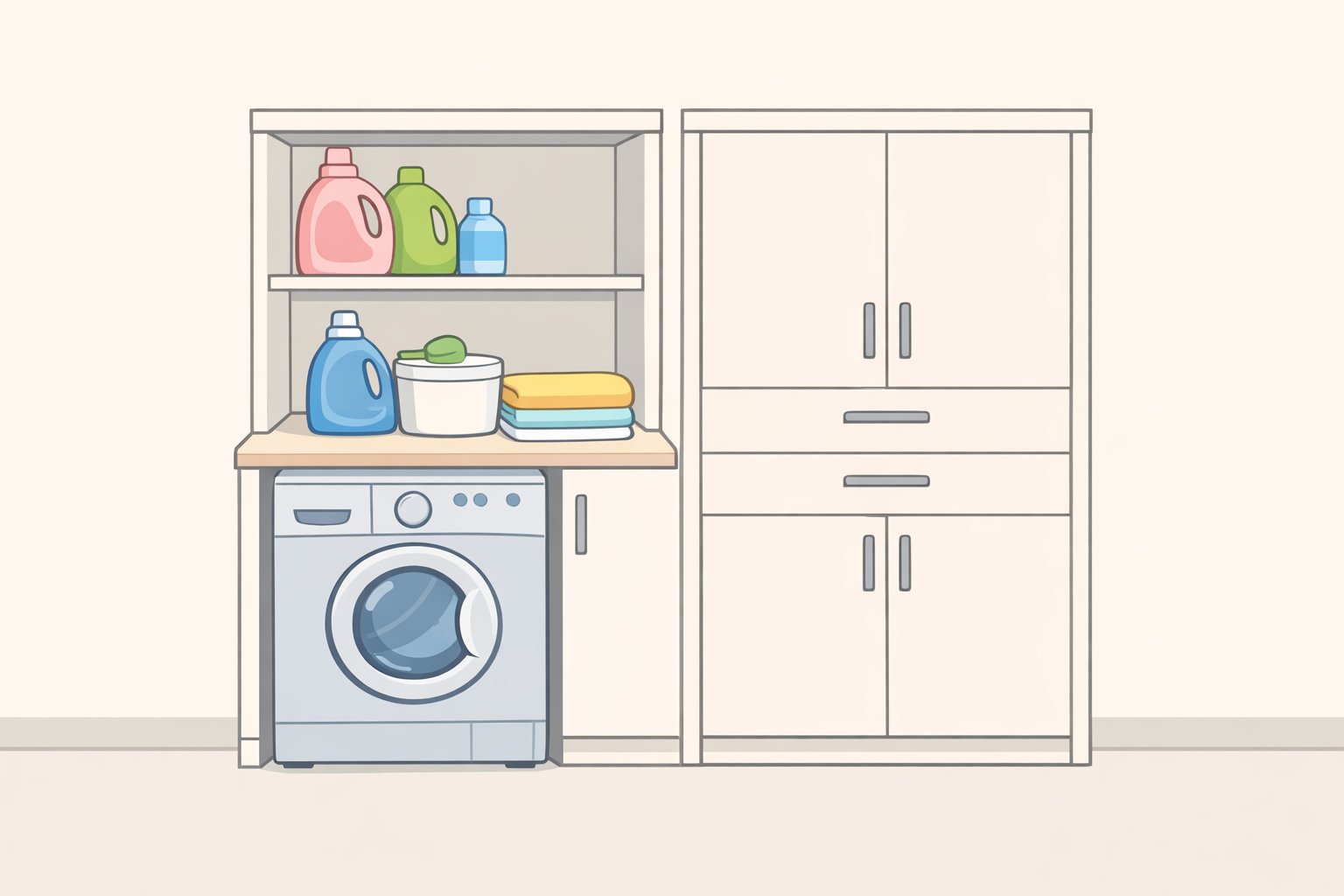
Many laundry rooms also function as cleaning hub, utility closet, and household storage. That's entirely legitimate, per Closet OS and Bless'er House. The problem is when those functions drift into shared space someone reaches for detergent and moves a mop to get to it, cleaning sprays share a shelf with dryer sheets, and the routine breaks before it starts.
The fix is zones, defined by function and kept closed. Multi-use laundry rooms expanded alongside open-plan home design, per Laundry Room Street about four months ago. The ones that work keep storage aligned to habits: tall cabinets for full-size cleaning tools, deep drawers for folded linens, adjustable shelving that adapts as needs shift, per Laundry Room Street.
Each secondary function gets one zone one cabinet, one drawer, one tall closet. That zone stays closed. Everything else is accessed on purpose.
Cleaning tools specifically: Mops, brooms, and dustpans are the items most likely to end up leaning against a wall. A slim pull-out cupboard built into a wall gap, or a tall cabinet with interior hooks, solves this permanently. The Bless'er House renovation used a narrow pull-out tucked beside cabinetry to hold a mop, broom, duster, squeegee, and cleaning sprays without occupying any visible floor space. The same principle scales down to a pegboard column or tall cabinet with hooks at lower cost.
After this step, every item in the room has a defined place. Nothing to hunt for, nothing to work around, no wrong cabinet.
Where to start
If you rent: Skip permanent installations. A rolling cart in the machine gap, an over-the-door organizer, and a wall-mounted drying rack cover the three most common friction points without touching cabinetry. Most wall-mounted drying racks require two screws and leave minimal damage.
If you have a closet-size setup: Stackable appliances free the adjacent wall for vertical storage, per Laundry Room Street. Prioritize the door and the wall above the machines before considering any floor-level solutions.
If you can only change one thing: Add a folding surface directly above or adjacent to the dryer. Organizing systems hold over time when every item has a specific assigned spot and zones stay closed and labeled by task, per Good Housekeeping but the folding surface is where most routines break first, and fixing it changes how the rest of the workflow feels without a single additional purchase.