How to Make Vodka Sauce Better Than a Restaurant: 4 Key Decisions
Most restaurant vodka sauce fails in one of three ways. Too much cream and the tomato disappears under a pale, fatty blanket. Too little fat and the acidity turns harsh, almost unpleasant. Too much vodka and you're eating a Bloody Mary with pasta in it. America's Test Kitchen ran into all three when testing existing recipes. None of them are mysterious failures they're proportion errors, and they're fixable once you understand what each ingredient is actually doing.
This guide walks through how to make vodka sauce better than a restaurant version: brighter tomato flavor, a sauce that reads creamy without announcing itself as creamy, no raw alcohol, and a texture that stays velvety rather than separating in the bowl. The method is built around four ingredient decisions, a seven-step process with troubleshooting at each stage, and one principle that holds all of it together.
That principle: vodka's role here is functional, not theatrical. Lidia Bastianich told La Cucina Italiana that cooking with vodka is "more chemistry than flavor" it adds creaminess and amplifies aroma without changing the taste of other ingredients. Understanding that single idea is the difference between a flat sauce and a remarkable one.
The dish's origins are genuinely contested. Actor and amateur cook Ugo Tognazzi published a vodka-spiked tomato pasta in his 1974 cookbook L'Abbuffone, which he called penne all'infuriata: penne, peeled tomatoes, garlic, chili, and a glass of chile-infused vodka, no cream (America's Test Kitchen; The Takeout). Whether that recipe is the origin or just the earliest documented version is another question. As ATK put it, the dish's "definitive origin story has been lost to time" it may have come from a Bologna restaurant, a New York kitchen, or a vodka company's marketing department. By the time penne alla vodka became a restaurant staple in the 1980s, the lean, spicy character of Tognazzi's version had mostly been abandoned in favor of heavier, cream-forward sauces.
Why vodka makes the sauce better (and the Italian vodka sauce secret most cooks miss)
Video of the Day
Vodka's primary job is aroma amplification. Certain flavor compounds in tomatoes aren't water-soluble alcohol extracts them, intensifying what you taste and smell. ATK's test kitchen described the effect as a volume knob: vodka boosted the sauce's fruitiness, savoriness, and complexity, making the finished dish taste like "a better version of itself" (America's Test Kitchen; What's Eating Dan?). The impact is on flavor and aroma. It doesn't restructure the sauce.
There's a secondary effect worth knowing. Alcohol helps bridge the water in tomatoes and the fat in cream into a more cohesive, glossy result. The Takeout explains the mechanism: ethanol acts as a solvent, binding water-based and fat-based components that would otherwise resist each other. The emulsification effect is real, though the flavor benefit is the more decisively tested of the two claims.
Both effects depend on quantity and cook-off time. Bologna chef Dante Casari, whose restaurant was already serving penne alla vodka by 1975, put it plainly: the vodka "ensured great flames without leaving any particular aftertaste" (Gambero Rosso). Doing its job invisibly. That's still the standard.
The most common failure is a finished sauce that stings the back of the throat. That's alcohol that didn't cook off. Budget a full two minutes of active simmering at medium-high heat after adding the vodka, before any other liquid enters the pan you should smell the alcohol dissipating, sharp and briefly unpleasant, then fading. This is the step home cooks most consistently rush (Sapori Tipici del Borgo). If the sauce still tastes hot at that point, it needs more time.
Video of the Day
How to make vodka sauce better than a restaurant: the four decisions that matter
The sauce has very few ingredients. That means every proportion choice is load-bearing there's nowhere to hide a mistake. America's Test Kitchen confirmed the failure modes directly in recipe testing: too cream-heavy and the sauce tastes flat; too little fat and the tomato tastes sharply acidic; too much vodka and it reads boozy. Here are the four choices that determine the outcome, and what each one actually changes.
Decision 1: Passata, not purée with a small amount of paste
Passata (strained raw tomatoes) retains the fresh, clean brightness that holds its own against cream. Cooked tomato purée has been reduced to a sweetness the fat overwhelms; paste-only versions taste concentrated and one-dimensional. ATK landed on passata as the clearest path to a smooth, velvety sauce without a blender the raw-strained texture is already smooth. One tablespoon of tomato paste alongside it deepens the umami without dulling the brightness.
Decision 2: Garlic, not onion
ATK's testers found that onion muddied and sweetened the tomato flavor; garlic sharpened it (America's Test Kitchen). This method uses garlic only. Bastianich's recipe uses both, which works it produces a softer, sweeter result but that's a different sauce than the focused, tomato-forward one this guide is after.
Decision 3: How to make creamy vodka sauce without overdoing it
The target is ½ cup of heavy cream to 2 cups of passata. That ratio creates the characteristic orange-pink color and smooths the acidity without flattening the tomato flavor. ATK arrived at the same figure independently; Bastianich's published recipe holds cream at ½ cup for a half-kilo of pasta (La Cucina Italiana). If the finished sauce tastes flat, the culprit is almost never too little cream. It's usually too little salt or vodka that didn't fully cook off.
Decision 4: A small amount of pancetta, finely minced
Keep it modest and cut it fine enough that it dissolves into the sauce rather than chunking it. The goal is meaty depth in the background, not a meat sauce. ATK found a few ounces was the right amount. Omit it for a vegetarian version the sauce still works, but loses a layer of savoriness that takes a little more cheese to compensate.
Step-by-step: penne alla vodka recipe
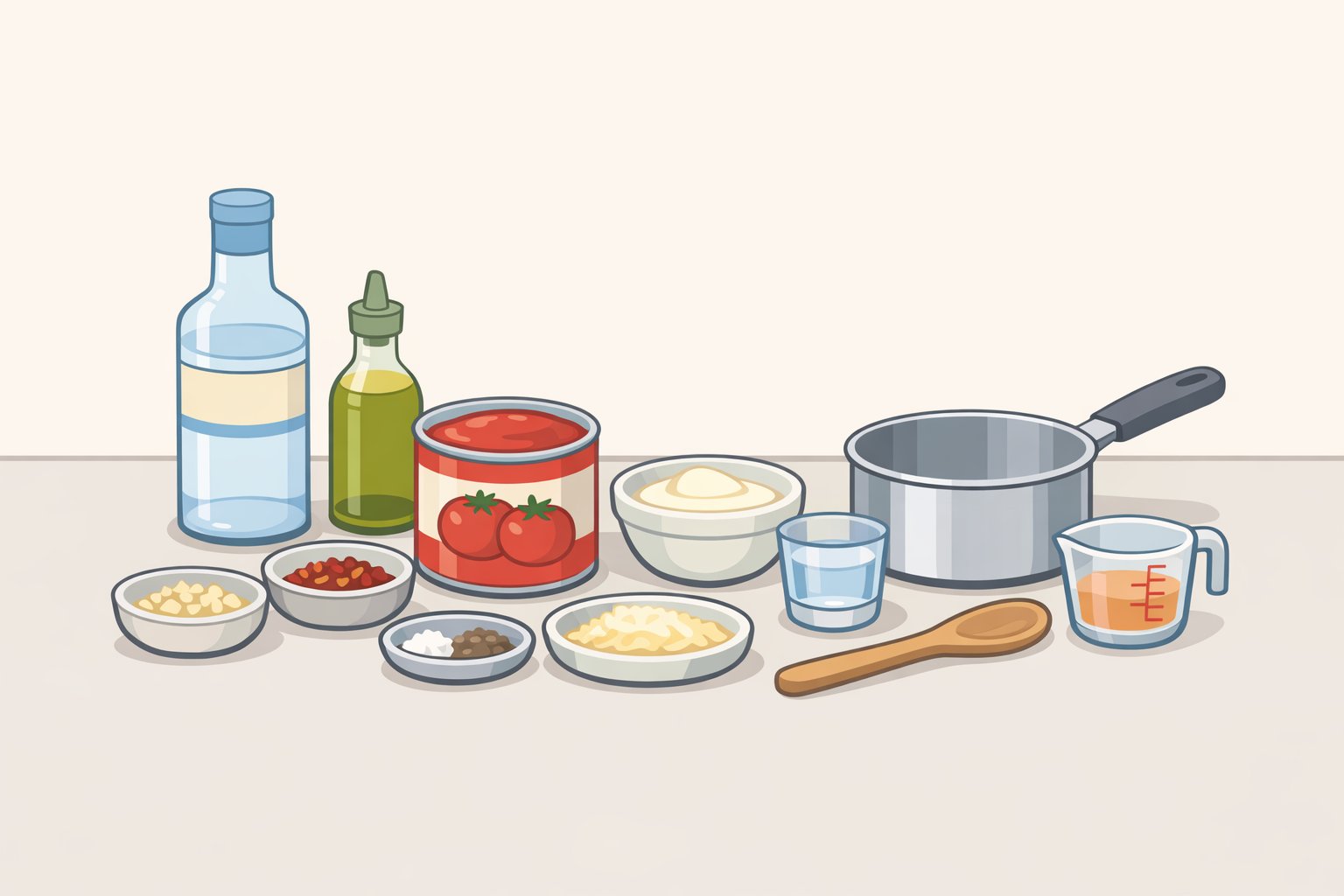
This is a restaurant-style vodka sauce recipe that runs well under 30 minutes once the prep is done. Start the pasta water before beginning the sauce both will be ready at roughly the same time.
What you'll need: a wide, heavy-bottomed skillet or sauté pan; passata (not purée); one small can of tomato paste; 3 to 4 garlic cloves; 2 to 3 oz finely minced pancetta; ⅓ cup vodka; ½ cup heavy cream; 400g rigatoni or penne rigate; Grana Padano or Parmigiano-Reggiano; olive oil; butter; red pepper flakes; salt. Serves 4.
Step 1: Render the pancetta.
Add a thin film of olive oil to a cold pan, then add the minced pancetta. Bring to medium heat. Cook 4 to 5 minutes until the fat has rendered and the meat is lightly golden but not crisped soft enough to melt into the sauce later. If it goes fully crisp, it will stay as visible bits rather than folding in.
Step 2: Sauté the garlic gently.
Add roughly 20g of butter to the pan with the pancetta fat. Add 3 to 4 minced garlic cloves. Cook over medium-low heat for about 90 seconds until fragrant and softened it should smell sweet, not sharp. If it starts to color, pull the heat down immediately. Browned garlic will make the finished sauce bitter.
Step 3: Toast the tomato paste.
Push the garlic and pancetta to the edges. Add 1 tablespoon of tomato paste to the center of the pan. Let it sit undisturbed for about 1 minute it should darken slightly to a brick-red then stir it into the fat. This removes the raw, tinny edge and concentrates the umami. Don't skip it.
Step 4: Add the vodka and cook off the alcohol.
Pour in ⅓ cup of vodka and raise the heat to medium-high. Let it bubble actively for a full 2 minutes, stirring occasionally. You should smell the alcohol leaving the pan. If the sauce stings the back of the throat at this point, it needs more time a boozy finished sauce means this step was rushed (Sapori Tipici del Borgo).
Step 5: Add the passata and simmer.
Pour in 2 cups of passata. Season with salt, a pinch of red pepper flakes, and black pepper. Reduce to medium-low and simmer 5 to 6 minutes, stirring occasionally, until the sauce thickens slightly and the color deepens (Sapori Tipici del Borgo). If it still smells sharp and acidic, give it another 2 minutes before moving on.
Step 6: Add the cream and finish the sauce.
Pour in ½ cup of heavy cream and stir to combine. The sauce will shift to its characteristic orange-pink. Simmer 2 to 3 more minutes, then taste: flat means more salt; harsh means another minute on the heat; thin means reduce slightly. Do not add more cream to solve any of these problems. Cream masks rather than fixes them.
Step 7: Cook the pasta and bring it together.
Cook rigatoni or penne rigate in heavily salted water until just short of al dente. Reserve 1 cup of pasta water before draining. Add the drained pasta directly to the pan with the sauce over medium heat. Toss for 1 to 2 minutes, adding pasta water a splash at a time only if the sauce is too tight to coat evenly too much dilutes flavor, so use it sparingly. Off the heat, stir in a generous handful of grated Grana Padano. Serve immediately.
What success looks like and where the real control lives
The target: bright, tomato-forward sauce with a texture that doesn't announce itself as creamy. A flicker of heat. No raw alcohol. Pasta coated evenly, not swimming. When the ratios are right, that's what comes out and it's better than the typical restaurant version because it addresses the main failure points at the decision level, before the sauce ever hits the pan.
The logic behind this approach was always restraint. Casari's description of vodka as the ingredient that "ensured great flames without leaving any particular aftertaste" (Gambero Rosso) is still the best one-line job description for what the spirit is supposed to do. ATK's test kitchen validates the same principle from the opposite direction: used correctly, vodka makes the dish taste like a better version of itself; used carelessly, it just makes it taste boozy (America's Test Kitchen).
Once the ratios are internalized, the adjustments that matter are salt, heat, and time not more cream, not more vodka. That's the difference between cooking a recipe and understanding one.